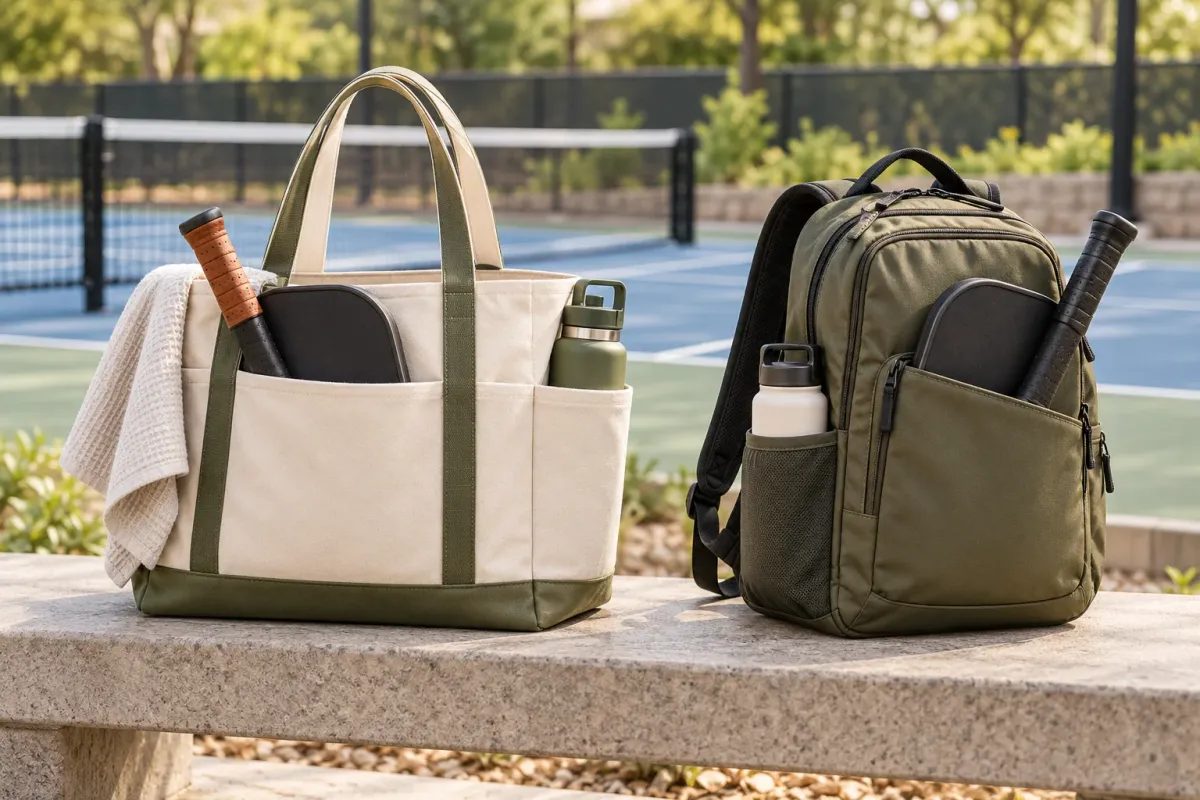
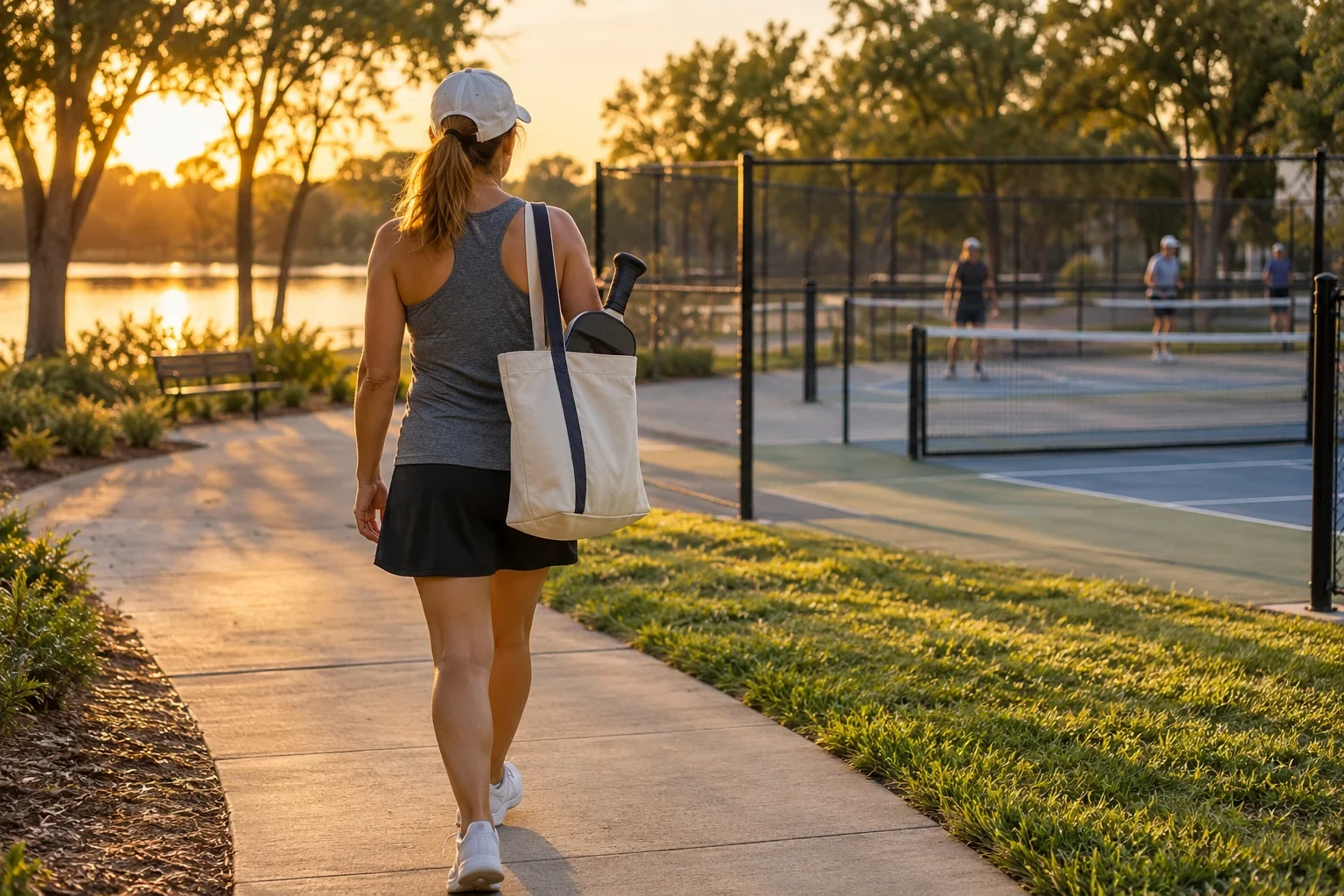
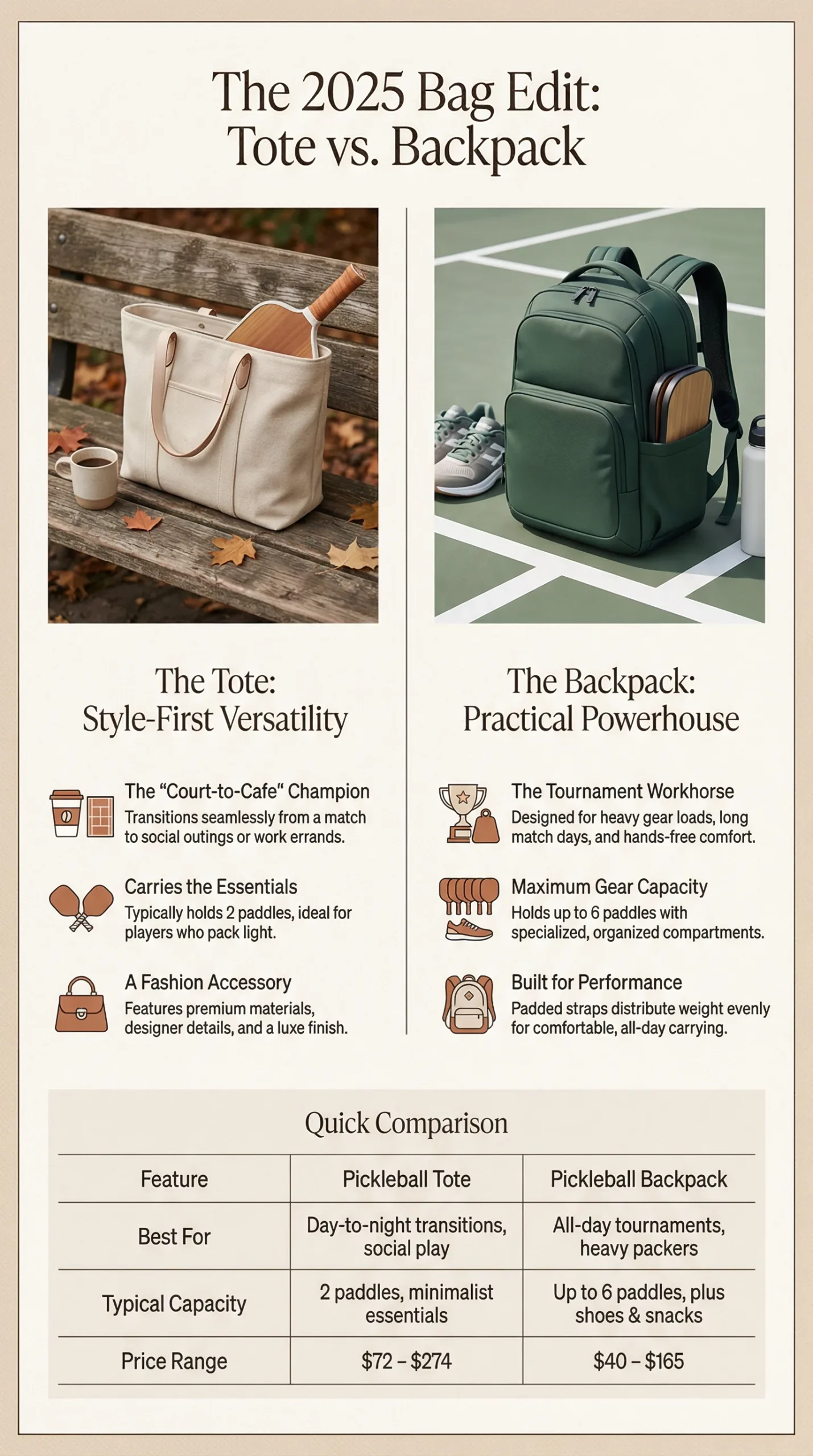
A tote and a backpack can both carry pickleball equipment. The useful comparison is your actual trip: how much you carry, how far you walk, whether your hands need to be free and where the bag will sit during play. Neither style is the universal winner.
Pack the kit you really use
Lay out the paddle, balls, shoes, clothing, water and personal items you take to a normal session. Remove things that live in the bag without being used. A small court kit and a change of clothes for a longer trip create different storage needs.
Measure the items that determine fit, including the paddle and water bottle. Compare the bag's usable compartments rather than its nominal volume alone. A large opening does not guarantee a secure place for a paddle.
When a tote may fit the trip
A tote can offer quick access and a shape you prefer for everyday use. It may be convenient when you carry a lighter kit from the car to a nearby court. Check whether the opening closes and whether the handles remain comfortable with the real contents.
A shoulder tote typically puts the load on one side at a time. Notice comfort during the route you expect to walk. An appealing unloaded bag can feel different when the water bottle and shoes are added.
When a backpack may fit the trip
A backpack can keep hands free and distribute the load through two straps. That can be practical on a walk, bicycle journey or trip with other luggage. Fit still matters: compare strap adjustment, where the loaded bag sits and how easily you reach important items.
Do not assume all backpacks have ventilated shoe storage or a protective paddle sleeve. Those are model-specific features. A regular backpack may work if its compartments suit the kit and protect the equipment adequately.
Compare organization, not just style
| Need | What to inspect in either style |
|---|---|
| Paddle protection | A suitable sleeve or compartment, kept apart from rough or hard objects |
| Damp clothing | Separation and a practical way to remove items promptly |
| Water bottle | Retention and the possibility of leakage near equipment |
| Small valuables | Closure, access and a secure location |
| Locker or car space | Loaded dimensions and opening clearance |
| Care and repair | Instructions, zipper access and replaceable parts |
Follow the paddle maker's storage and care instructions. Use a suitable sleeve when needed, and avoid leaving damp or dirty equipment pressed together. A specialized compartment can help organization but does not create a guarantee against every kind of damage.
Run a loaded carry test
Within the retailer's try-on rules, load the bag with your kit or equivalent clean items. Lift it, adjust the straps and walk gently. Try reaching the bottle and a small personal item without unloading everything.
Check how the bag stands or lies when set down. Confirm that a full bag fits the intended locker, storage shelf or car space. If you cannot test in person, compare measured dimensions and read the return policy before ordering.
Think about the next destination
Some players go directly home; others need a change of clothes for work or another activity. Choose the shape, closure and organization that fit that route. A tote's look and a backpack's hands-free convenience are preferences to assess, not evidence of better athletic performance.
Keep the bag outside court movement paths during play. Whatever style you choose, unpack damp items after the session and check the contents before the next visit.
Buy for the problem the bag solves
Compare the exact model's current cost, care requirements and return terms. Skip claims of professional testing when no method or results are supplied. If your existing bag works with a better sleeve or packing arrangement, try that before replacing it.
For a longer gear-care routine, use the maintenance and reuse guide. The right bag makes the trip easier and keeps the kit organized; it does not need a fictional review history to justify the choice.
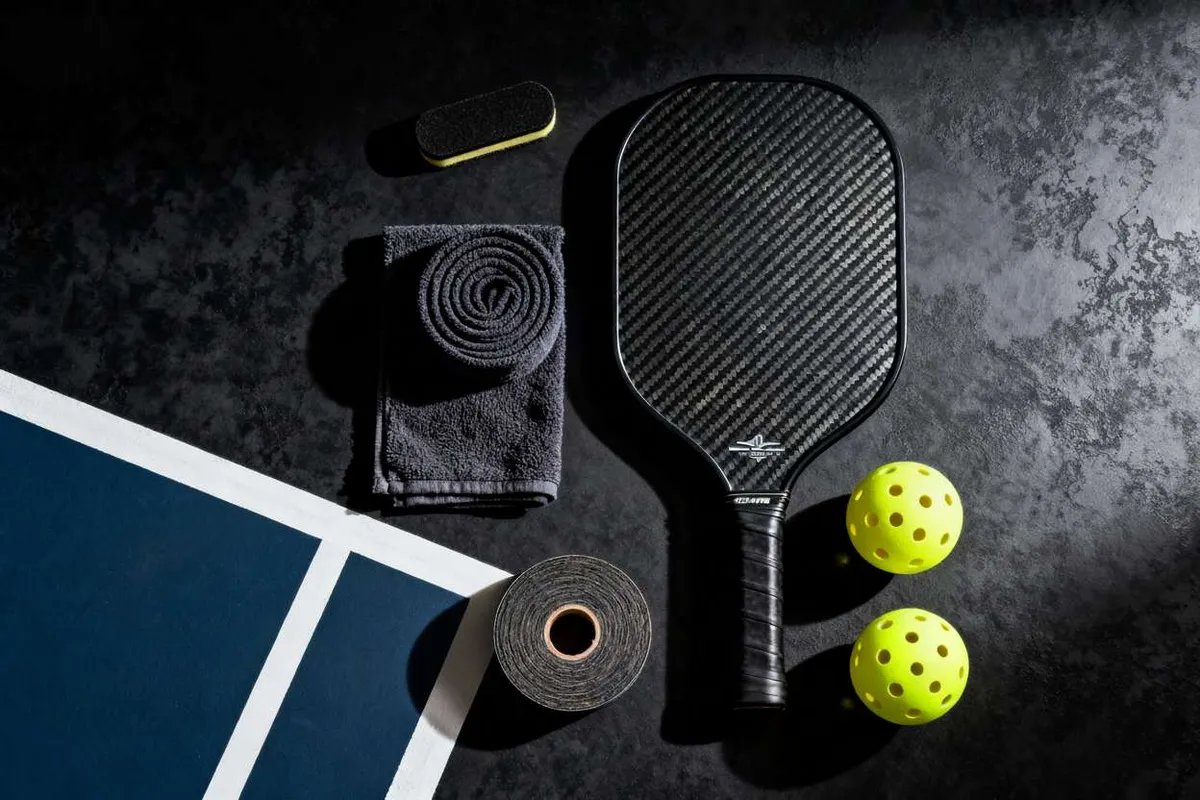
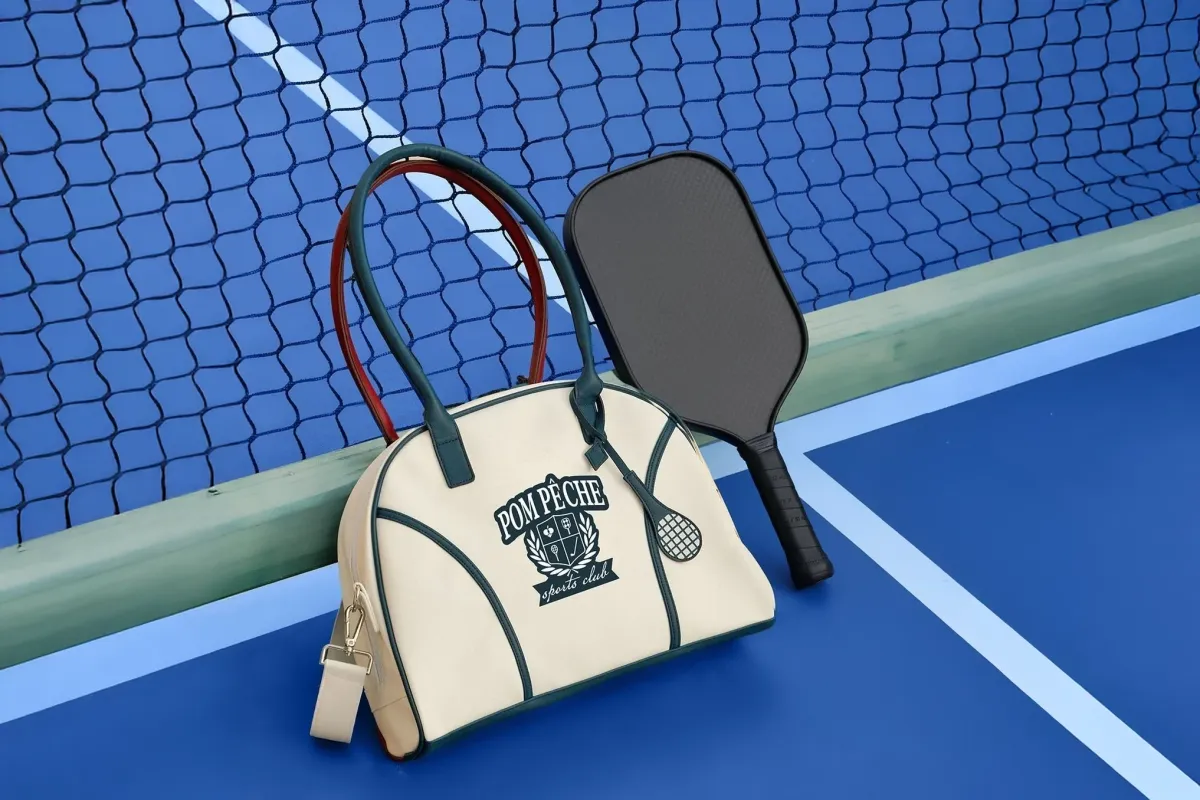
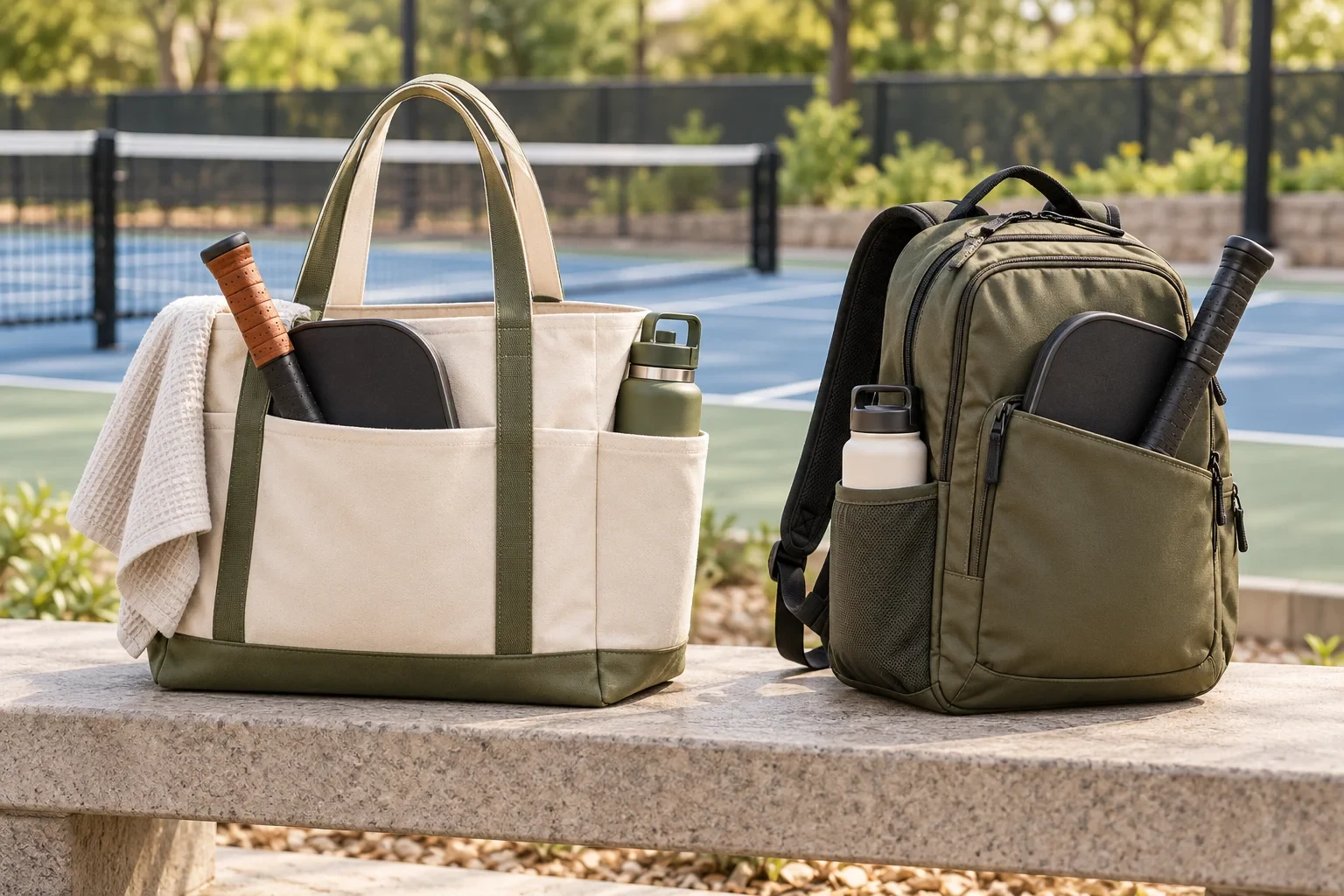
Bag styles and packing illustrations
Visual examples of equipment and court settings. Images are illustrative; current specifications and fit should be checked with the maker or retailer.
Frequently asked questions
Is a backpack always more comfortable than a tote?
Comfort depends on the load, fit, route and person. Test the bag with the contents you actually carry, including water and any change of clothing.
Do I need a dedicated pickleball bag?
No. A regular bag can work when it holds the kit securely and protects the paddle appropriately. Choose a specialist model only when its features solve a carrying or organization problem.
How do I compare capacity?
Use the usable compartment dimensions and your actual packed kit. Nominal volume alone does not establish paddle fit, pocket access or locker compatibility.