Padel and pickleball both offer racket or paddle play on a court, but their court geometry and rally rules create different games. Padel uses an enclosed court with playable wall rebounds under its rules. Pickleball uses an open lined court and a non-volley zone. Neither sport is automatically easier, cheaper or more demanding for every player.
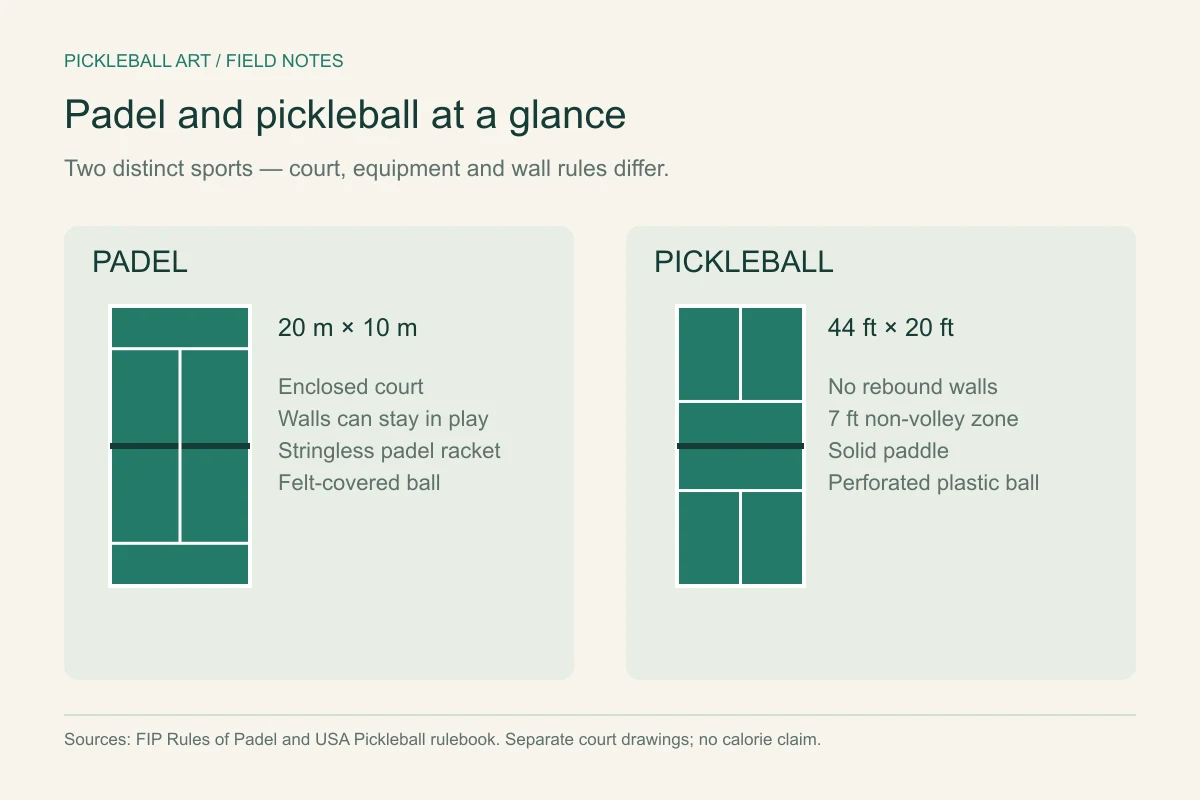
The court changes the rally
| Feature | Padel | Pickleball |
|---|---|---|
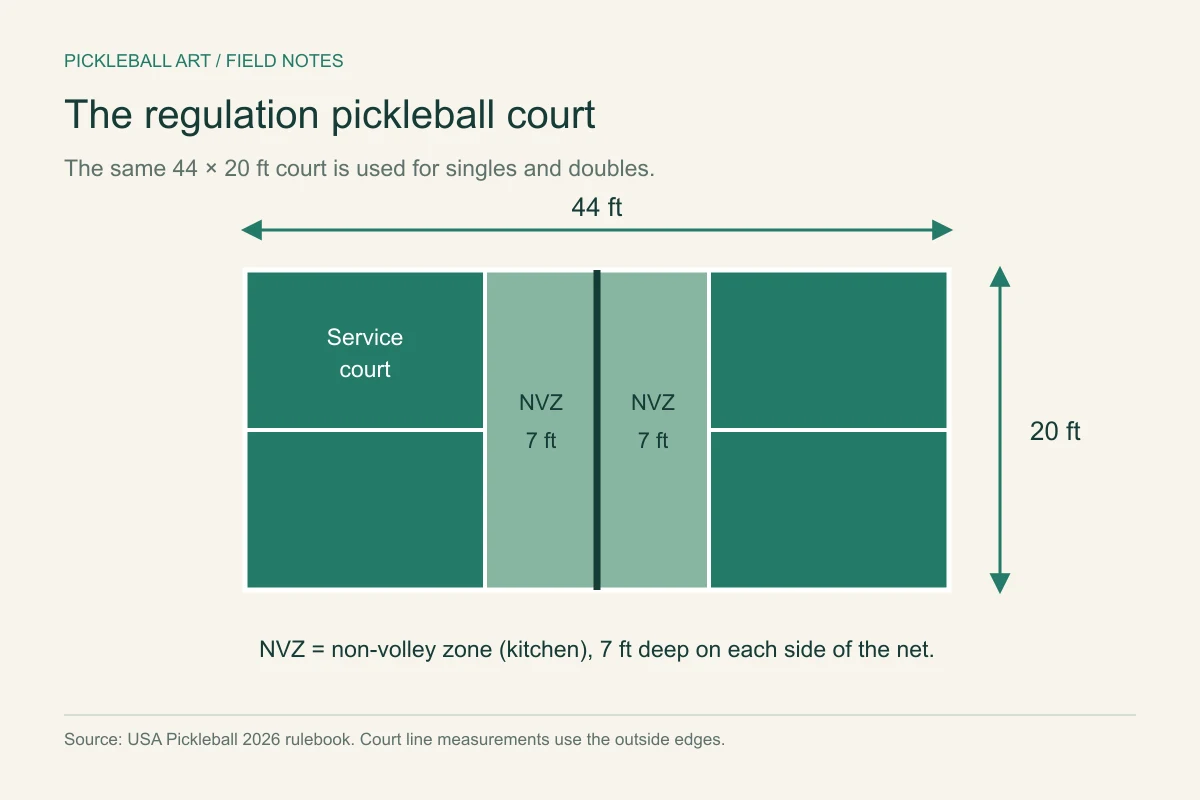
| Regulation court | 20 by 10 meters | 44 by 20 feet |
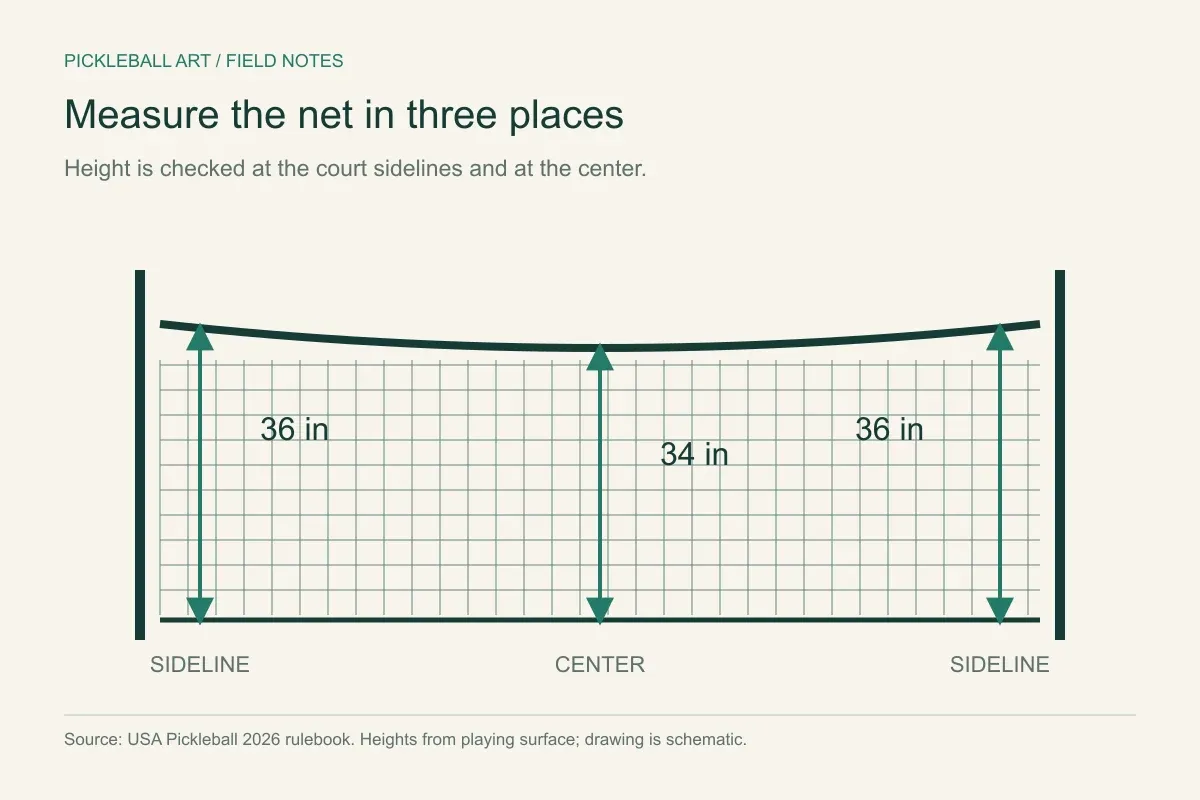
| Net height | 0.88 meters at center; up to 0.92 meters at ends | 34 inches at center; 36 inches at sidelines |
| Walls | Enclosures form part of specified legal rebounds | Walls are not a normal part of the court rally |
| Area near net | No pickleball-style kitchen | A 7-foot non-volley zone on each side |
These dimensions come from the International Padel Federation rules effective January 2026 and the USA Pickleball rules. Court dimensions describe the playing area; facilities need additional access and safe circulation space.
Wall play versus the kitchen
In padel, learning when a ball can rebound from the enclosure is part of court positioning. It can sometimes be useful to let a rebound develop before returning the ball. Not every contact with glass or fencing is legal; the sequence and circumstances matter.
In pickleball, a volley is a hit before the bounce. Players cannot volley while touching the non-volley zone or its line, and volley momentum cannot carry them into it. They can enter to play a ball after it bounces. This encourages decisions about when to attack a ball in the air and when to let it bounce.

Equipment and serving differ
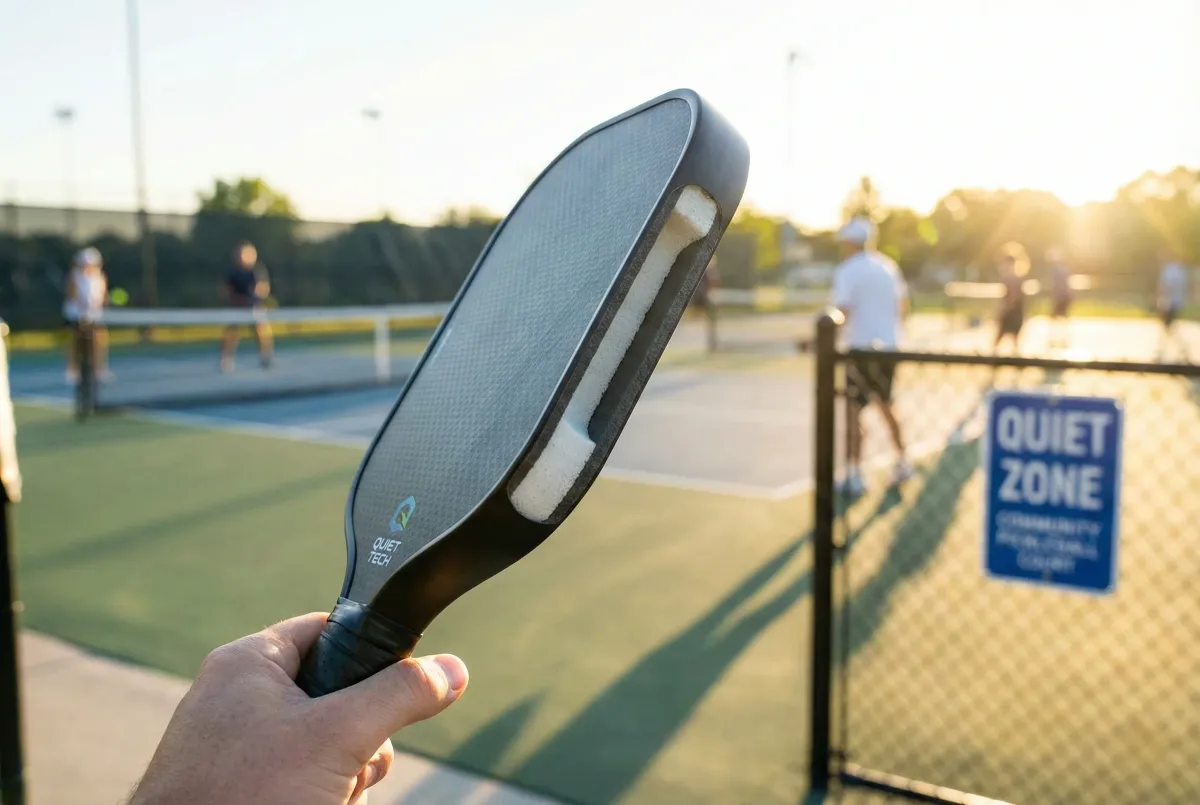
Padel uses a perforated racket and a pressurized ball specified for that sport. Pickleball uses a solid-faced paddle and a plastic ball with holes. Use the correct ball and approved equipment for the venue or event; a casual visual resemblance is not evidence that equipment is interchangeable.
A padel serve starts after a bounce and contact is at or below waist height under the FIP service rules. Pickleball permits a volley serve and a drop serve with different conditions. Its receiving team must let the serve bounce, and the serving team must then let the return bounce before either side volleys.
Understand the scoring system before playing
Padel generally organizes points into games and sets with tennis-style scoring, subject to the event's chosen format. Traditional pickleball uses side-out scoring, commonly to 11 and win by two: only the serving side scores. Rally-scoring pickleball formats also exist. Ask which system your session uses rather than transferring scoring from the other sport.
Which should you try first?
Compare nearby court availability, beginner sessions, loaner equipment and actual booking costs. A purpose-built padel facility and an existing public pickleball court have different infrastructure, but the price you pay depends on the local provider. Neither has a universal cost advantage.
For exercise, the intensity depends on pace, singles or doubles, rest and the individual. Fixed calorie-per-hour promises do not describe every session. Begin with an appropriate beginner session, learn the local rules and choose the game you enjoy returning to.
Name check: paddle tennis is another sport. A video about paddle tennis versus pickleball is not necessarily a padel comparison.
Frequently Asked Questions
No. Their similar names can cause confusion. Check that a facility, lesson or comparison actually concerns padel.
A standard pickleball court does not incorporate wall rebounds as normal rally play.
There is no universal answer. Intensity, duration, format and the player change the workload; fixed session estimates should not be treated as a guarantee.