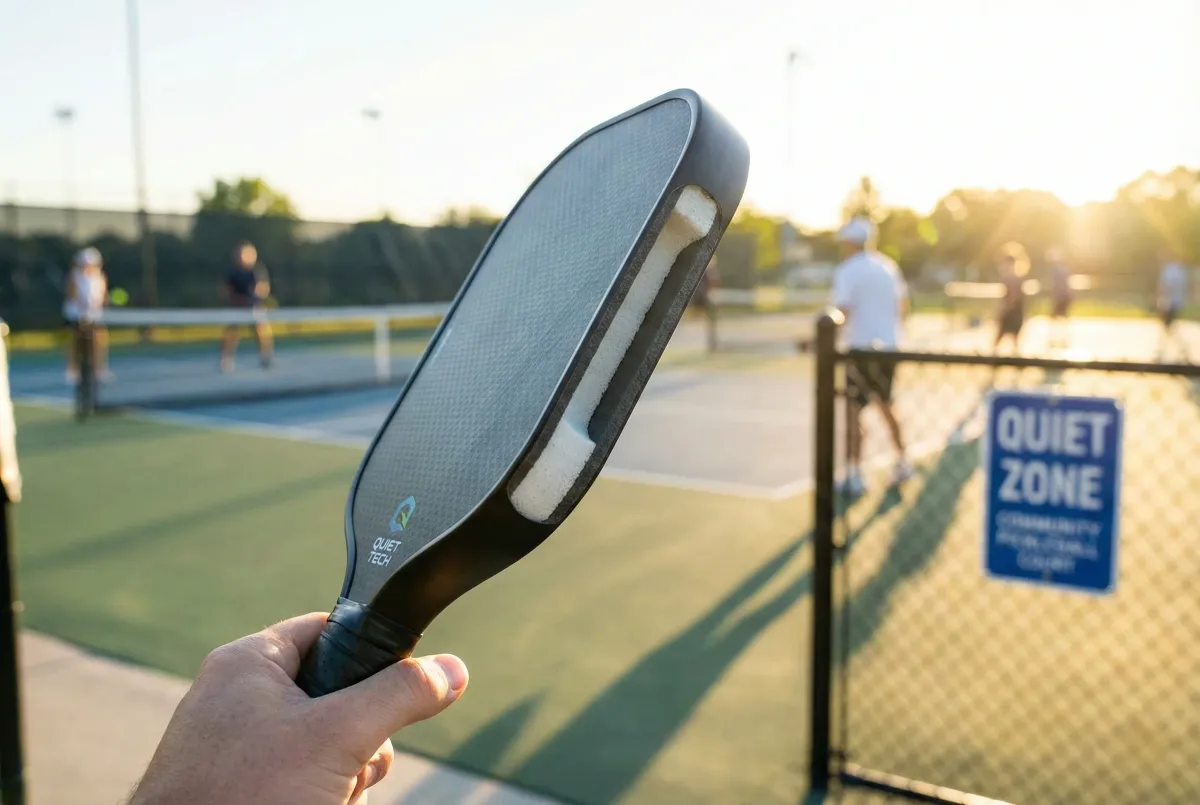
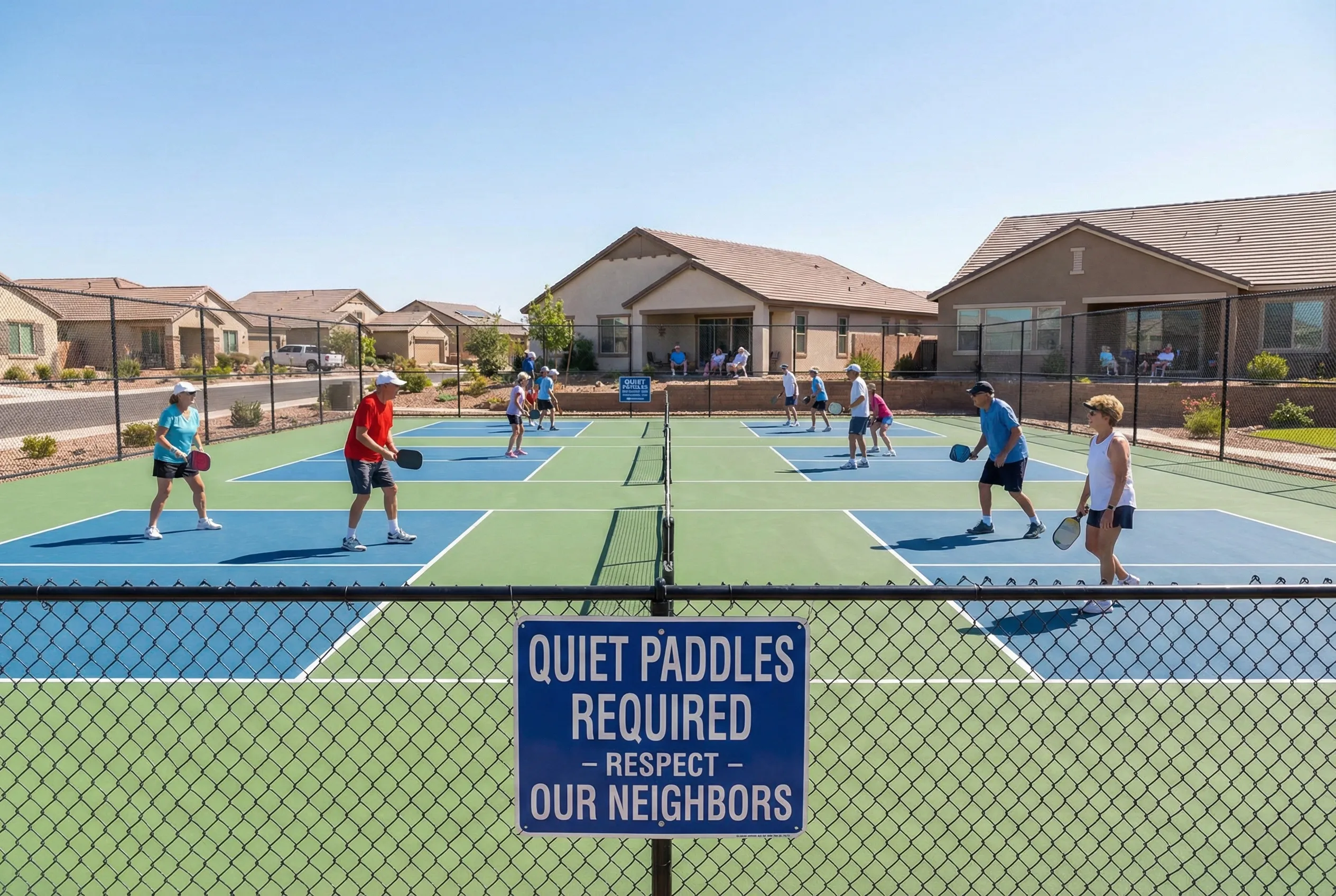
Shopping for a quiet pickleball paddle starts with two questions: will the exact setup be accepted where you play, and is there useful evidence that it lowers acoustic output? “Foam core,” “soft feel” and “Quiet” are not interchangeable claims.
Start With the Official Lists
Use the USA Pickleball acoustic equipment database to find recognized quiet equipment. It includes paddles, covers and balls, reflecting several approaches to reducing impact sound.
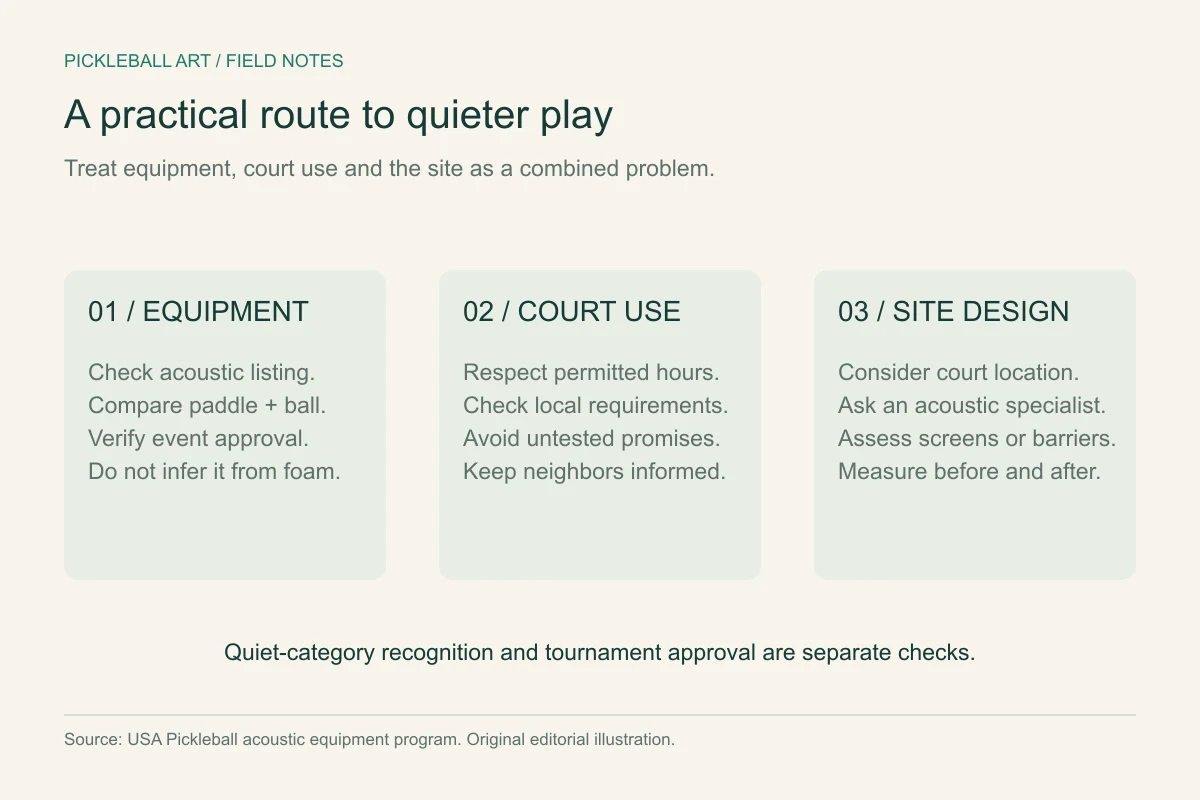
Then search the exact model on the approved paddle list. Acoustic recognition and sanctioned tournament approval serve different purposes. Confirm approval again before an event because equipment status can change. A marketing logo or a brand-level claim is not enough.
Read Acoustic Claims Carefully
A useful sound comparison describes what was measured and how. Ask which ball was used, where the microphone was placed, how impacts were produced and whether the test was indoors or outdoors. A percentage reduction without a baseline or method is difficult to interpret.
Do not compare a sound-pressure level from one location with a reading taken at a different distance or in a different room. Nor should a single frequency or decibel number be assigned to all honeycomb or all foam paddles. This guide does not report laboratory measurements of these products.
Separate Core Design From the Finished Paddle
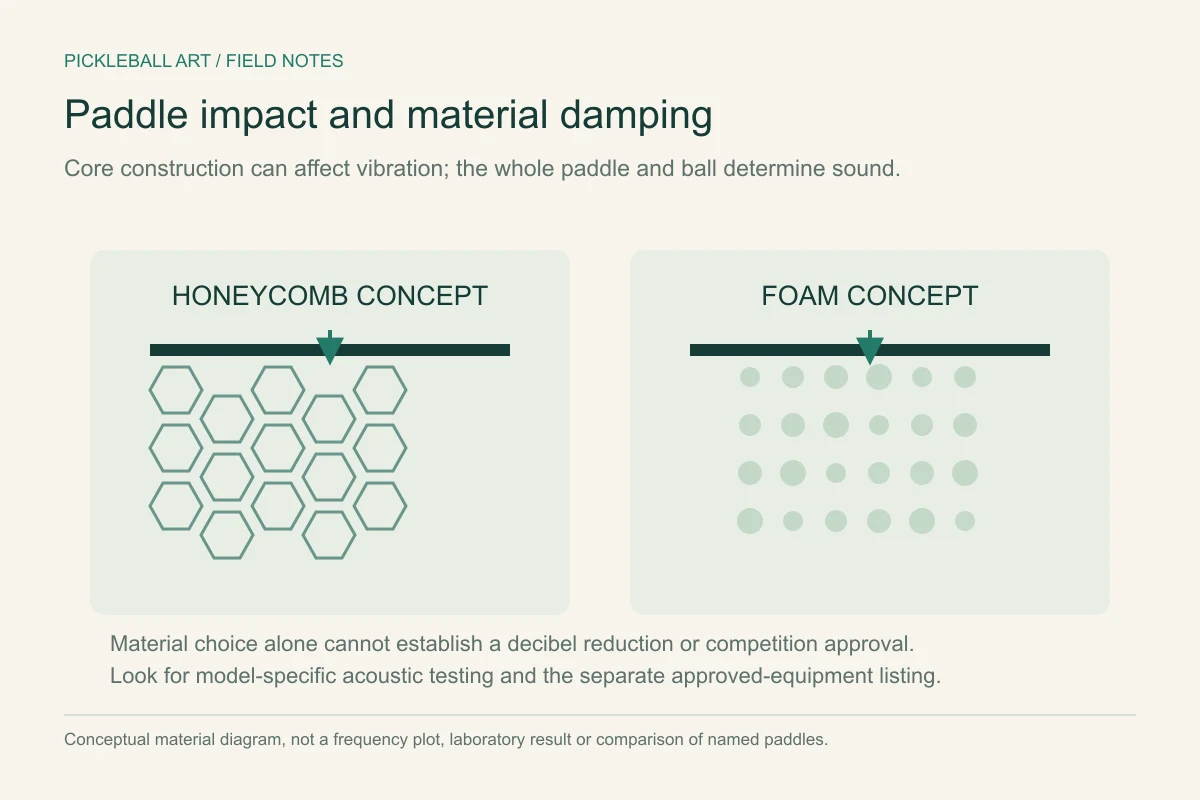
Foam may be used around the perimeter, in parts of the core or throughout a core; those constructions are not identical. Face layers, bonding and acoustic treatments also contribute to the finished paddle’s sound and feel. A manufacturer’s term such as “Gen 4” is not a universal performance standard.
The official acoustic list includes more than one design strategy. Choose a documented model that suits your venue instead of treating a construction label as certification.
A Court Demo Checklist
- Venue policy: Confirm the exact model and any cover or sleeve are accepted.
- Grip and handling: Try normal ready positions and repeated volleys without over-gripping.
- Soft shots: Compare predictable rebound on dinks, blocks and resets.
- Full swings: Try controlled serves and drives. A comfortable soft game does not establish every other performance characteristic.
- Sound: Use the same ball and playing conditions for comparisons, and include the operator or neighbors where appropriate.
- Ownership: Check warranty, care instructions and replacement parts on the manufacturer’s current page.
A demo should answer whether the paddle fits your game and local requirements. It cannot establish how long every unit will last or guarantee relief from arm discomfort.
Choose Quiet Practice Equipment for the Right Task
Foam balls can make a low-noise practice setup more practical. They may be useful for coordination and touch drills, while differing from a standard perforated match ball in flight and rebound. Practice with your normal match ball when learning timing for competition.
Acoustic covers can also change a paddle’s playing surface. Check the venue’s policy and competition rules before fitting one. Do not assume approval of an uncovered paddle automatically approves every accessory added to it.
Before You Buy
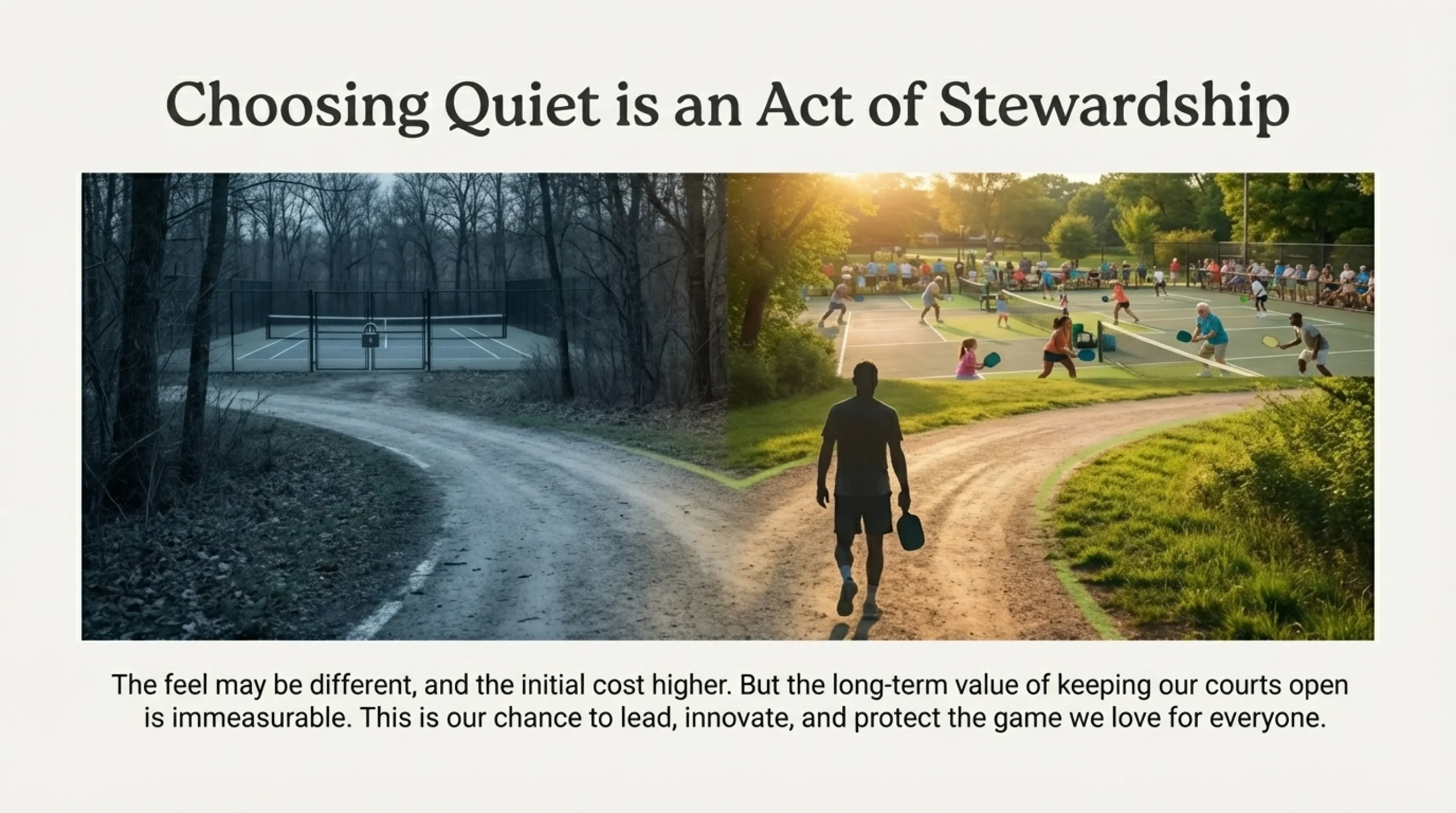
Keep a record of the exact model, the applicable listings and the seller’s return policy. If the venue has a trial program, use it. A paddle that is accepted and manageable is more useful than one selected from an unsupported claim about foam.
If the problem involves multiple courts near homes, review our community court noise plan and USA Pickleball facilities resources. Equipment should be considered alongside operating hours and acoustic design.
Frequently Asked Questions
Check your venue’s accepted equipment, the acoustic database and any tournament approval requirements for the exact model.
No. Model-specific test conditions and results are needed. Other parts of the paddle and the ball affect the sound too.
Follow the event rules and equipment standards. Approval of the original paddle does not automatically approve an added cover or altered surface.
There is no universal answer. Compare specific models through a demo; acoustic behavior, rebound and handling are separate characteristics.
Not necessarily. It can be useful for quiet practice but may have different flight, bounce and approval status.