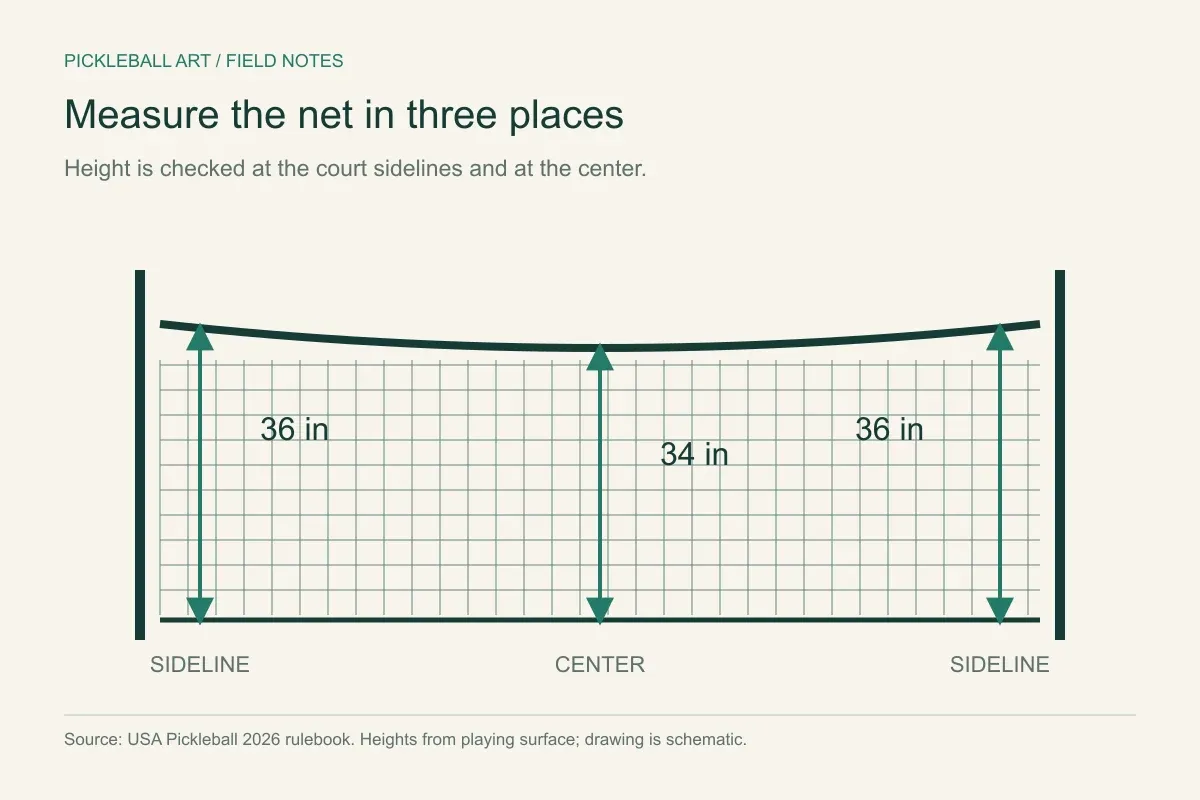

A regulation pickleball net is 36 inches high at each sideline and 34 inches at the center. Measure vertically from the playing surface to the top of the net at those locations. The difference is intentional; setting the entire top edge to one height is not the regulation setup.
Use the current USA Pickleball rulebook for the governing specifications and USA Pickleball court construction resources for facility planning. This guide explains the measuring procedure; it does not report a study connecting net adjustments to player win rates.
Check the court and assemble the net
Find the sidelines before measuring. They identify the correct locations for the side-height checks; the height at a support post is not a substitute. Assemble a portable net according to its manufacturer's instructions and seat every connection fully. Check the frame for damage and keep bases and supports out of the playing path.
A short starter net, half-court set or children's practice set may be useful for drills, but it does not establish a full regulation court merely because its packaging says pickleball.
Measure the three locations
- Place a tape measure vertically at one sideline and check 36 inches to the top of the net.
- Repeat at the opposite sideline.
- Measure at the center and check 34 inches.
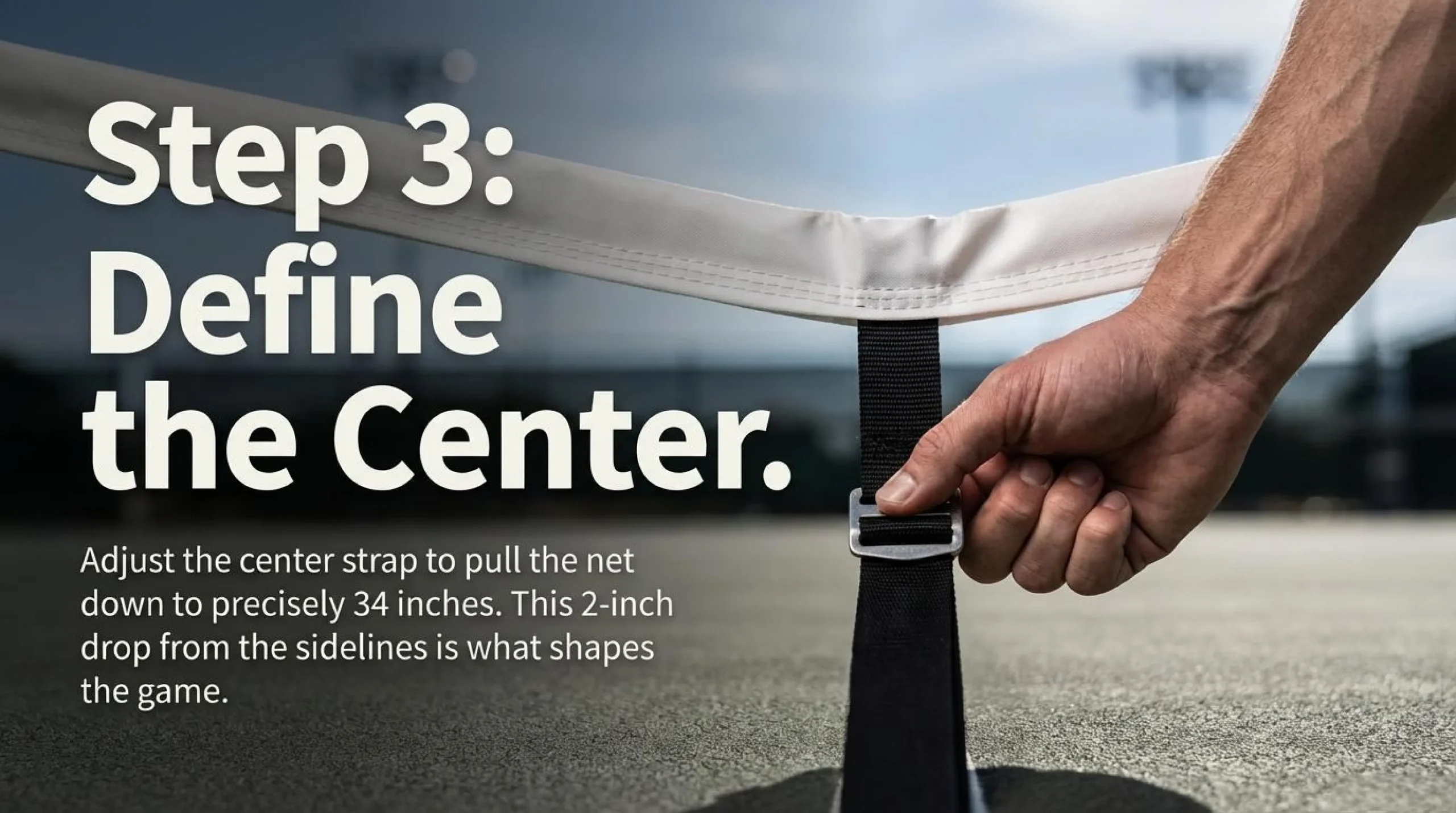
- Adjust the supports, tension or center strap as the particular net permits.
- Measure all three points again after the adjustment.
Do not tilt the tape along the mesh. It should measure the vertical height from the local playing surface. On an uneven or sloped court, note the surface condition instead of forcing a frame into an unsafe position to hide the problem.
Use tension to support the correct shape
The top should be supported so the intended center height remains stable. A loose setup can sag excessively; extra tension can pull the center too high or distort a portable frame. Follow the net's adjustment method and recheck after moving it, assembling it again or noticing a change.
Some portable systems use a center support rather than the same hardware as a permanent installation. That does not change the target height. Repair a damaged support or strap instead of compensating with a makeshift weight in the playing area.
Common measuring errors
- Measuring only at the posts: use the actual sideline locations.
- Measuring diagonally: keep the tape vertical.
- Setting the center to 36 inches: the center target is 34 inches.
- Ignoring assembly instructions: different net systems adjust differently.
- Checking once before moving the net: relocation or retensioning can change the result.
Before play begins
Confirm the net is secure, measure the heights and inspect the court for trip hazards. For a tournament, follow the event's equipment checks and referee procedure. For informal practice, explain any nonstandard setup so players do not confuse it with regulation play.
Net height is one specification. The court also needs its correct lines and space for play; see court planning basics before buying a permanent system.
Frequently Asked Questions
36 inches at the sidelines and 34 inches at the center, measured vertically from the playing surface to the top of the net.
That would leave the sideline portions below the regulation height. Check the center and both sidelines separately.
No. Confirm the exact model and dimensions, assemble it correctly and measure the finished setup.