A paddle specification tells you what a manufacturer built. It does not tell you how consistently you will return a serve with it. Use these seven checks to connect the specifications to your own shots, then compare a short list on court. This is an editorial selection guide, rather than a record of laboratory or personal product testing.
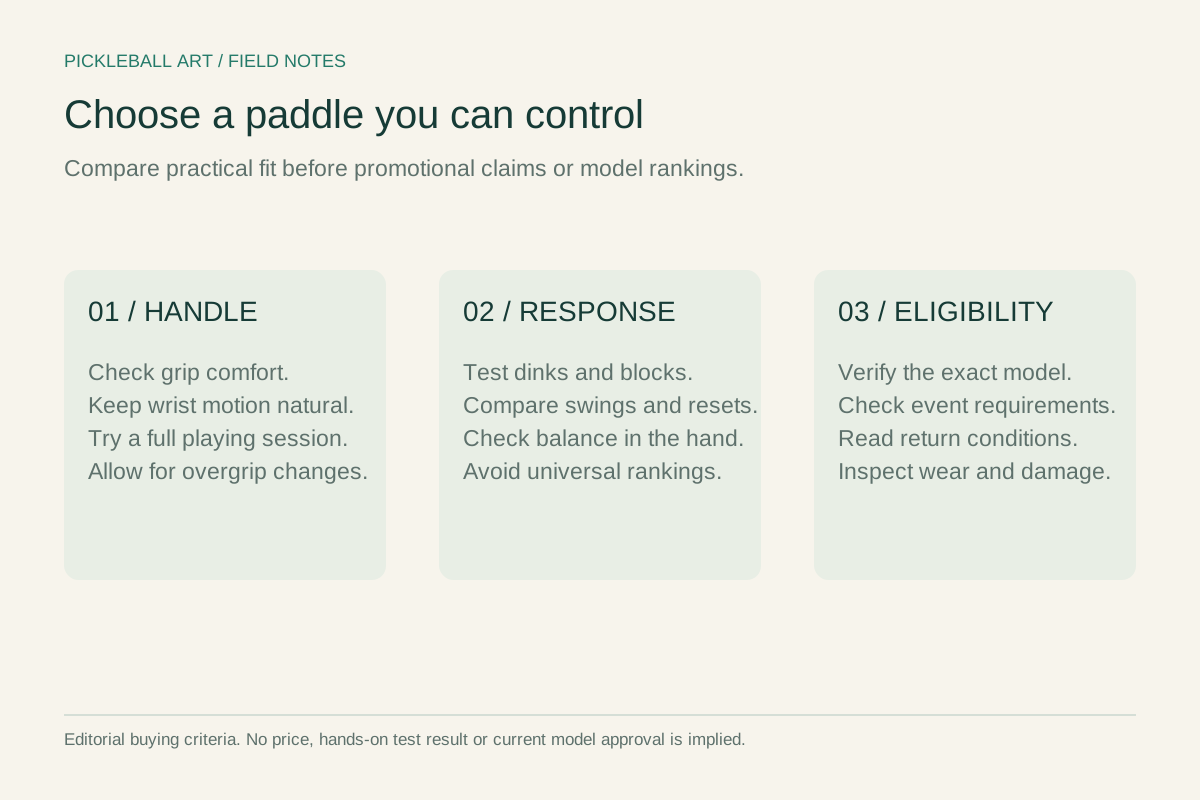
1. Start with the shots you need to improve
Write down one problem you want to solve: frequent pop-ups, late blocks, uncertain contact on drops, or a handle that feels cramped. A new paddle may change feel and timing, but it cannot establish the right contact point or footwork for you. Borrowing or taking a lesson can help distinguish an equipment issue from a technique issue.
2. Compare weight and balance together
Static weight measures the whole paddle. Its distribution affects how it feels while moving. Two equally heavy paddles can handle differently if more mass is near the tip. Ask for the listed weight range, and try actual examples when possible. Do not assume that the heaviest option produces your fastest useful shot.
Alternate forehand and backhand blocks, then try a longer sequence of drops and returns. Notice whether you start late, squeeze harder or lose control as the session continues. Manufacturer weight categories are convenient labels, not a prescription for every player.
3. Check grip circumference and usable handle length
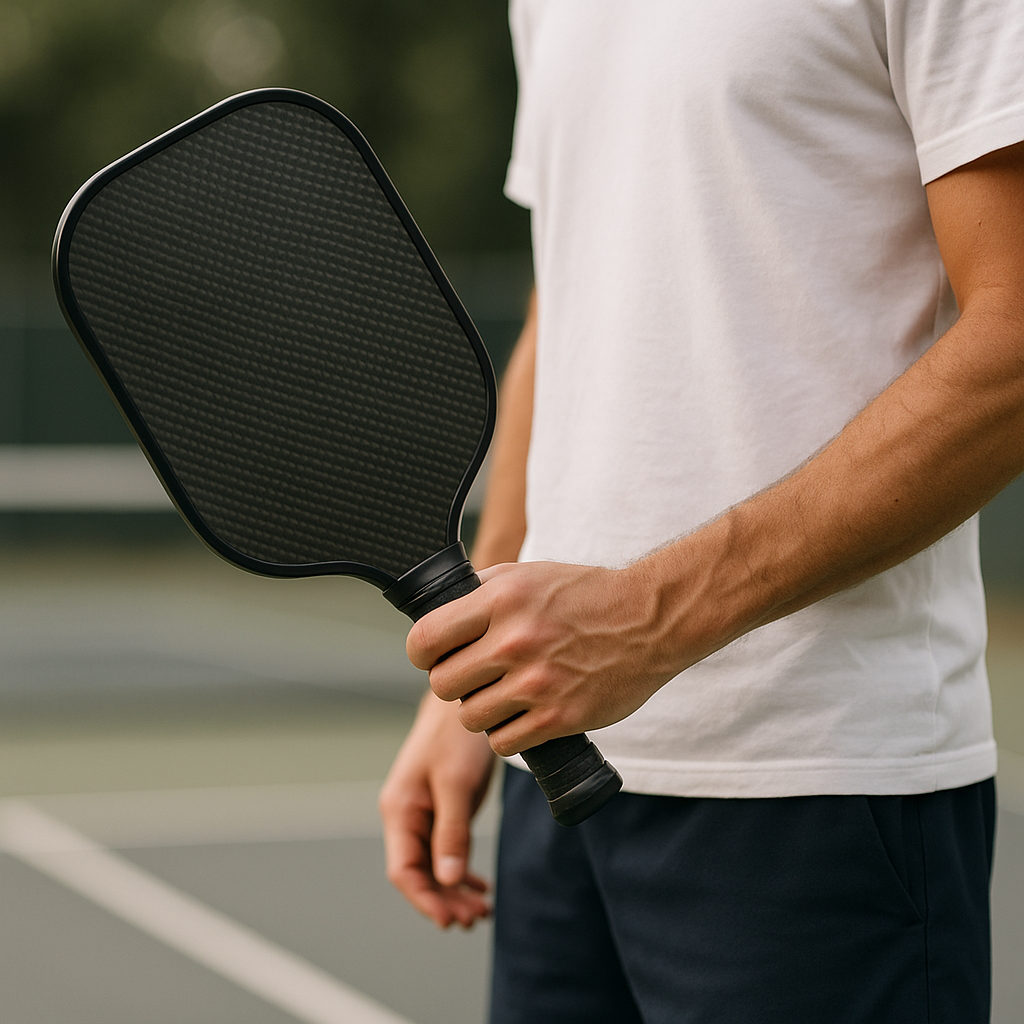
Hold the paddle in your normal ready position. You should be able to keep a secure hold without clenching continuously. Try your usual overgrip if permitted; it changes both circumference and weight. For a two-handed backhand, place both hands on the handle and check space with the actual model rather than relying on a universal minimum length.
Pain or persistent discomfort should be assessed separately. Changing a grip is not a guaranteed treatment for elbow or wrist problems.
4. Choose shape through contact consistency
A longer face offers reach; a wider face provides more width to contact the ball. Handle length also changes how much of the total paddle is available as hitting surface. Compare blocks that land away from the middle, low pickups and quick transitions. An elongated shape is not reserved for a particular rating, and a wider paddle is not only for beginners.
5. Read materials as part of a complete construction
Core material, core structure, face layup, surface finish and perimeter design all contribute to response. Carbon fiber does not automatically outperform fiberglass in every shot. A fiber grade such as T700 is not a spin score. Thermoforming describes a manufacturing approach; it does not prove that every model is more durable or more forgiving.
For terminology, see paddle materials explained. If quiet play matters at your venue, check the exact model's acoustic listing separately from its competition approval.
6. Verify the exact model and its condition
For USA Pickleball competition, consult the current approved paddle list and your event's rules. A printed approval logo, a similarly named model, or an acoustic designation is not enough. Check the model, version and applicable status before entering.
For a used or demo paddle, look for a loose handle, separated edges, face damage or a change in response. Ask about warranty transfer, returns and permitted alterations. Do not sand, roughen or apply a coating to increase spin.
7. Run the same demo and compare total cost
Use the same ball and partner where possible. Try serves, returns, dinks, drops and blocks with each option, then record contact consistency, handling and comfort. A handful of spectacular drives should not outweigh repeated errors on ordinary shots.
Compare the actual purchase price, shipping, return costs and warranty terms. There is no price threshold that guarantees performance or a calendar deadline that makes a sound paddle obsolete. Buy the model that makes your regular shots manageable, then spend practice time on the problem you identified in check one.
Frequently Asked Questions
No. Surface finish and the whole construction affect response. Compare actual paddles and your normal shots rather than ranking them by fiber name alone.
Not necessarily. Acoustic recognition and tournament approval are separate checks; verify the exact model on the applicable lists.
Inspect condition and changes in response. There is no universal replacement interval that applies to every material, player and frequency of use.