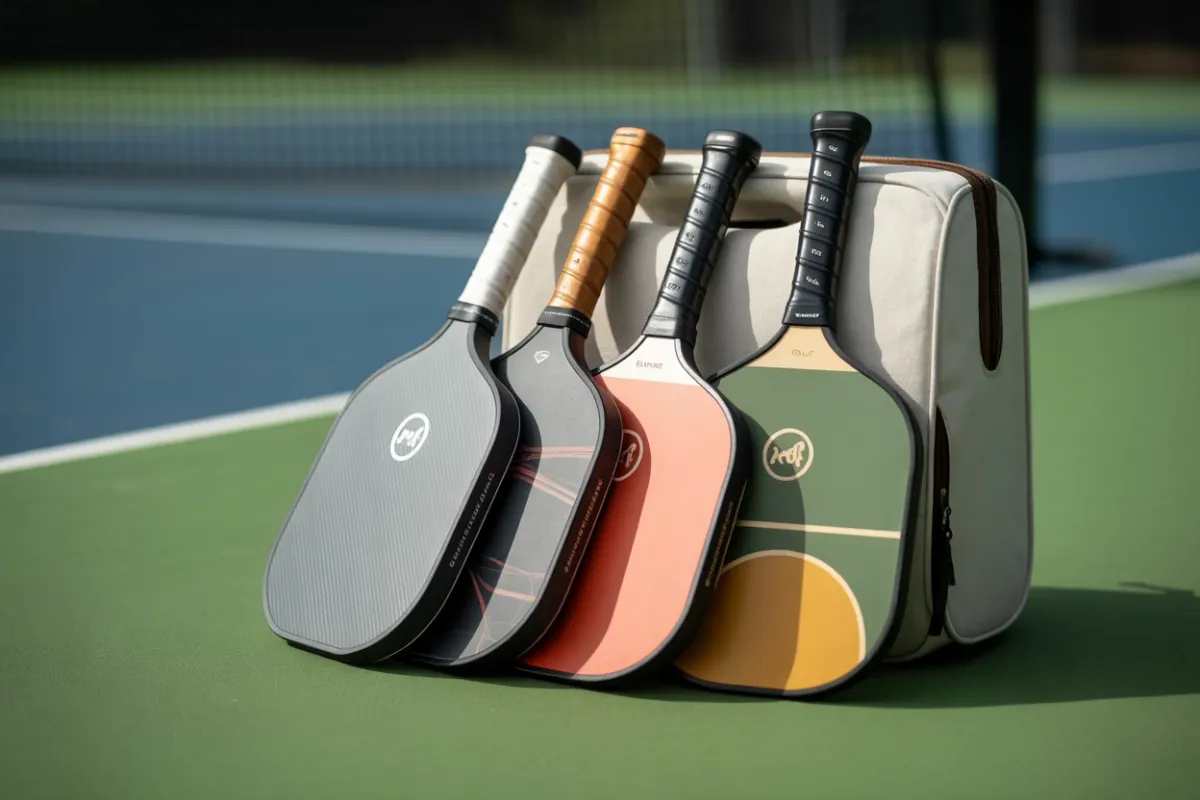
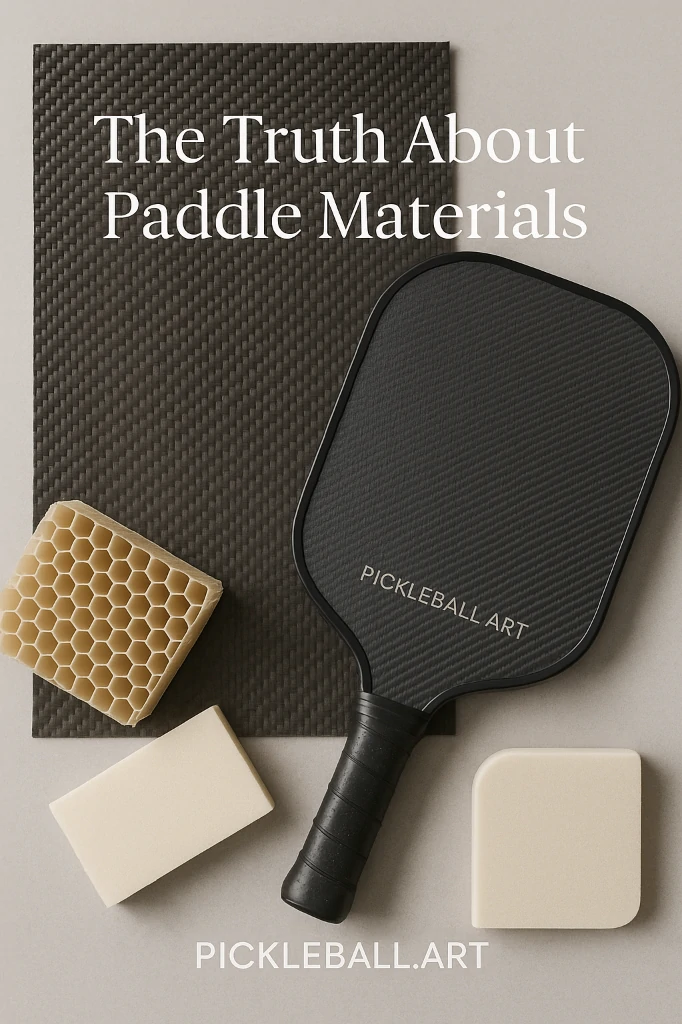
Paddle labels often reduce a complete construction to one material: carbon fiber, fiberglass, polymer or foam. Those names are useful, but the ball meets a finished face attached to a core, handle and perimeter. A material name alone does not establish spin, noise, power, durability or tournament eligibility.
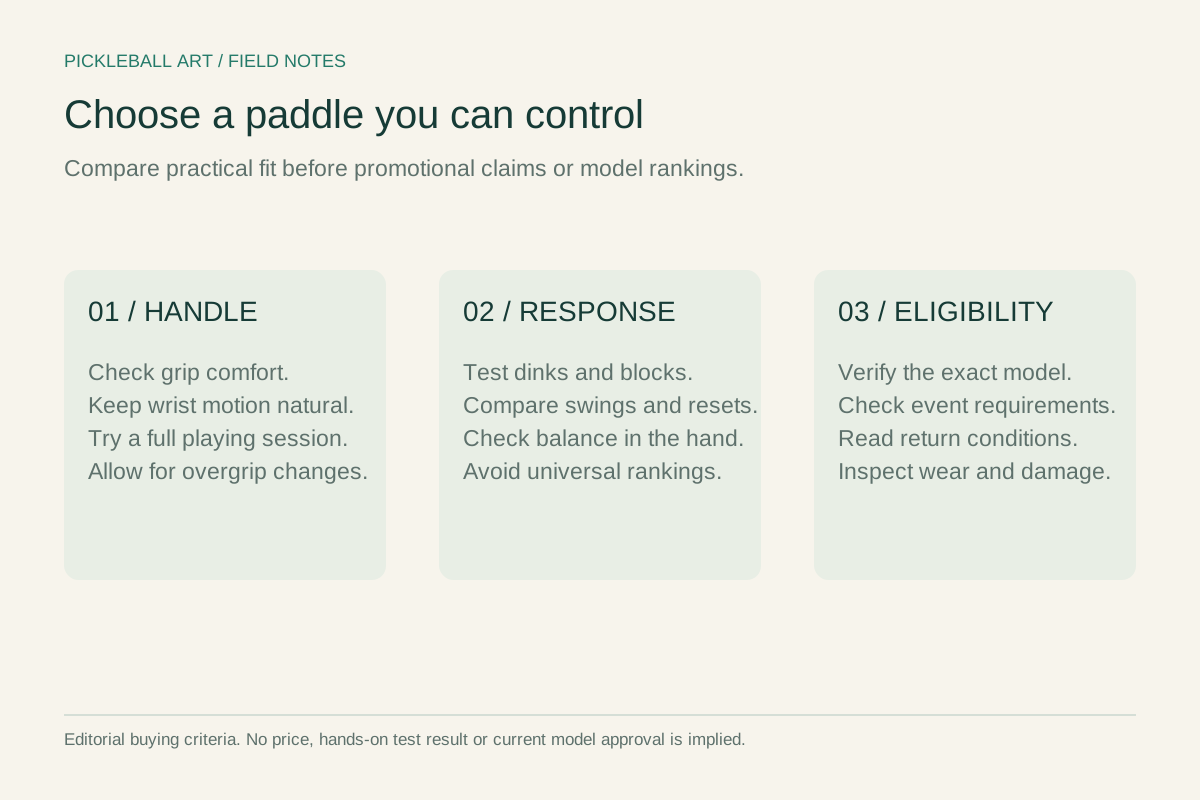
Separate the face from the core
The face is the outer hitting surface and its underlying layers. The core sits between the faces. Perimeter structures, adhesive, handle construction and surface finish also affect the finished paddle. Two paddles with the same advertised face material can differ in thickness, geometry, weight distribution and response.
Manufacturer specifications describe construction. Comparative performance needs evidence with a consistent method and conditions. This article explains selection criteria; Pickleball Art does not present these descriptions as a personal test of hundreds of products.
Carbon fiber, graphite and fiberglass labels
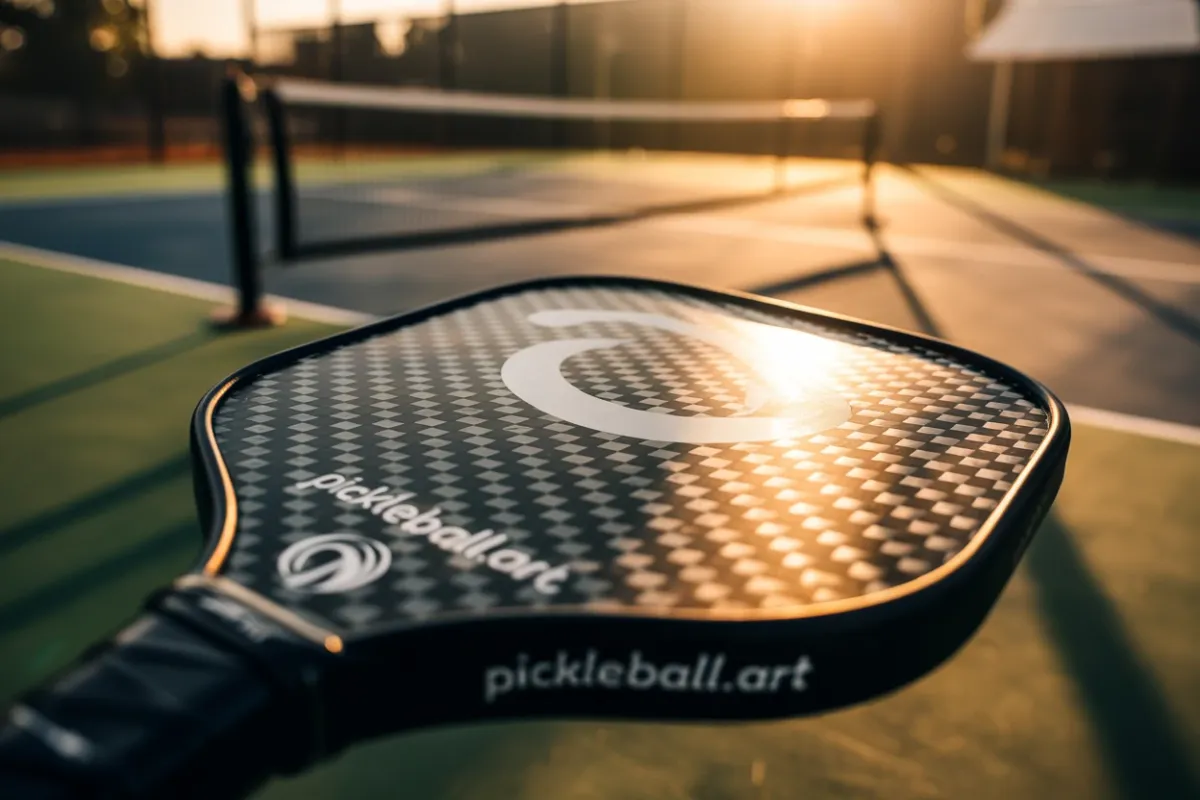
Carbon fiber faces use carbon reinforcement in a composite structure. “Raw carbon” commonly describes a textured finish; it does not mean that the entire paddle is untreated fiber. Graphite is another label used in paddle marketing, and exact construction should be checked rather than inferred from the word alone. Fiberglass faces use glass-fiber reinforcement.
Surface finish and the whole layup matter when comparing spin and feel. A fiber grade such as T700 identifies a material specification, not a certified spin rating. A carbon face is not inherently the winner of every power or control comparison, and a fiberglass face is not limited to beginners.
Honeycomb and foam describe core approaches
Polymer honeycomb has a cellular structure. Other honeycomb constructions, including aramid-based designs, also exist. Core depth, cell structure and the rest of the paddle influence its response; calling one material “control” and another “power” oversimplifies different models.
Foam can appear around the perimeter, within a core or as part of a different internal design. These are not interchangeable uses. A foam label does not prove that the paddle is quiet, more durable or approved for an event. Verify each claim for the exact model and version.
Construction and thickness do not create a universal ranking
Thermoforming generally refers to a heat-assisted molding process. “Unibody” and generation labels are used differently by manufacturers. Ask what is actually constructed that way and what evidence supports a claimed benefit.
Core thickness is a useful comparison within related designs, but it does not guarantee a particular sweet spot or response across all brands. Demo the finished paddle, including its handle and weight balance, before treating a thickness as your ideal choice.
What to compare on court
| Question | Useful comparison |
|---|---|
| Can I place soft shots consistently? | Repeat dinks and drops with the same ball and target. |
| Can I handle incoming pace? | Compare controlled blocks and off-center contacts. |
| Does it feel manageable over a session? | Try ready-position transitions and longer sequences. |
| Does its texture remain in good condition? | Check the face and follow model-specific care guidance. |
Approval is a separate decision
USA Pickleball competition uses equipment standards and model-specific approval. Consult the current paddle list and the current rulebook and linked equipment manual. Approval does not prove that a paddle suits your style. Acoustic recognition also does not automatically establish tournament eligibility.
Choose a shortlist by handling, fit, approval and total cost. For a practical seven-step process, use the paddle checklist. For community noise questions, see quiet equipment and court planning.
Frequently Asked Questions
No material label establishes the outcome by itself. The finished surface, construction, condition and stroke matter; comparative claims need a consistent test.
No. Foam is used in different ways. Check the exact model’s acoustic evidence and venue requirements.
No. Thickness is one construction variable. Compare the finished models and the shots you actually play.