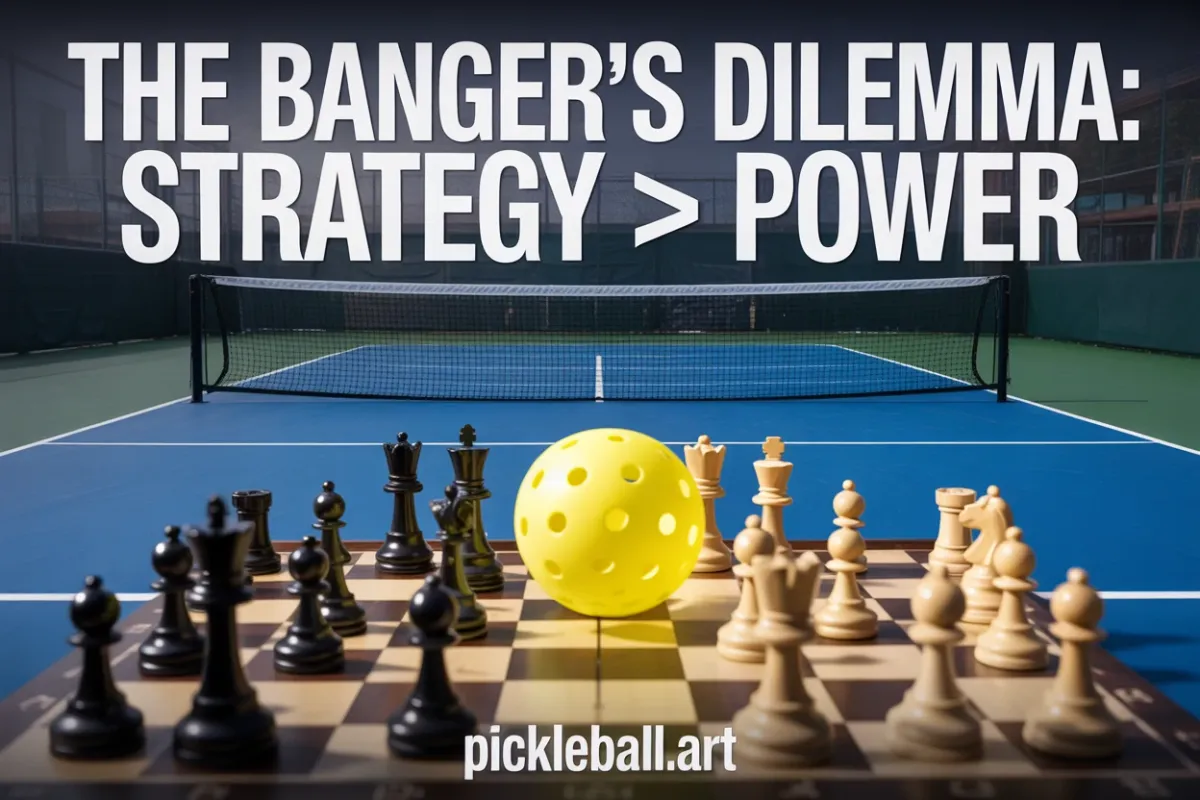
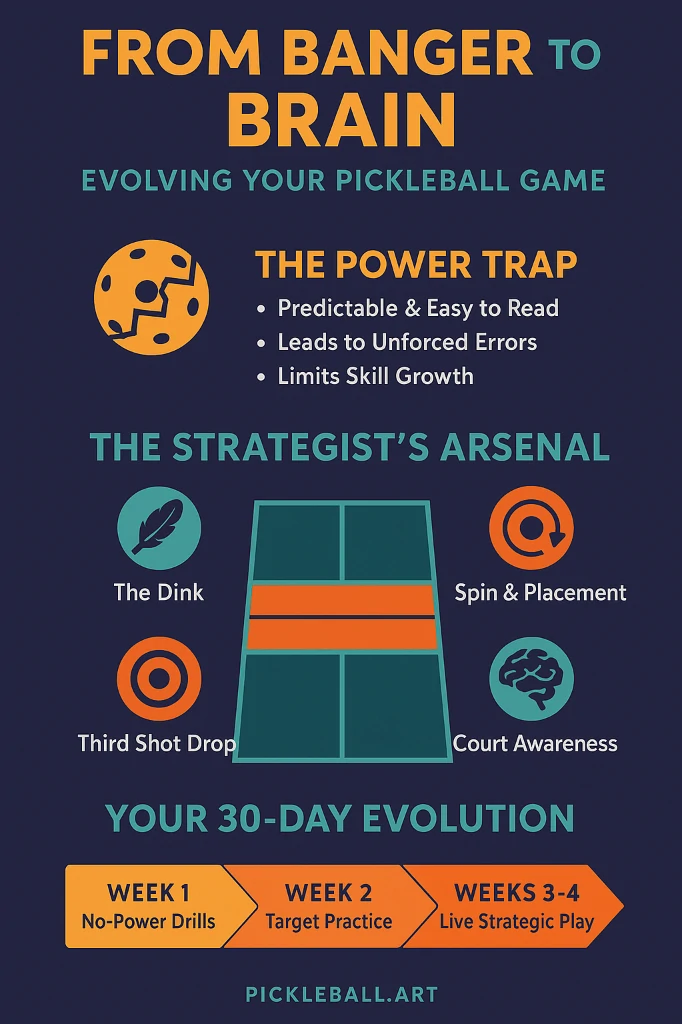
Power is a tool in pickleball. Its value depends on the ball you receive, your balance, the available target and what the opponents can do with the reply. A softer shot can create time or change an angle; a firm drive can pressure a suitable target. The useful skill is choosing deliberately.
This guide offers a decision framework rather than declaring one style universally superior. Pair it with the opening-rally sequence so the shot choice fits the stage of the point.
Read the contact situation first
Before choosing pace, notice whether the ball is high or low, whether you can meet it comfortably and whether you are moving or balanced. A difficult reach changes what you can control. Trying to attack every ball the same way ignores that information.
Give yourself a target with margin. A shot aimed at an ambitious sideline can fail even when the chosen pace is appropriate. Compare the intended reply with the risk of missing the target entirely.
Use a drive for a purpose
A drive may pressure an opponent who is moving, challenge a comfortable target or produce a reply you can manage. It should have a destination and follow-up plan. The sound of a hard hit is not evidence that it created an advantage.
If opponents repeatedly block the drive back to an awkward location, change the pattern. You can reduce pace, choose another target or use a softer shot. Repeating maximum power without observing the reply gives the other side a predictable task.
Use a drop to change the rally's geometry
A drop attempts to land a softer ball near the opposing kitchen. It can create an opportunity to move forward, but a high drop can be attacked. The decision to advance should come from the actual shot and reply rather than from the name of the shot you intended.
Practice from several starting distances. Begin with a manageable target and repeatable contact, then add movement. The kitchen rules still apply when you reach the net; use the kitchen guide if the distinction between a bounced ball and a volley is unclear.
Reset when control matters more than attack
A reset is a softer defensive reply used to make the next ball less attackable. It can be appropriate when you are stretched, the opponent has created pace or you need time to regain balance. It is not a guarantee that the rally will become neutral.
Start with controlled feeds and try to send a manageable reply. When that works, add difficulty gradually. Chasing an unrepeatable perfect shot is less useful than learning which incoming balls you can soften reliably.
Compare choices with a simple worksheet
| Situation | Possible choice | Question after the rally |
|---|---|---|
| Comfortable higher ball | Controlled attack | Was the target sensible? |
| Deep return with time | Drop or purposeful drive | Did it permit a safe next step? |
| Stretched defensive contact | Reset or controlled recovery shot | Did the reply help regain balance? |
| Low ball near the kitchen | Soft placement with margin | Did it avoid offering an easy attack? |
These are practice options, not mandatory answers. A player's reliable shot range affects the choice. Record what actually happened instead of judging the decision only by whether the point was won.
Practice alternatives to your default
Choose a cooperative drill that repeats the same incoming ball. Alternate a controlled drive and a softer option, observing the partner's reply. Then play a game segment where you state the intended target to yourself before contact.
When reviewing, distinguish a poor decision from a poorly executed reasonable decision. The first needs a tactical change; the second may need technical practice. For repeatable tasks, use the partner-drill plan.
Keep the discussion useful with a partner
Agree one pattern to try rather than labeling a partner a “banger.” “Let's compare a deeper return and a controlled third shot” gives a concrete task. Ask before offering advice and review between games.
The USA Pickleball sportsmanship guide supports a respectful setting for that work. The goal is to expand the pair's options so power and touch can both serve the next decision.
Frequently asked questions
Is power bad pickleball strategy?
No. A controlled attack can be useful when the ball, balance and target support it. The problem is using the same pace without reading the situation or reply.
Should beginners avoid dinks and drops?
Learn them with manageable cooperative feeds. A soft shot is not automatically easy or safe, but it provides another option alongside controlled drives.
How do I review a lost rally?
Ask whether the shot choice fitted the situation and whether it was executed as intended. A good decision can be missed, and a risky decision can occasionally win.