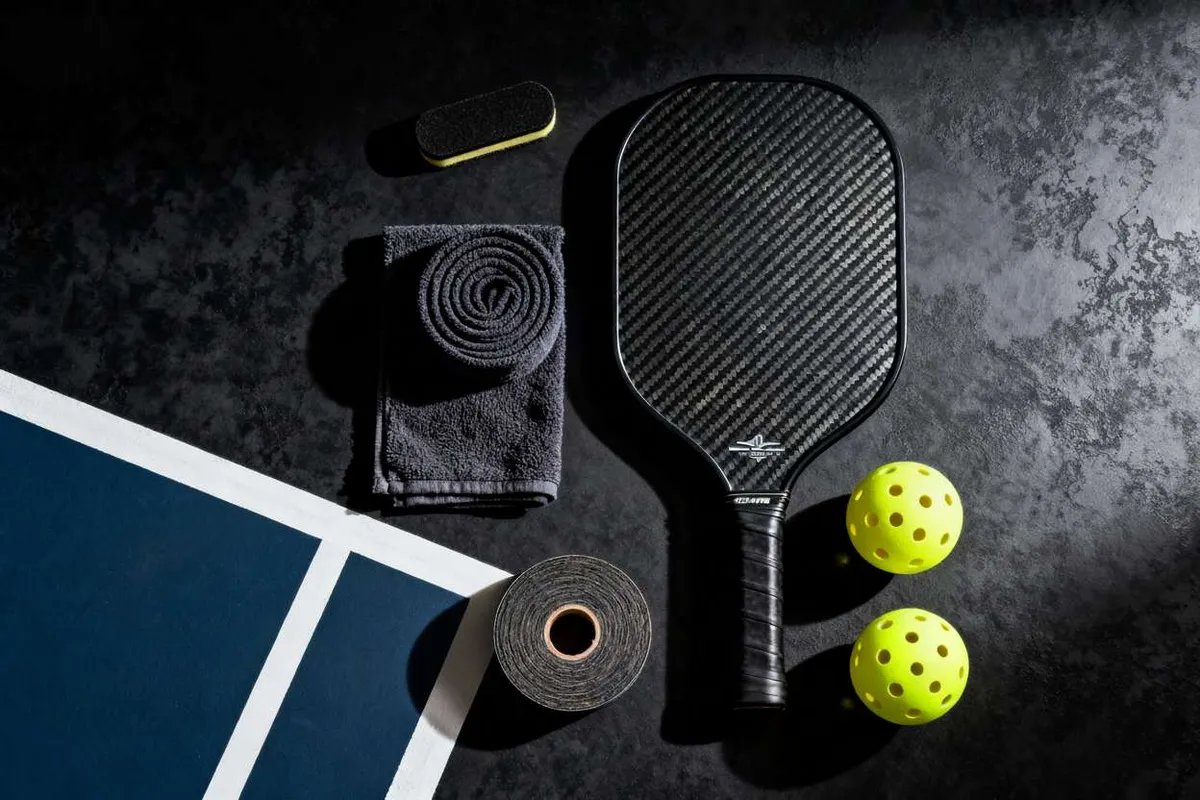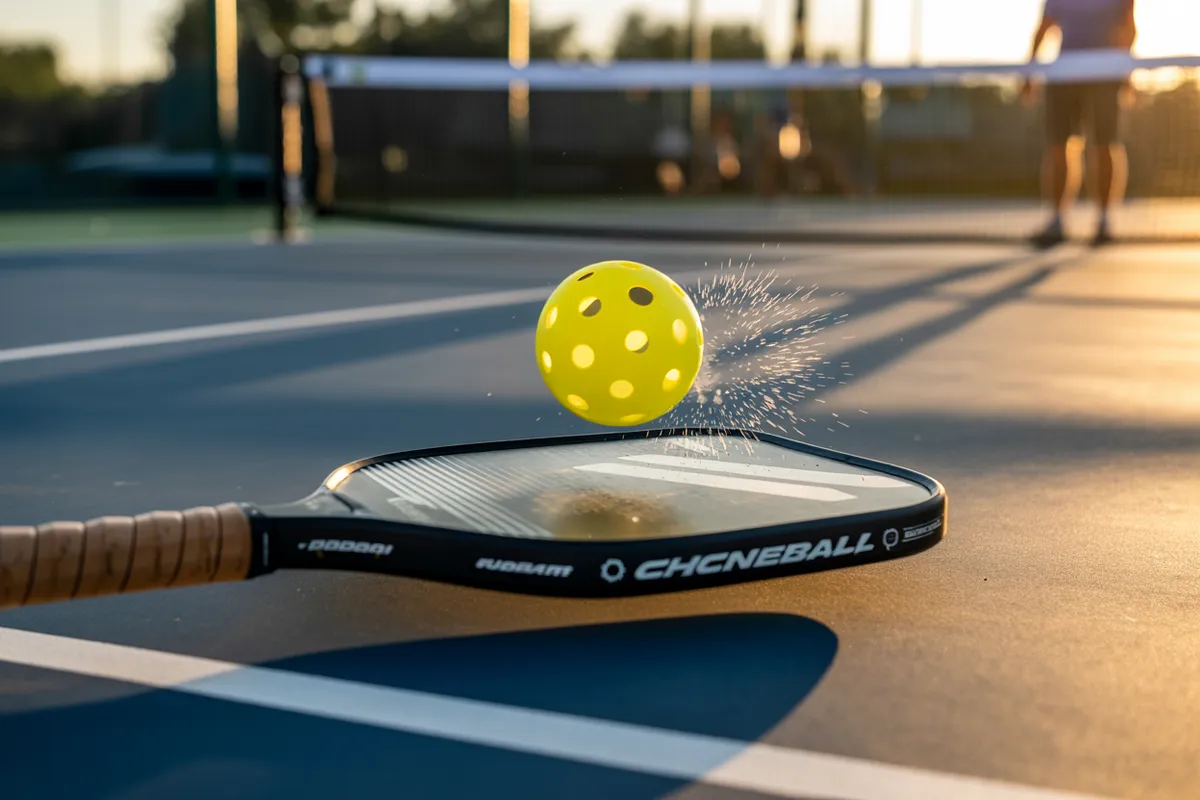
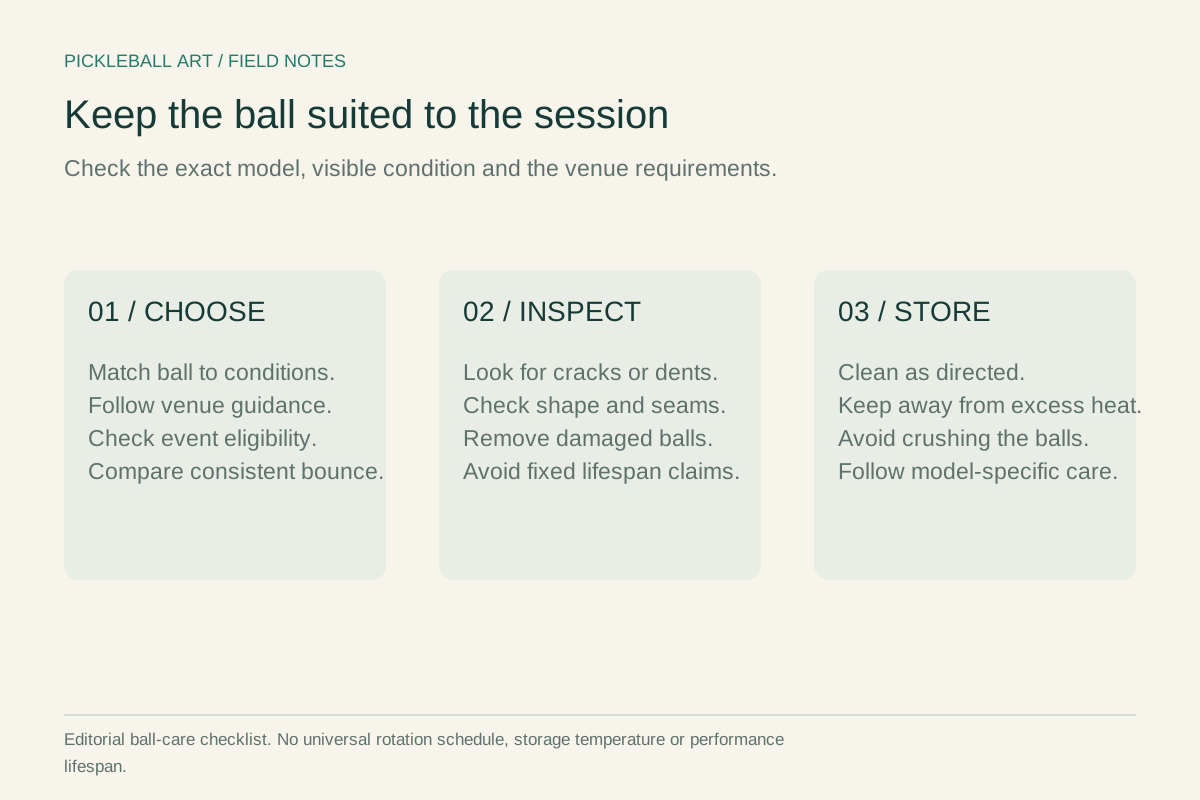
The right pickleball ball starts with the place and format in which you play. A club or event may specify an exact model; a casual group may choose one together. Within those requirements, consider visibility, the surface, conditions and whether your balls remain consistent and undamaged.
This guide explains a selection process rather than presenting an original test ranking. Terms such as indoor and outdoor are useful starting points, but they are not a substitute for the manufacturer’s guidance or an event’s approved-ball requirements.
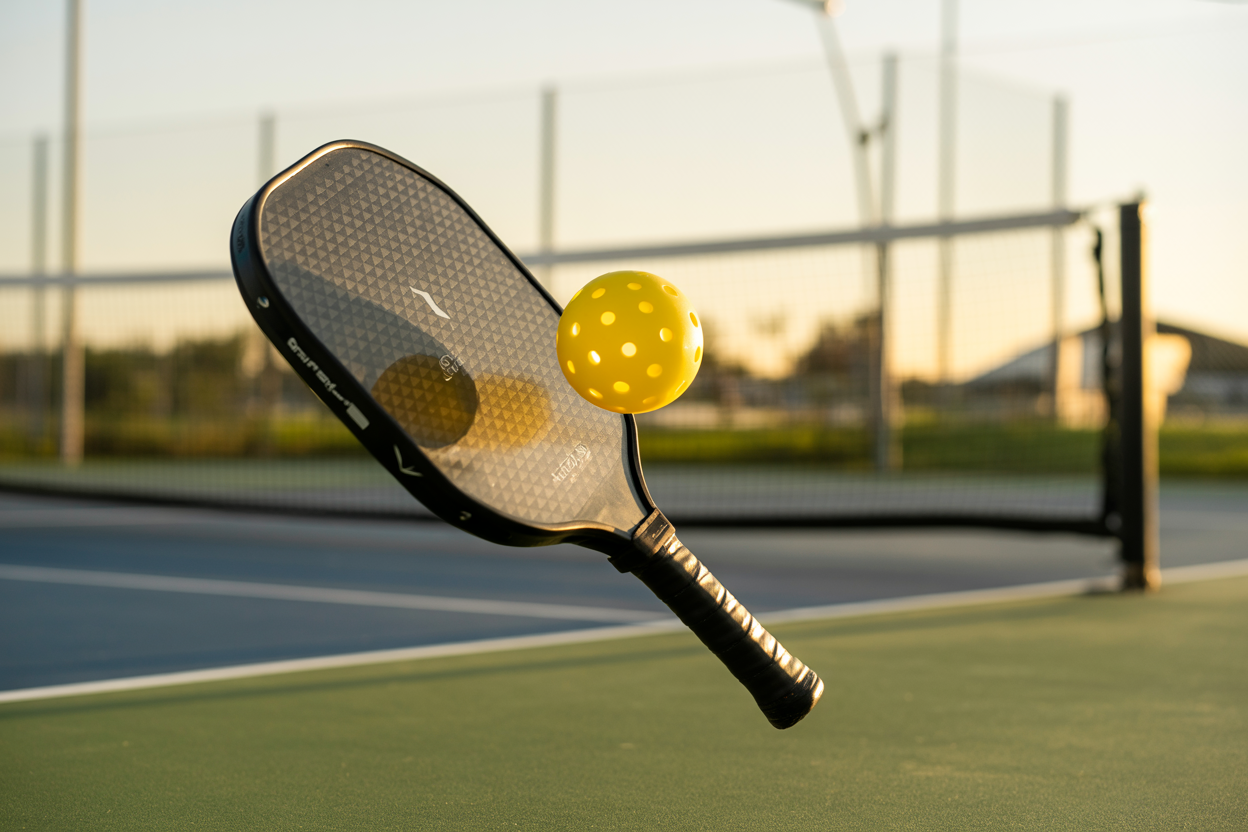
Start with the court and event
Ask the facility or organizer which ball is used. An indoor sports hall, a sheltered outdoor court and an exposed asphalt court can place different demands on a ball. Follow a required tournament model even if you prefer another ball in casual practice.
For sanctioned play, check the exact model in the USA Pickleball approved ball list. Approval means it meets the applicable equipment criteria; it is not a recommendation that the ball will be your favorite or the longest-lasting choice.
Understand indoor and outdoor design choices
Indoor-design balls commonly use larger holes, while outdoor designs commonly use smaller, more numerous holes. Manufacturers also choose different materials and constructions. Those patterns help explain product labels but do not establish every model’s speed or durability.
Use the manufacturer’s stated application and try the ball on the actual court. If a group changes models, allow time to get used to the new bounce and feel. Avoid judging one ball on a sports-hall floor and another on a rough outdoor court as though only the ball changed.
Check visibility against your surroundings
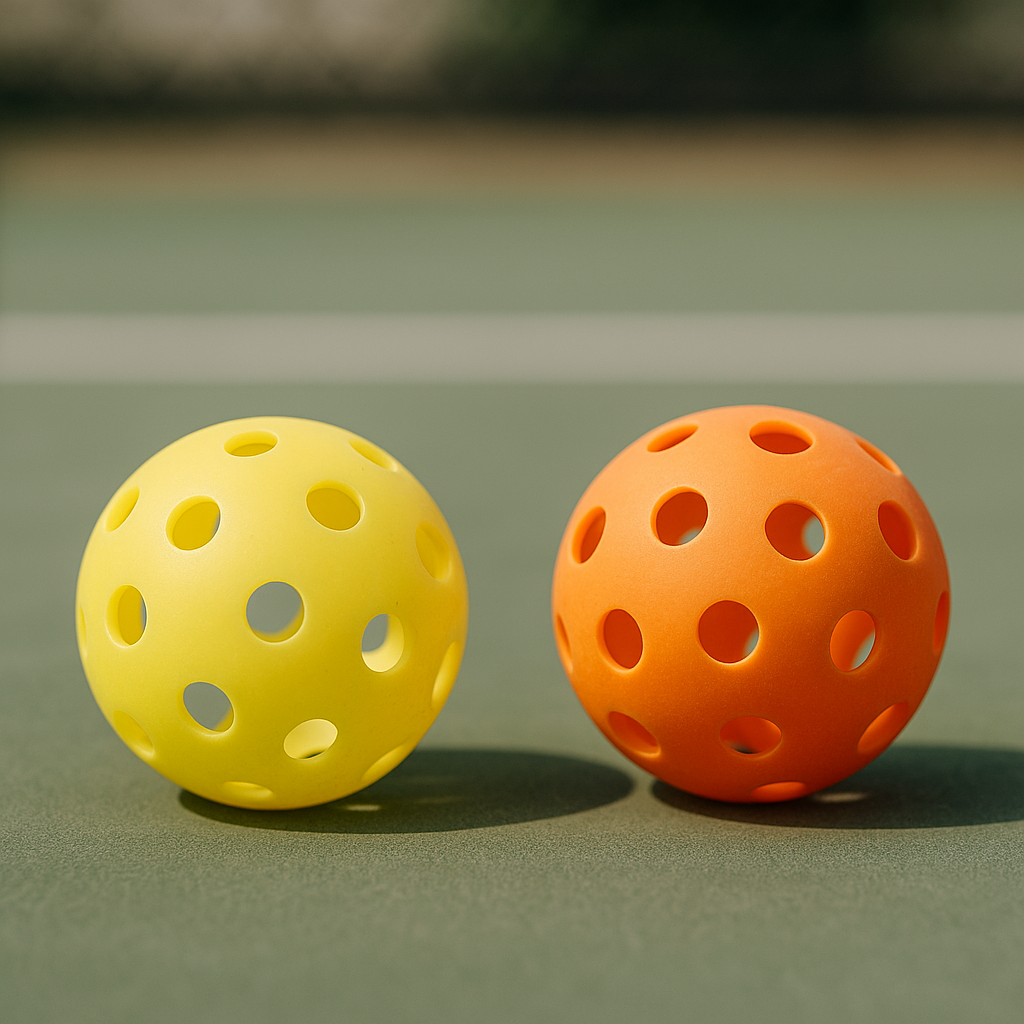
Pick a permitted color that your group can see against the court, walls and background. Visibility changes with light and surroundings. A color that works in bright outdoor light may be less easy to track in a darker hall.
Check how the ball looks from both ends of the court and during a low rally. If an event restricts colors or uses a supplied ball, follow those requirements. Good visibility is a practical selection criterion, not a measured guarantee of faster reactions.
Compare like with like in casual practice
Try a short series of ordinary serves, returns, dinks and groundstrokes with the same players on the same court. Notice whether the ball is easy to see, feels consistent and suits the group’s session. Use several balls of each model where practical so one damaged example does not determine your opinion.
Record the court, conditions and model rather than assigning a made-up universal score. Temperature, wear and surface conditions can affect the experience. Informal observations can help your group choose; they are not laboratory measurements of hardness, bounce or wind performance.
Inspect condition between sessions
Look for visible cracks, deformation and damage around the holes. If a ball behaves unexpectedly, stop and inspect it rather than continuing with a potentially damaged ball. Compare it with an undamaged example of the same model.
There is no fixed number of games after which every ball must be discarded. Use its actual condition and the manufacturer’s advice. Store balls away from avoidable prolonged heat or other conditions the manufacturer warns against. Keep a replacement available when organizing a session.
Assess value without invented lifespan claims
Compare current package size, unit cost, delivery cost and the model actually supplied. A mixed-color pack is not necessarily the same order as the specific competition model your facility requests. Check what can be returned and whether opened packages are eligible.
For balls you already use, you can record how many needed replacement and under what conditions. That is more informative for your group than a universal claim that a ball lasts a certain number of hours. Avoid treating a familiar brand name as proof that all its models have the same approval or construction.
Use the standards for technical questions
The USA Pickleball equipment standards manual is the source for official ball specifications and testing requirements. Use it when exact dimensions or compliance matter rather than copying an old comparison chart.
For a focused comparison, continue with the indoor-versus-outdoor ball guide or the ball selection checklist. Choose a model that fits the session’s requirements and your observed playing conditions.
Frequently Asked Questions
Should an indoor or outdoor ball be used?
Start with the facility’s or organizer’s requirement and the manufacturer’s intended application. Court surface and conditions matter as well as whether the court has a roof.
Does approval mean a ball is the best choice?
No. Approval establishes compliance with applicable equipment criteria. Visibility, playing preferences, conditions and event requirements still affect the choice.
How can two models be compared fairly?
Use the same court, players and conditions, inspect the balls and try normal strokes. Treat the results as informal observations rather than a universal laboratory ranking.
When should a ball be replaced?
Inspect for cracks, deformation and irregular behavior, and follow manufacturer advice. There is no single game-count lifespan for every model and condition.
Where are official ball specifications published?
The USA Pickleball equipment standards manual contains official specifications and testing requirements; the approved ball database identifies currently listed models.