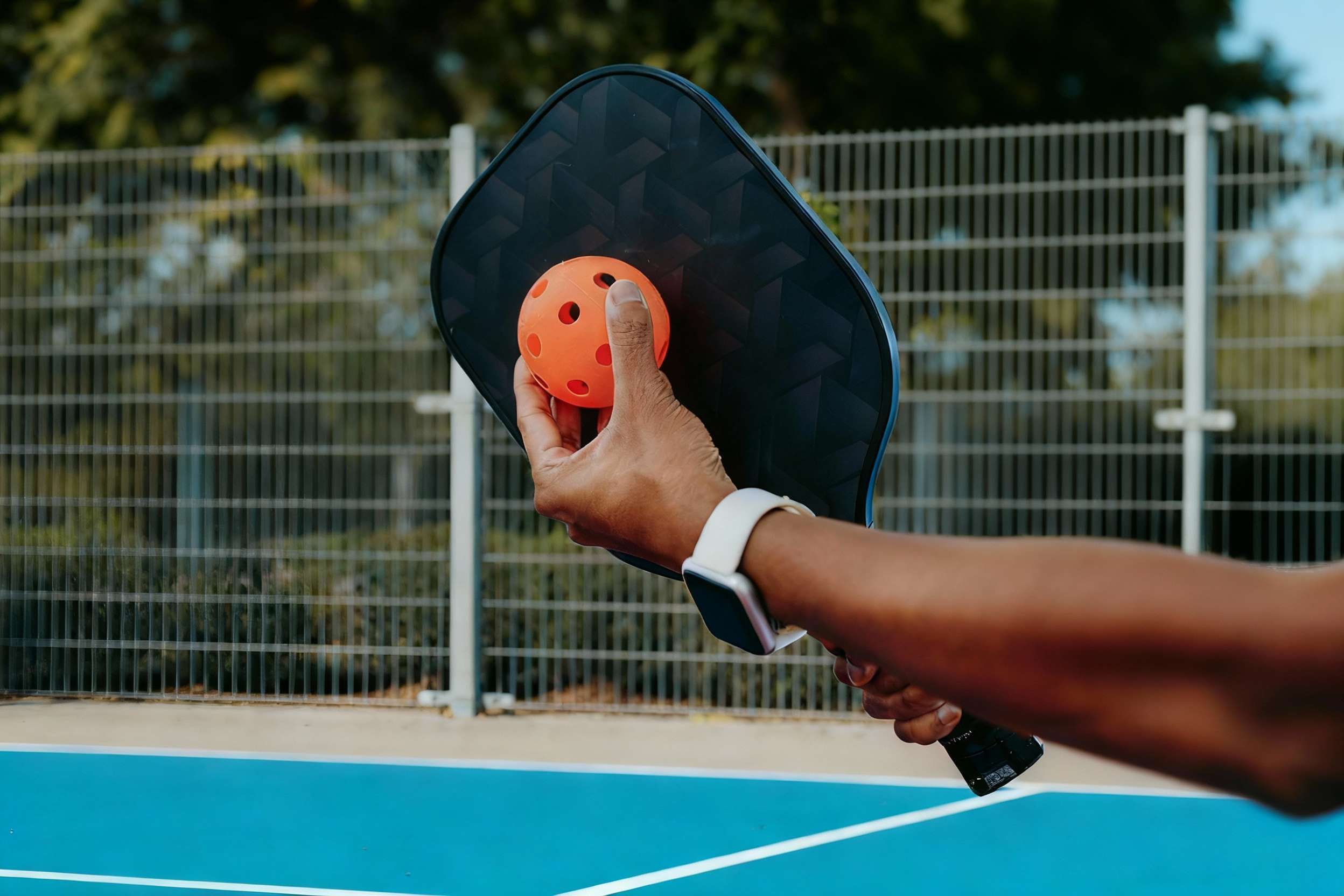
Indoor and outdoor pickleballs are product categories designed around different playing conditions. Choosing between them begins with the court surface and the session's rules, not simply whether there is a roof overhead. A covered hard court may use an outdoor ball, while a gym may specify an indoor model.
This guide explains the distinction. For buying quantities, comparing samples and checking worn balls, use the ball-selection and replacement plan.
Ask the venue which ball it uses
Confirm the model when joining a club session or reserving a facility. A venue may have selected a ball that works with its floor and players. Using the same model keeps the session consistent and avoids a debate every time someone changes the ball.
If you are entering an event, check the organizer's chosen ball. The USA Pickleball Equipment Standards Manual states that the tournament director chooses the tournament ball, and a ball for a USA Pickleball sanctioned tournament must appear on the approved list.
Compare intended use rather than memorizing a hole-count rule
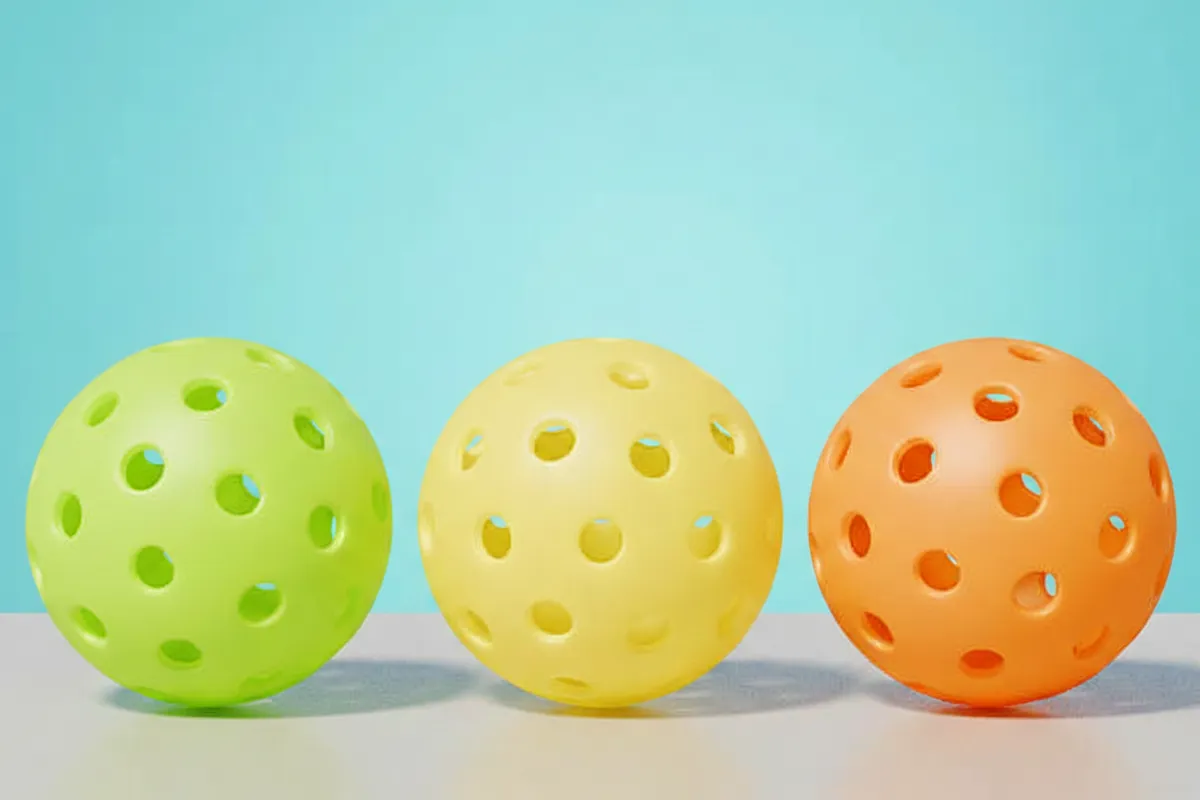
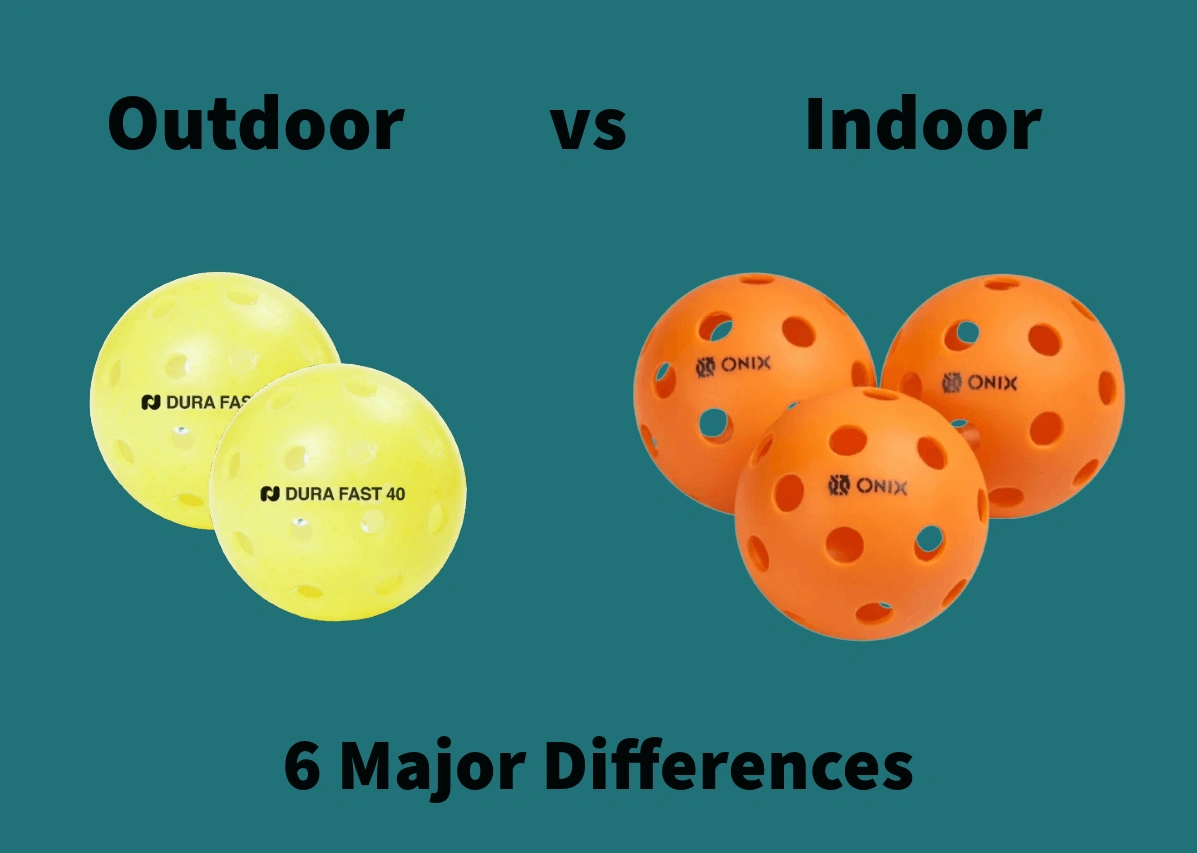
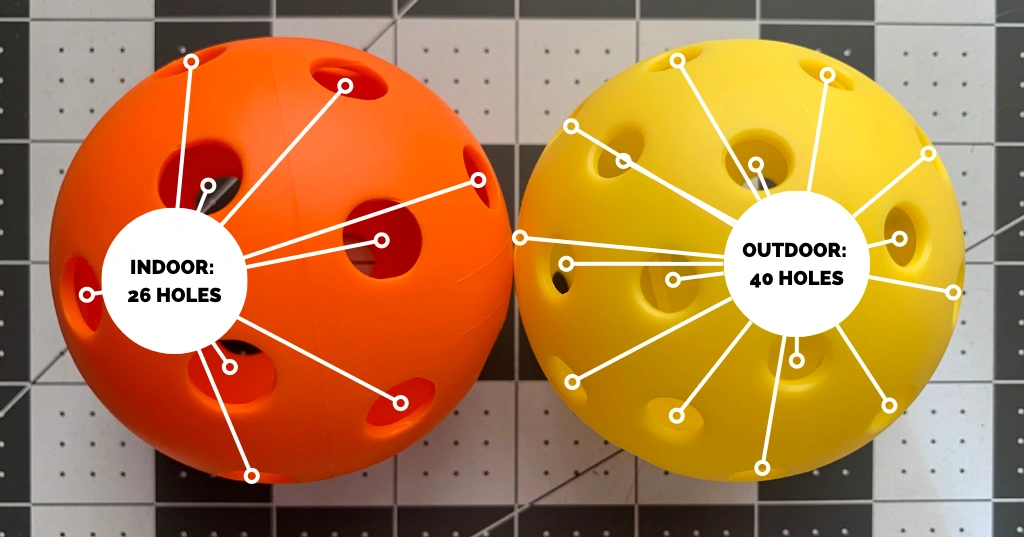
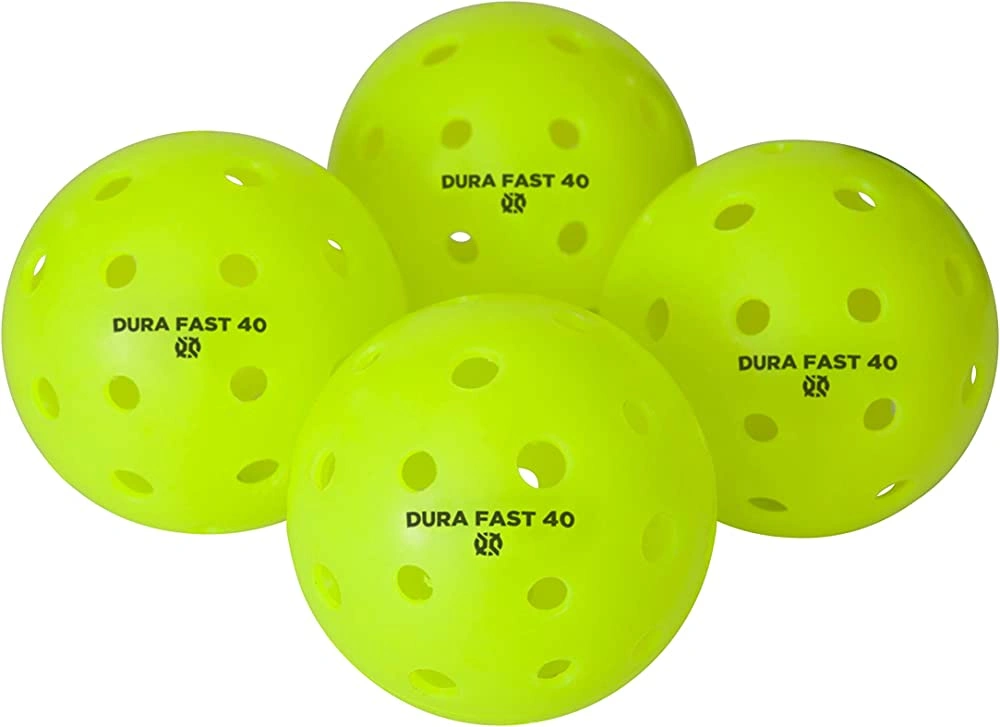
Many players recognize indoor models by larger holes and outdoor models by smaller holes, but inspect the exact product. ONIX describes its Fuse Indoor ball as having a larger hole pattern for indoor play. Franklin lists 40 holes on the X-40 Outdoor ball.
Those descriptions are examples, not proof that all balls share the same construction. The equipment manual permits a range of 26 to 40 circular holes. It does not require every indoor ball to have one exact count and every outdoor ball another.
| Question | Indoor category | Outdoor category |
|---|---|---|
| What to inspect first? | Maker's indoor designation and facility recommendation | Maker's outdoor designation and surface recommendation |
| What design may differ? | Hole pattern and construction vary by model | Hole pattern and construction vary by model |
| Does the roof decide? | No; check the actual floor | No; covered hard courts may still use this category |
| What matters for an event? | Organizer's chosen model and applicable approval | Organizer's chosen model and applicable approval |
Expect the feel to change when the model changes
A different ball can change how the rally feels on a particular floor. When you switch, allow a short warm-up with controlled exchanges and routine serves. Do not assume an unexpected bounce means the paddle or your technique has suddenly failed.
Compare models on the same surface. A ball tested in a gym and another tested on an outdoor acrylic court cannot support a fair direct conclusion about speed or control. Wind, temperature and equipment condition also deserve a note when they differ.
Understand what approval establishes
The USA Pickleball ball database lets you search by brand, model and type. Check the exact identification rather than a similar package name. Approval relates to the equipment requirements; it is not a ranking of comfort, visibility or useful life for your group.
A ball can meet the relevant standards when supplied and later become damaged. Inspect condition before play. Do not keep a visibly cracked ball in use simply because the package carries an approval logo.
Choose visibility with the actual background
Look at the ball against the court, fencing, walls and available light. Ask the players who will use it whether they can track it comfortably. A color that stands out at one venue may be less clear against another background.
For organized competition, the permitted or selected color may already be specified. Check before buying a bulk pack. Recreational preference should not be confused with a rule granting a particular color access to every event.
Keep the session consistent
Use one model at a time when practical. If a ball is replaced because it is damaged, select another in comparable condition rather than mixing unrelated types mid-rally. Mark storage containers with the model and intended session so players can find the right supply.
Separate indoor and outdoor equipment where the venue uses both. That simple sorting step often prevents more confusion than trying to identify every ball by hole count at the beginning of a game.
A quick surface-matching decision
- Identify the actual court surface and ask the venue's preferred model.
- Read the maker's intended-use description.
- Check event selection and approval when relevant.
- Assess visibility and condition with the group.
- Warm up with that ball before comparing game performance.
If two models remain plausible, buy a small sample and compare them at the venue before buying in quantity. The best choice is the ball that fits the session's surface, rules and practical needs; a universal “fastest” or “most durable” claim does not answer those questions.
Ball shapes, hole patterns and court illustrations
Visual examples of equipment and court settings. Images are illustrative; current specifications and fit should be checked with the maker or retailer.
Frequently asked questions
Do all indoor pickleballs have 26 holes?
No universal indoor-only count follows from the USA Pickleball equipment standard. It allows 26 to 40 holes; check the exact model’s designation and specifications.
Should an indoor hard court always use an indoor ball?
No. The surface and venue recommendation matter. A covered acrylic hard court can use an outdoor-designated ball; confirm the model used for that session.
Does approval tell me which ball is best?
Approval establishes equipment eligibility under the relevant requirements. It does not rank every ball for your surface, visibility preference or expected lifespan.