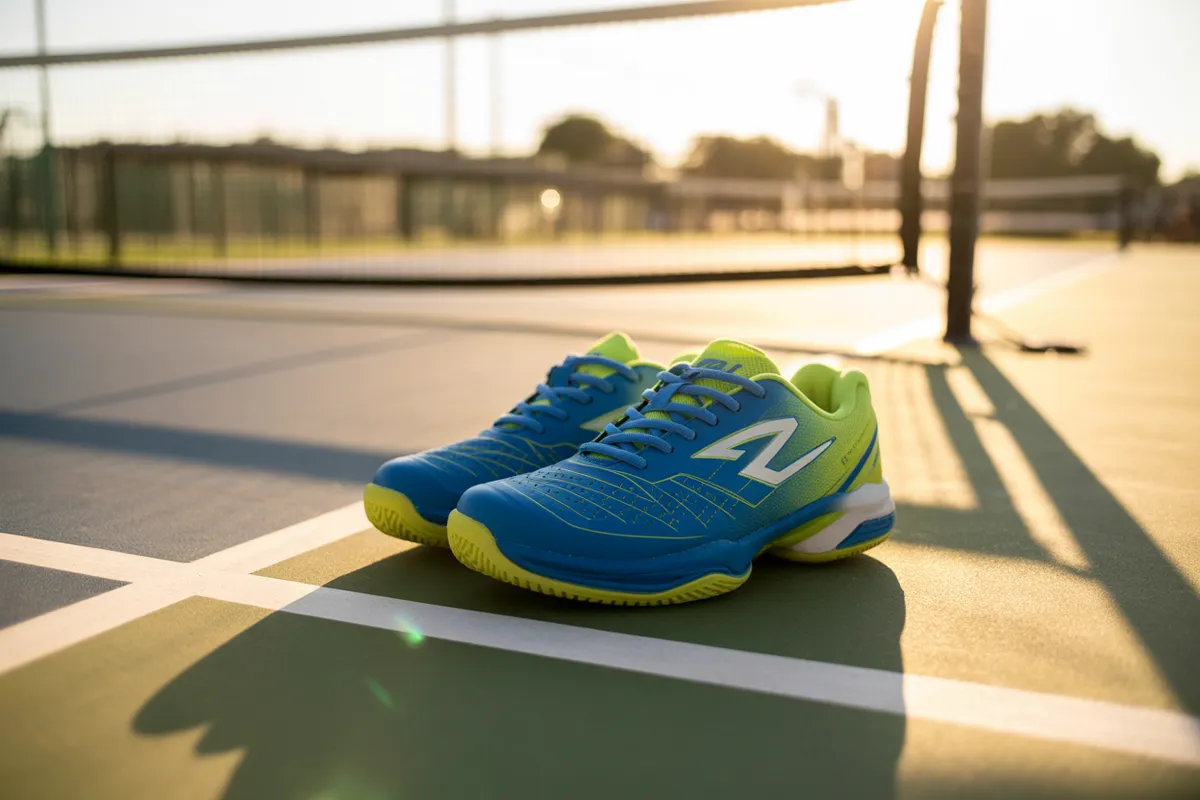
The useful question is whether a shoe fits your foot and the surface you play on. Pickleball includes stops and movement in several directions, so start with court footwear and evaluate its actual fit. A shoe labeled “pickleball” is not automatically a better match than a suitable tennis or indoor court model.
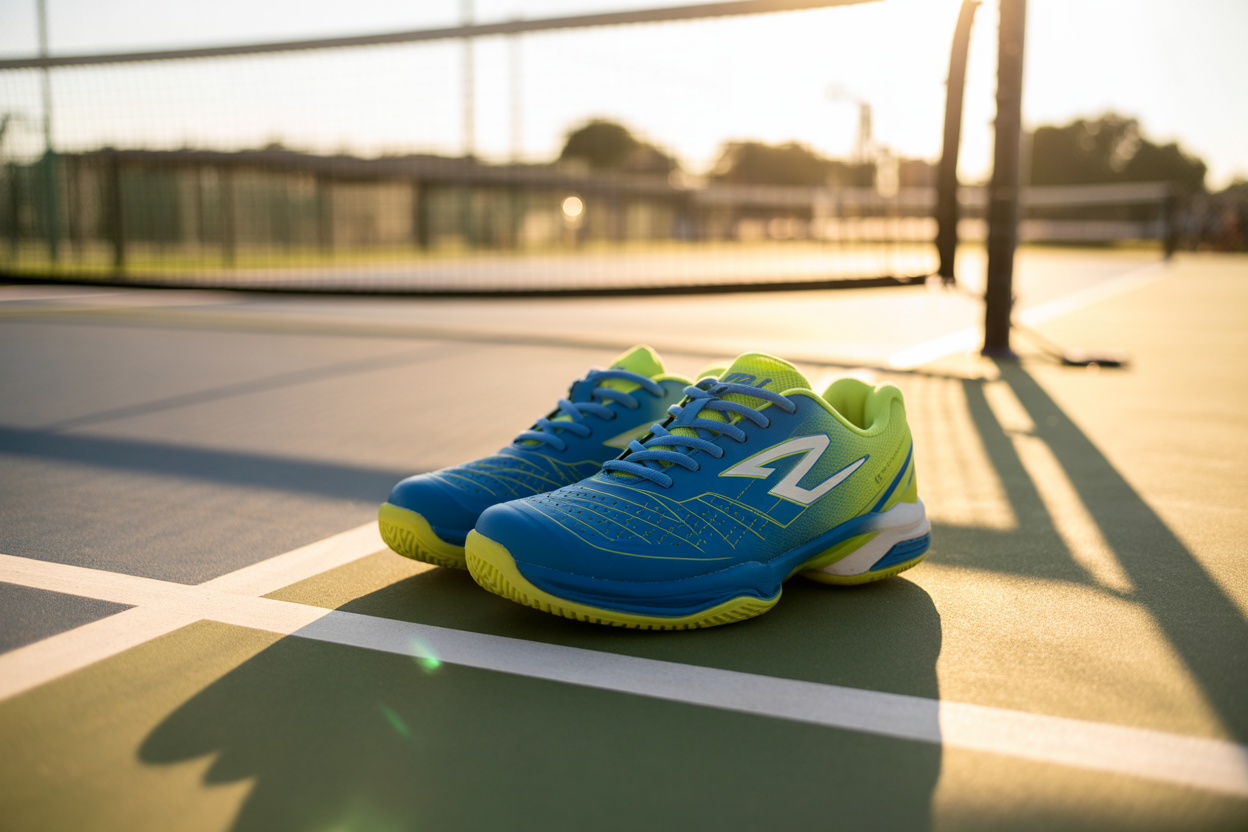
Start with your court surface
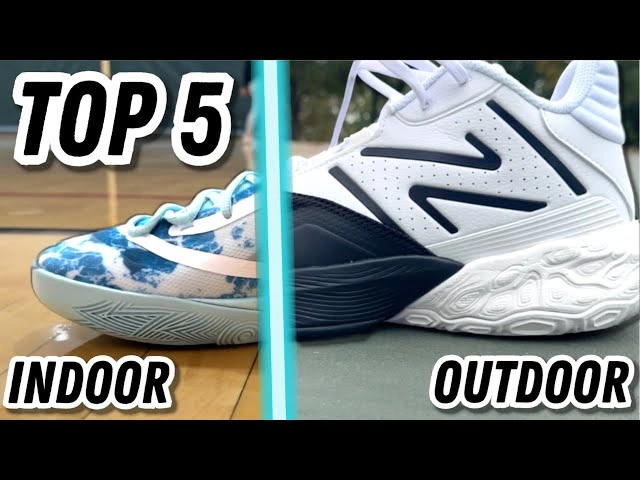
For indoor gym floors, confirm the venue's non-marking footwear requirement. For abrasive outdoor courts, look for an outsole the maker specifies for hard-court use. Indoor-specific rubber and outdoor designs may wear and grip differently, so read the intended use of the exact model.
Dust, water, damage and debris can change traction. No outsole makes a wet or unsafe court reliably playable. Inspect the area before testing movement and follow the facility's closure instructions.
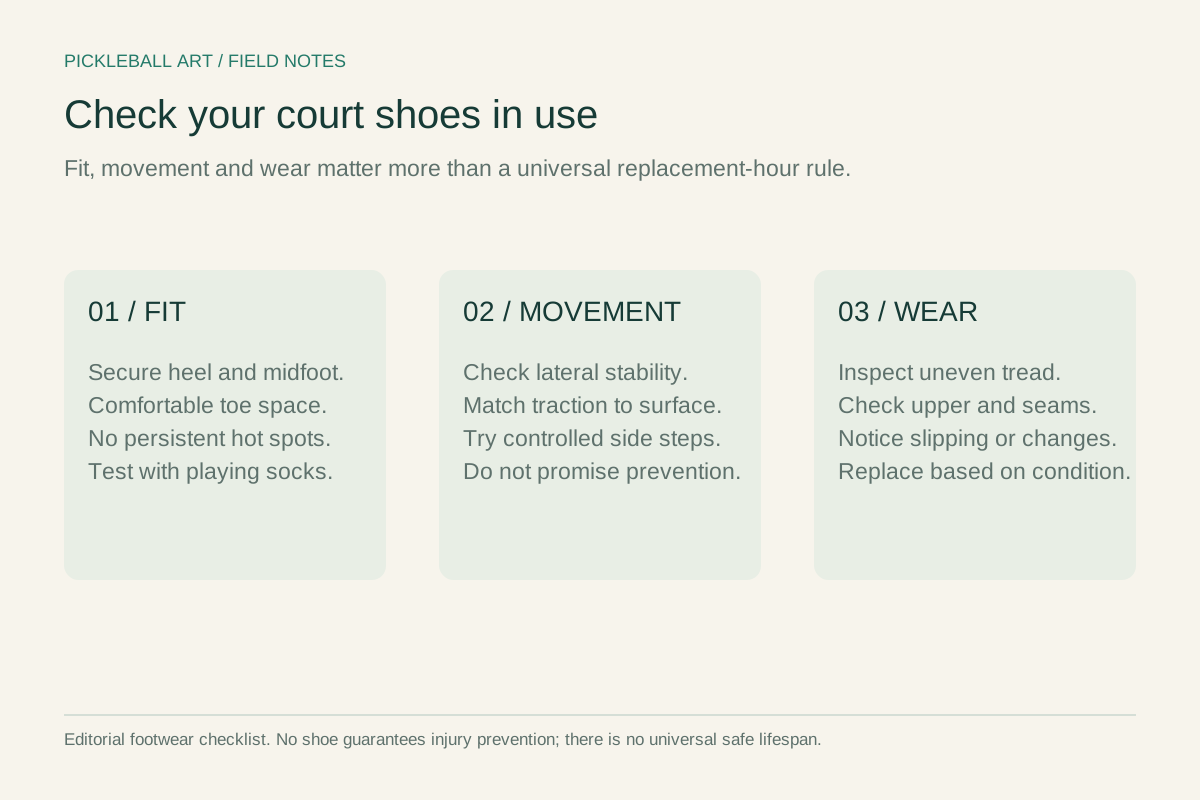
Check that your foot stays secure during lateral movement
Try both shoes with your playing socks. Lace them normally, walk and perform gentle side steps if the shop permits. Your heel should stay secure and your toes should have room without sliding forward or sideways. The upper should hold your foot without a pressure point across the forefoot.
The American Academy of Orthopaedic Surgeons footwear guide describes court shoes as designed for stability in multiple directions and recommends checking heel hold, toe room and fit with sport socks. These are practical starting points, not a guarantee against injury.
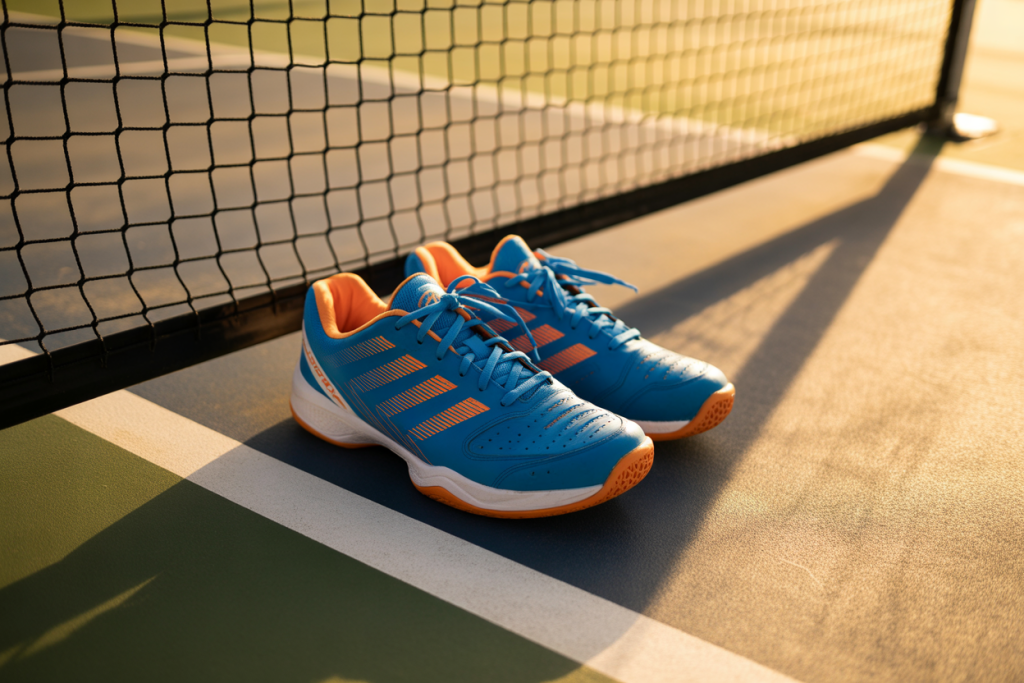
Balance cushioning with a stable feel
Very soft cushioning may feel pleasant while standing but different when stopping. A firm shoe may feel secure yet uncomfortable over your normal session. Compare both movement and comfort rather than choosing the thickest midsole or lightest listed weight.
A reinforced upper or support component describes construction, not a proven injury reduction for you. If you use an orthotic, test the complete setup and confirm that the shoe still closes securely. Persistent pain, a recent injury or a medical footwear need deserves individual advice.
Do running shoes work?
Running and court shoes are designed around different movements. A running shoe that feels comfortable going forward may not hold your foot securely during repeated sideways stops. Prefer an appropriate court shoe for regular play, while checking the actual model rather than treating every running shoe as identical.
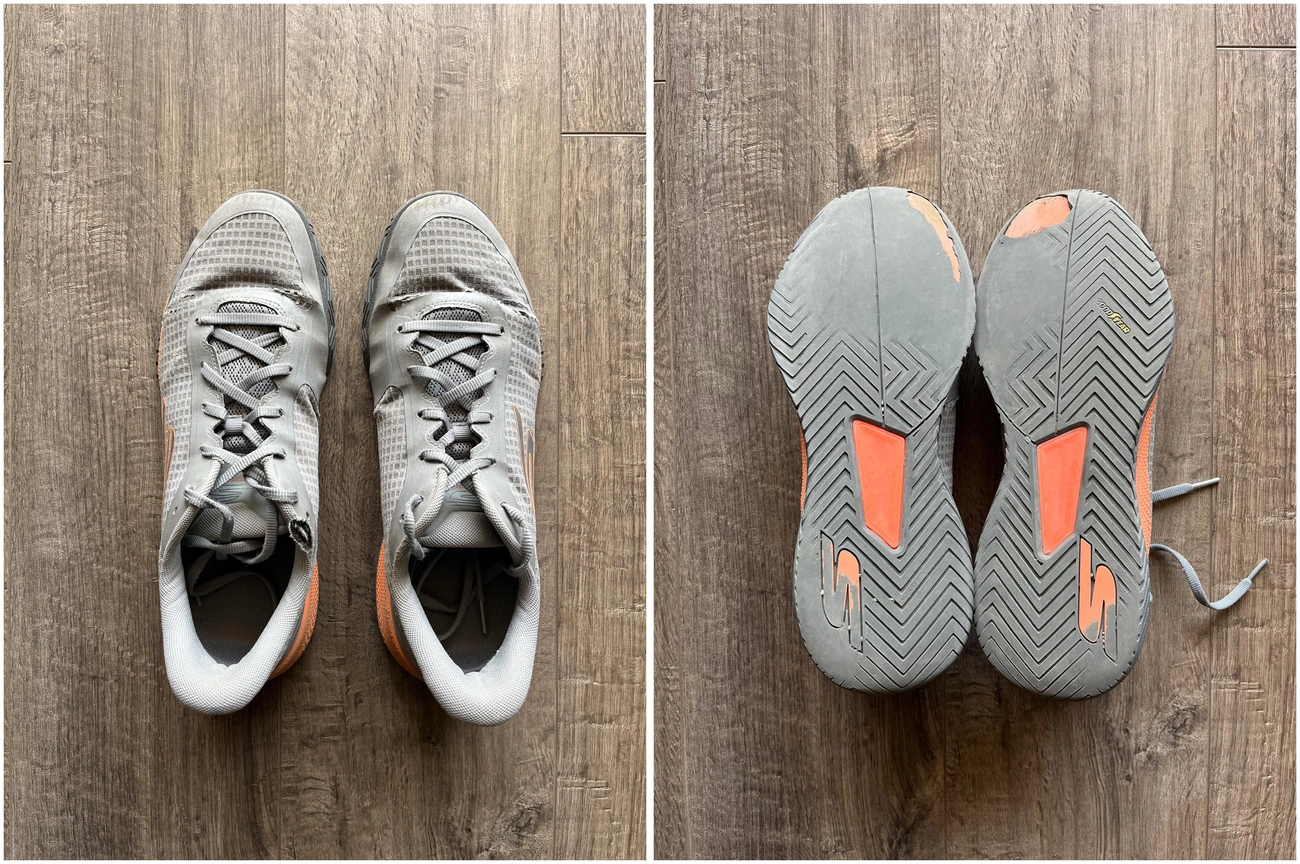
Use wear signs instead of a universal hour limit
Inspect the sole for smooth areas, holes and separation. Look for a stretched upper, persistent heel slip or cushioning that feels changed. Replacement depends on surface, movement, care and the shoe; there is no verified 50–60-hour rule for all pickleball players.
Dry shoes between sessions according to their care instructions and remove court grit. A second pair can be convenient when you play frequently or use different surfaces, but it is not required to begin. Avoid assuming that reduced squeaking alone measures grip.
A short buying checklist
- Confirm indoor or outdoor intended use and facility requirements.
- Try the complete setup with socks and any prescribed insert.
- Check heel security, toe space and controlled side steps.
- Compare cushioning during movement, not only while standing.
- Read the return policy before testing outside.
- Inspect wear periodically and stop using a shoe with a damaged structure.
For a wider comparison of fit and purchase considerations, see our pickleball shoe guide.
Frequently Asked Questions
Only if your surfaces and shoes require it. Check venue requirements and the intended surface of your shoe; one appropriate pair may cover your normal play.
No. Suitable footwear is one part of preparation. Surface conditions, movement, fatigue and individual health also matter.
Use condition and secure fit as your guide. A fixed number of months or hours cannot account for all players and surfaces.