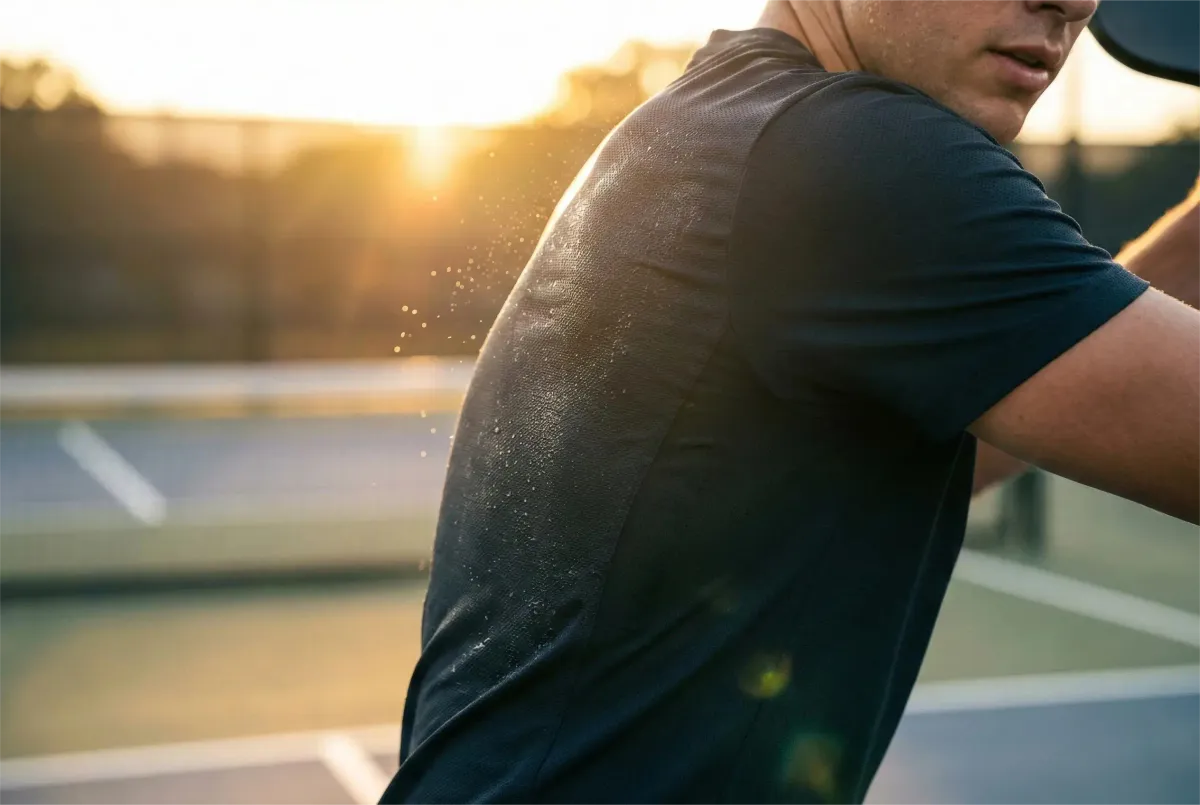
Moisture-wicking fabric moves liquid through a textile. Breathability describes moisture vapor or air movement, while drying describes how water leaves it. These properties are related, but a shirt can perform well in one and poorly in another.
For pickleball, the useful goal is a garment that feels comfortable during repeated movement and sweating. A fiber name or a “cooling” badge alone cannot establish that result.
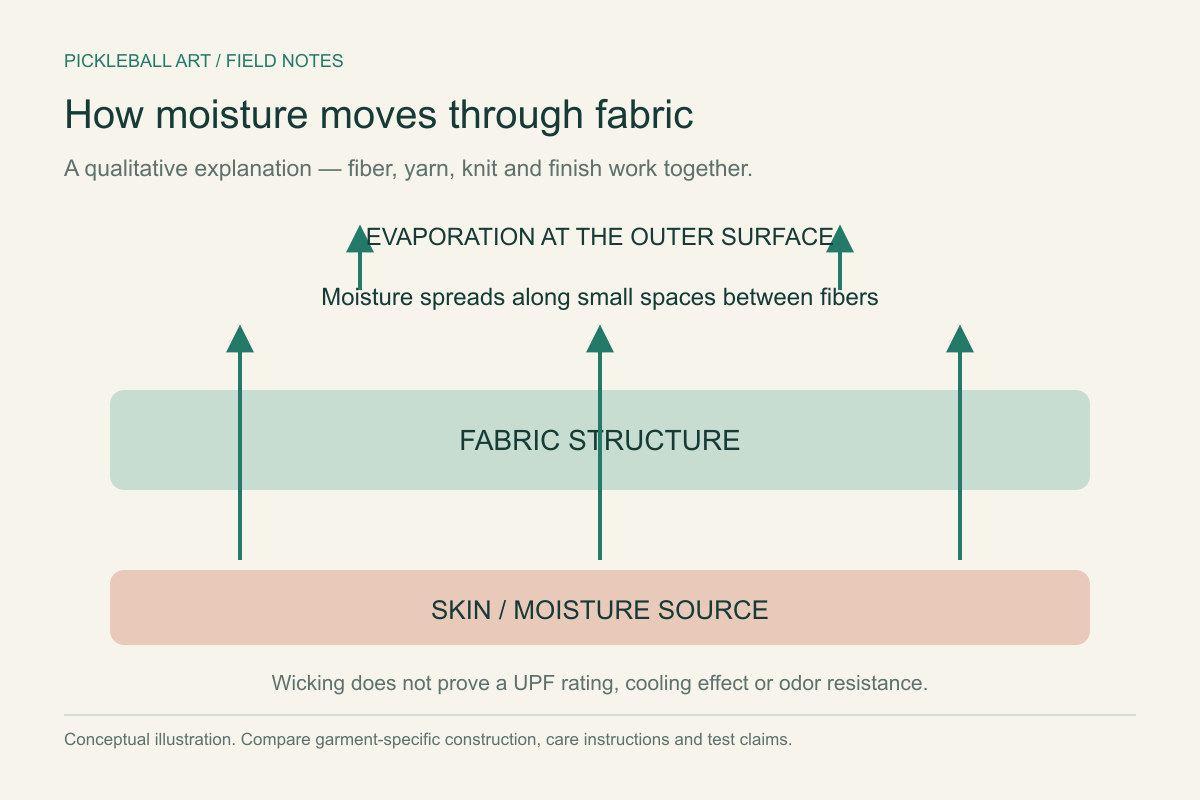
How Moisture Moves Through Fabric
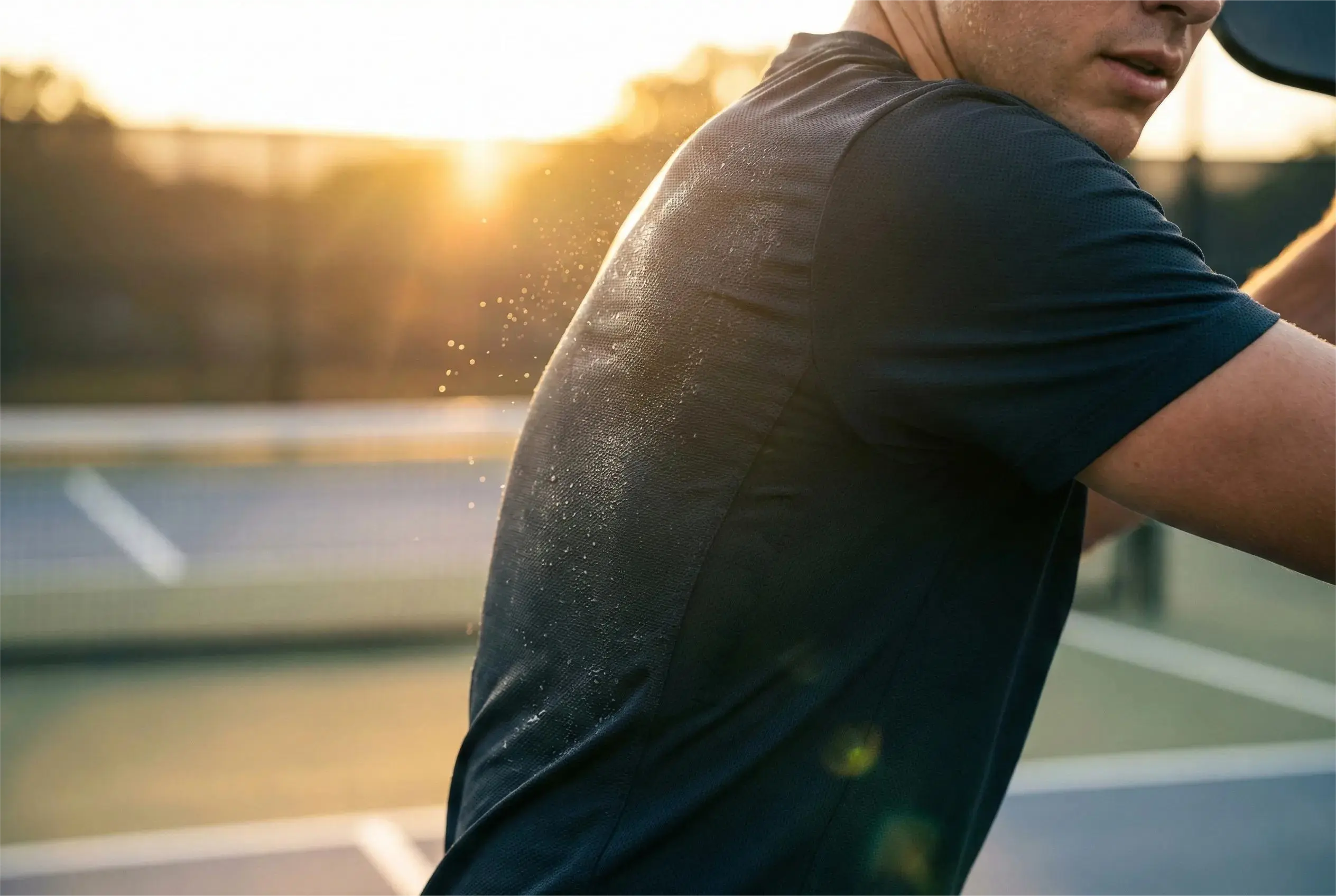
Water can travel through the small spaces between fibers and yarns by capillary action. The yarn arrangement, fabric structure and finishing treatment affect how it spreads. Spreading water across a surface may help evaporation when the surrounding conditions allow it.
AATCC TM195 evaluates liquid moisture management through objective textile measurements. AATCC also publishes separate methods for wicking, drying and water-vapor transmission. This distinction is useful: a liquid-wicking result is not automatically a complete measure of wear comfort.
Fiber Labels Are Only a Starting Point
Polyester is common in technical activewear; nylon, cotton and blends are also used. Cotton often takes up water readily, while many synthetic fibers absorb less water into the fiber itself. The finished fabric’s construction and treatment still matter. “Cotton is always bad” and “all polyester is performance fabric” are both poor shopping rules.
Cotton Incorporated’s TransDRY technical description gives an example of cotton yarn treatment designed for moisture management. It demonstrates why untreated and engineered fabrics should not be treated as the same product. It is a supplier description, not an independent test of every cotton garment.
What a Useful Performance Claim Includes
- Method: Which test evaluated the fabric?
- Property: Was it liquid spreading, drying time, air permeability or another measure?
- Comparison: What was the baseline, under the same conditions?
- Condition: Was it tested new or after laundering?
- Garment: Does the result apply to the item and color you are buying, rather than a different fabric?
These questions are more informative than an unsupported claim that a fabric improves performance by a fixed percentage. This article provides a technical shopping framework; it does not report original laboratory or on-court product testing.
Try the Garment Through Pickleball Movements
Check an overhead reach, a low ready stance and a sideways lunge. A shirt should not bind at the shoulder, and a skort liner should not need constant adjustment. Seams, waistbands and pockets can be more noticeable during movement than when standing in a fitting room.
Stretch percentage on a fiber label does not directly tell you how far the finished garment will move or how well it will recover. Knit structure, cut and fit also matter. Compare the size chart, then try the actual motions you expect to use.
Sun Protection and Heat Management Are Separate
Check a garment’s stated UPF if you want sun protection; do not infer it from thickness or color alone. The Skin Cancer Foundation explains UPF and garment protection, including how wetness and stretch can affect protection. Covered skin, exposed skin and the eyes require their own protection choices.
Light, comfortable apparel does not prevent heat illness. The CDC’s guidance for athletes in heat emphasizes changing activity conditions, breaks and hydration. Choose cooler times of day and stop if you feel unwell.
Care for the Fabric You Actually Bought
Follow the garment’s care label. Do not assume one washing routine suits every stretch knit, print, treatment or trim. Clean after sweaty use, dry as directed and avoid adding products the label advises against. If a garment’s feel changes after washing, inspect fit and residue before assuming its technical finish has failed.
Make a Better Comparison
Compare two garments against your own needs: climate, skin feel, freedom of movement, useful storage and care. Seek test documentation for a precise technical claim. For a practical garment checklist, see our five-point skort checklist.
Frequently Asked Questions
No. Wicking describes moisture movement through a textile; drying describes moisture leaving it. Separate measurements can evaluate each property.
No. Cotton fabrics differ in weight, structure and treatment. Choose a garment that is comfortable for your conditions rather than relying on the fiber name alone.
No. The fabric structure, garment cut and fit also determine movement and recovery.
No. UPF concerns ultraviolet transmission, while thermal comfort and heat safety are separate issues.
Look for the test method, comparison material, conditions and laundering history. A technical claim should describe the specific property tested.