Playing with less waste starts with ordinary decisions: use equipment that still works, maintain it, share items you rarely need and ask where worn-out gear can actually go. A new “eco-friendly” product is not automatically a better choice than using something you already own.
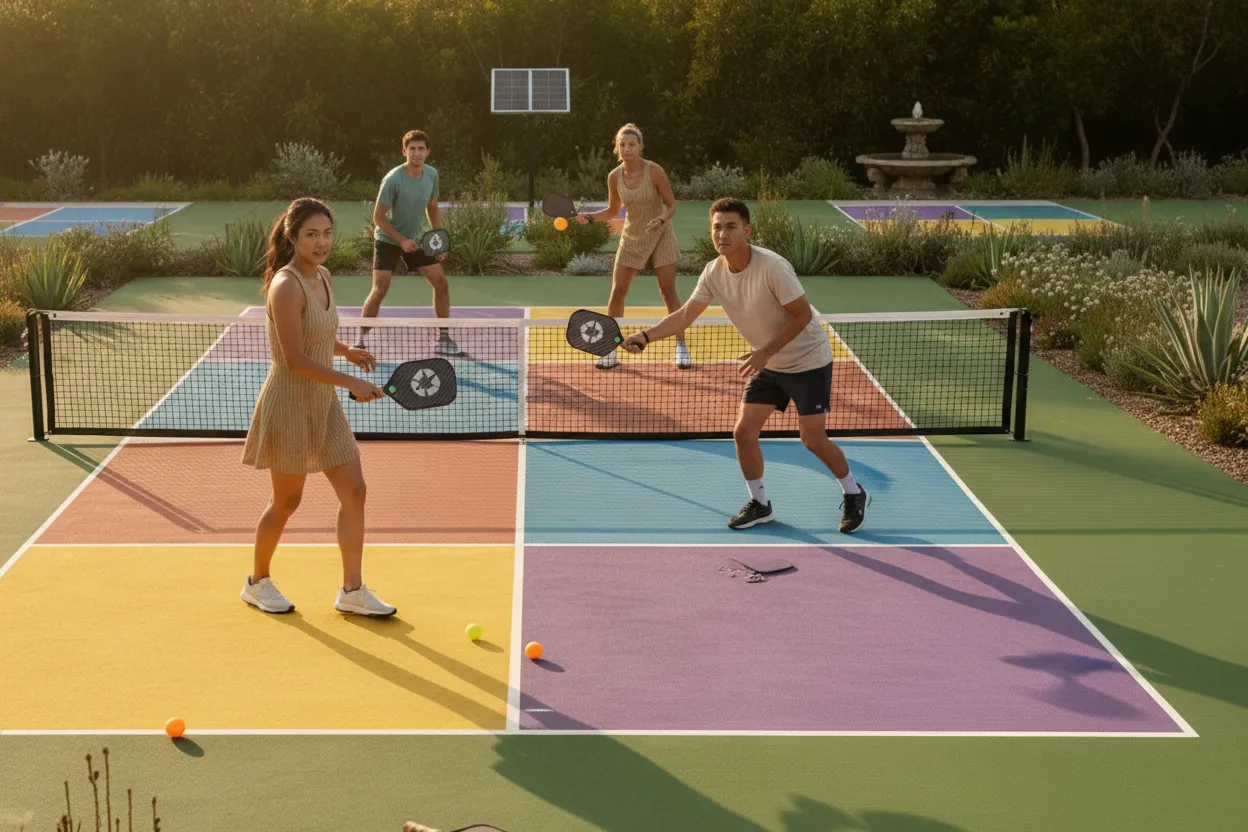
Read Environmental Claims as Specific Claims
The FTC’s Green Guides summary explains why broad environmental benefit claims need qualification. Look for a stated material, a defined recycled percentage or a named return program rather than an unexplained “green” badge.
Recycled content, recyclability and lower carbon impact are different assertions. A recycled component does not prove the whole paddle is recyclable, and a natural fiber does not prove a complete product has a smaller footprint. Resins, manufacturing, transport and durability also matter.
Keep a Working Paddle in Play
Replace a paddle for a clear reason: damage, changed playing requirements or a fit problem that a grip adjustment cannot address. Marketing generations alone are not a reason to discard usable equipment. Follow the manufacturer’s care instructions and avoid storage conditions it warns against.
If you buy a paddle with a recycled or plant-fiber component, check which part of the paddle the statement covers. Ask for the basis of any numerical impact comparison. Check the approved paddle database if sanctioned events are part of your plans.
Give Balls a Real End-of-Life Route
Inspect balls for cracks, distortion and inconsistent rebound. Retire damaged balls from match play. Some clean, intact balls that no longer suit matches can still serve noncompetitive drills, where their different behavior is understood.
Do not place a ball in curbside recycling merely because it is plastic. Check your local program or a collection scheme that explicitly accepts that ball material and product. Confirm collection locations, accepted condition and transport requirements before organizing a club bin.
Buy Apparel for Repeat Use
Choose clothing that fits your movements and care routine. A garment worn repeatedly is more useful than a supposedly sustainable purchase left in a drawer because the liner or waistband is uncomfortable.
For recycled-fiber labels, check whether the claim applies to the fabric, trim or the whole garment. Keep care practical: follow the label, repair a simple seam when suitable and donate clean usable clothing through a program that accepts it.
Reduce Unnecessary Travel and Shared Purchases
Try nearby sessions, combine errands or share a ride where convenient. The saving depends on the trips actually replaced; this guide does not assign a universal emissions percentage to carpooling.
Clubs can share ball collectors, demo paddles and occasional training equipment. Agree who stores and maintains it. Sharing only helps when the items remain usable and accessible.
Ask Better Questions About Court Projects
Court surface decisions need site-specific planning. Durable construction, drainage, repair options and lighting design should be discussed with the facility professional. Do not assume a recycled material, porous system or low-odor coating suits every playing surface or local drainage requirement.
Ask suppliers to document the exact claim they make. A “recyclable” tile is only practically recyclable if there is an available route for that product. A maintenance plan should include cleaning, repair and eventual replacement.
A Club Checklist You Can Use
- Audit what the club discards and why.
- Keep a small repair and spare-grip kit.
- Confirm an accepted ball collection route before advertising one.
- Set up a usable-gear exchange with condition checks.
- Compare vendors using documented product claims and total ownership needs.
- Review the actual waste collected and the destinations used.
Choose actions that you can verify. Avoid claims that one shopping decision erases the footprint of playing, and keep performance, safety and equipment approval checks alongside environmental considerations.
Frequently Asked Questions
No. Recycled content is one attribute. A complete comparison also needs information about construction, durability, manufacturing and end of life.
Only if the local program explicitly accepts that product and material. Check an accepted collection route rather than assuming all plastic is accepted.
Not automatically. Continued use and proper maintenance avoid an immediate replacement purchase; evaluate a new item when you need it.
Define what is collected, where it goes, who maintains the program and how the result is checked.
No. Evaluate the exact model’s fit, performance and approval status separately from its material claim.