A top pickleball paddle for one player may be a poor fit for another. Start with the shots or handling problems you want to address, then compare complete models through the same demo routine.
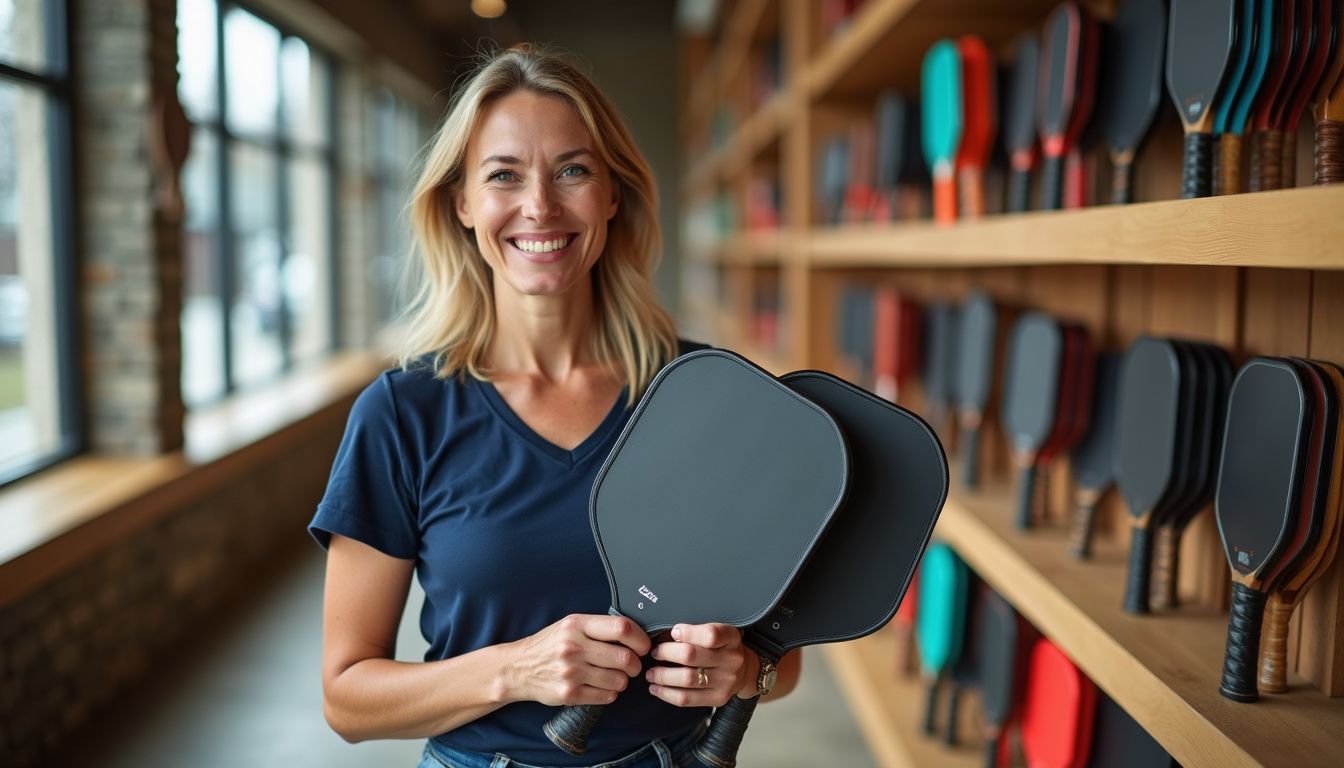
Match the Comparison to Your Game
| Need | Compare in a demo | Avoid assuming |
|---|---|---|
| Quicker exchanges | Ready-position changes and compact volleys | A lower static weight always means easier handling |
| Predictable soft shots | Repeated dinks and blocks with the same ball | A thicker core always has better control |
| Reach or two-handed backhand | Handle fit and face geometry | The longest paddle is best for every player |
| More comfortable use | Grip, balance and normal swings | A construction label prevents injury |
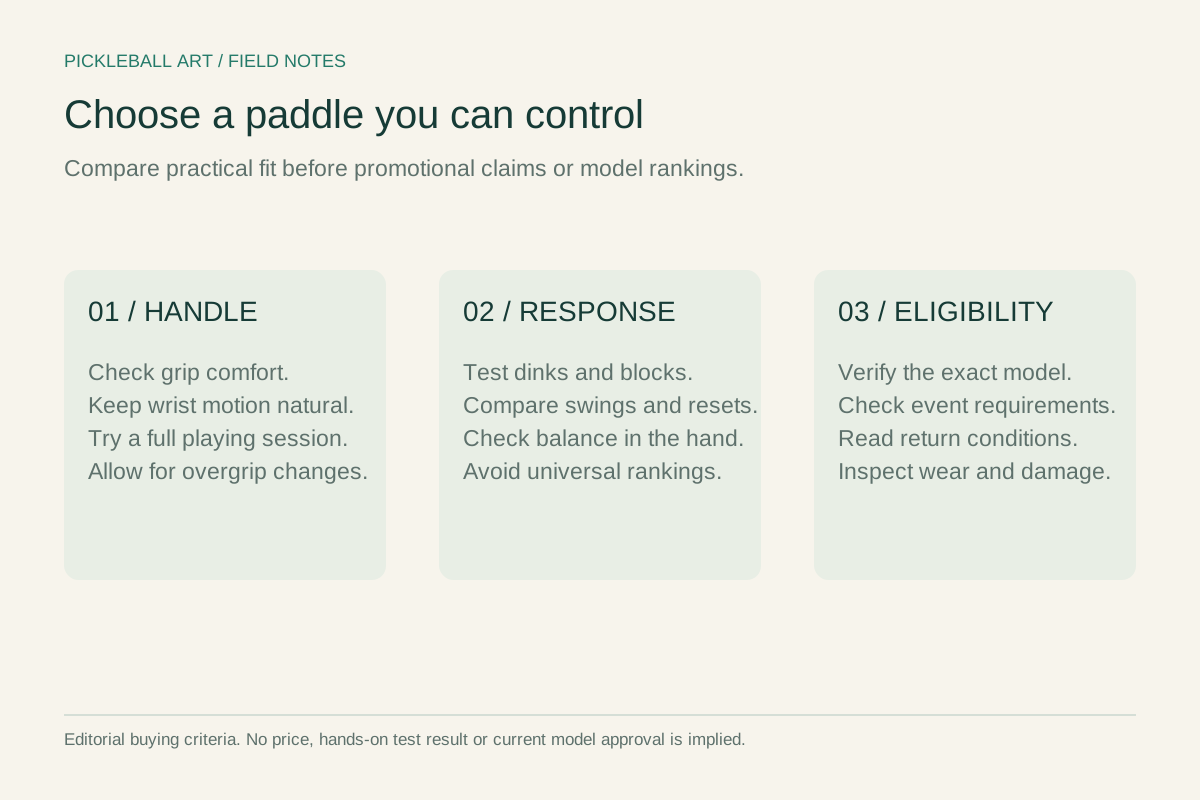
Understand Specifications Without Turning Them Into a Ranking
Static weight describes the paddle on a scale. Balance and mass distribution affect how it moves. Face material, core and bonding interact in the finished item. A carbon-fiber label alone does not establish spin, control or durability superiority over every fiberglass model.
The Vatic Pro PRISM page illustrates why variant selection matters: one family can include different shapes, thicknesses and handles. Compare the exact item rather than a range name.
Use a Consistent Demo Routine
Use the same ball and similar feeds. Begin with serves and returns, then soft shots, blocks and controlled drives. Note what becomes easier and what becomes less predictable. If you keep changing technique during the comparison, it is difficult to attribute the result to the paddle.
Check Approval Before a Competition Purchase
Use the current approved paddle list and your event’s equipment rules. Quiet recognition is a separate designation, and model status may change. Do not rely on an old review’s “approved” description.
Include Ownership in Your Decision
Compare current price, demo return terms, warranty and cleaning instructions. Inspect your existing paddle first; grip wear or an unsuitable grip size may be addressable without replacing the entire paddle.
This is a decision guide, not a five-product laboratory ranking. For detailed criteria, read how to choose a paddle and the materials guide.
Frequently Asked Questions
There is no universal choice. Fit, handling, preferred shots and approval requirements determine a useful shortlist.
Not by itself. Compare whether you can use the rebound consistently on the shots your game needs.
No. Complete construction and technique matter; a material label alone does not establish a ranking.
Equipment status and event requirements can change. Verify the exact model close to the event.
No. Consult the manufacturer or seller for current terms; this guide does not invent measured scores.