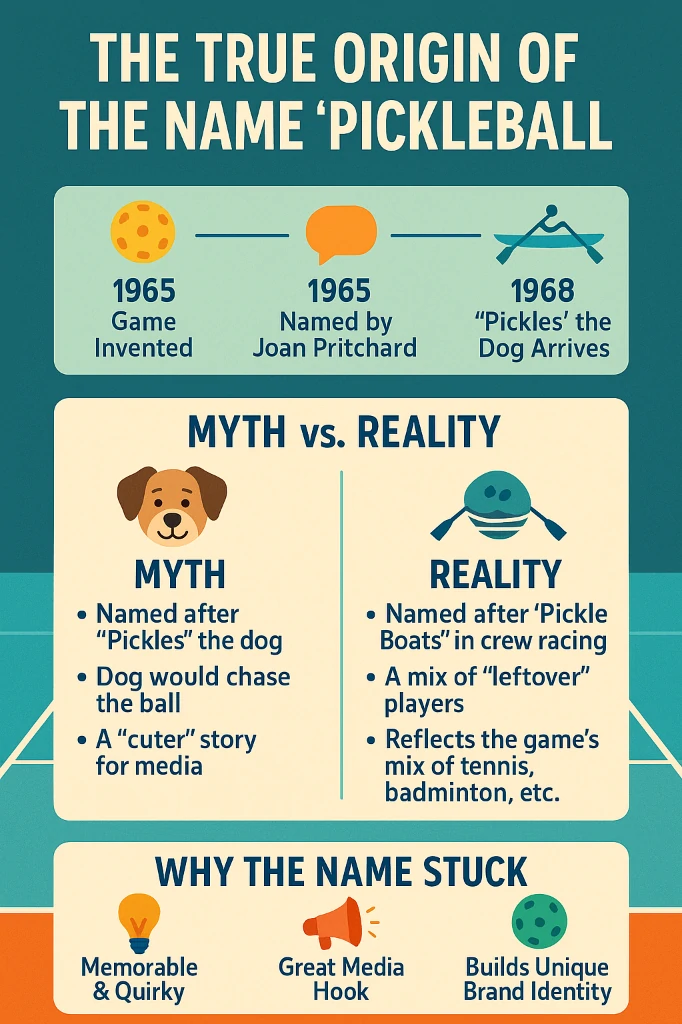
USA Pickleball's published investigation credits Joan Pritchard with naming the game after a “pickle boat,” a rowing reference to an assembled group of spare rowers. The familiar story about the family dog, Pickles, runs into a timeline problem: the investigation dates the dog to after the game's creation.
The linked account is the basis for this explanation. It is better to identify that evidence than present a repeated anecdote as a newly discovered firsthand fact.
The short timeline
| Event | Official account |
|---|---|
| The game begins | Bainbridge Island, Washington, in 1965 |
| The name is chosen | Joan Pritchard's pickle-boat reference in the same summer |
| The dog arrives | The investigation dates Pickles to 1968 |
The USA Pickleball history timeline identifies Joel Pritchard, Bill Bell and Barney McCallum with the development of the sport. The initial equipment borrowed elements from existing games, including a badminton setting, table-tennis paddles and a perforated plastic ball.
What did the rowing reference mean?
In the official naming account, Joan's reference was to spare rowers brought together in a pickle boat. That mixed group offered an analogy for a game assembled from elements of other activities.
You do not need to interpret the name as a reference to food or as a technical description of a rule. Names can come from a comparison that made sense to the people in the room. Here, the account connects the choice to Joan's familiarity with rowing.
Why is the dog story so widespread?
The same investigation describes a later publicity anecdote about Pickles. Its interviews and timeline support the family's account that the dog was named after the game. That is the key distinction: a dog called Pickles existed, but its existence alone does not explain when the sport received its name.
When retelling the story, avoid merging the two events into one. “The dog was called Pickles” and “the game was named after the dog” are different claims. The second needs the dog to be present at the relevant time.
How to explain it at the court
A concise version is enough: the official account credits Joan's pickle-boat analogy, and its timeline places the dog later. If someone wants the details, point them to the investigation rather than reproducing long interview quotations from memory.
The anecdote makes a natural conversation starter, but it does not establish why the sport subsequently grew. Participation needs its own dated evidence. A memorable name should not become an unsupported claim about marketing impact.
From the name to the game
The history explains the title of the sport; learning to play requires a different set of information. Start with the beginner orientation, then use the first-session checklist to find the court, equipment and session that suit you.
Keeping those questions distinct lets the naming story remain clear and interesting without adding fictional personal memories or an unrelated sales pitch.
Pickleball history and court illustrations
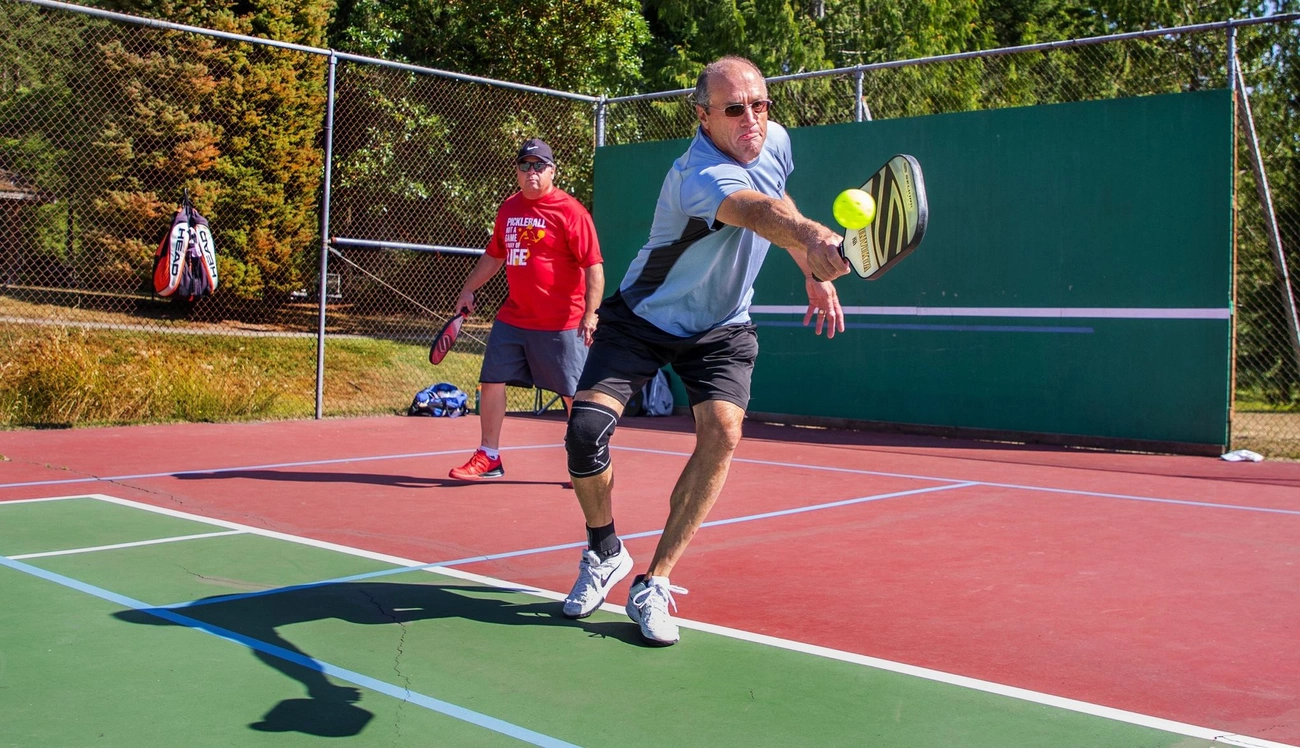
Visual examples of equipment and court settings. Images are illustrative; current specifications and fit should be checked with the maker or retailer.
Frequently asked questions
Was pickleball named after the dog Pickles?
USA Pickleball’s published investigation supports the pickle-boat account and dates the dog later. The dog existed, but that does not establish it as the source of the sport’s name.
Who is credited with naming the game?
The official investigation credits Joan Pritchard and her rowing analogy. Follow the linked account for the interviews and timeline behind that conclusion.
Does pickleball refer to pickled food?
The official account explains the name through a rowing reference. The word is not a description of food used in play.