Moving forward after a third-shot drop should depend on its quality and the opponent’s next contact. A low ball may create time to advance; an attackable ball can require a stop and defensive reset.
Competitive play requires reliable contact, controlled shot selection and the ability to respond in fast exchanges. Develop those habits before adding deceptive patterns.
As rallies become faster, the decision behind a shot matters as much as its pace. Observe the available contact height, the opponent’s position and your partner’s recovery before choosing to attack or reset.
The patterns below give you practical choices to rehearse: controlled dinking, a deliberate transition, compact attacks and defensive resets. They are practice suggestions rather than documented professional routines.
Begin with a pattern that fits your current skills, then practice its next shot and recovery as well as the initial contact.
Build Reliable Contact Before Adding Complex Patterns
You can't build a house without a solid foundation, and pickleball is no different. Too many players get excited about advanced strategies and skip right past the fundamentals that actually make those strategies work.
Advanced patterns become more reliable when contact points and ordinary shots are consistent. Practice the foundation before adding complex combinations.
Find a comfortable contact position
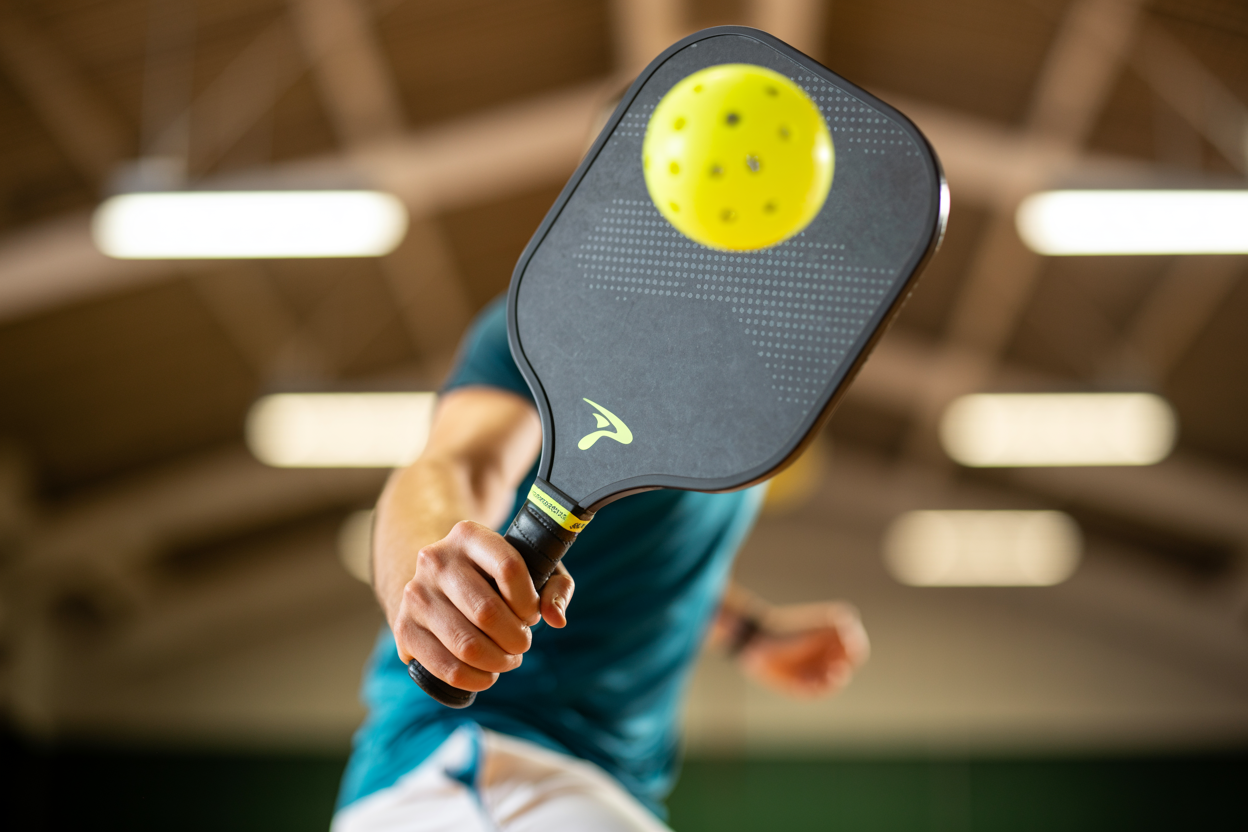
Aim for a consistent, controlled area of the paddle face and notice how off-center contact changes the ball. The most responsive area depends on the paddle’s shape and construction; it cannot be located from a universal rule about an elongated face.
Combine that aim with a comfortable contact position for your body. Move to leave room for the stroke rather than reaching so far that you lose balance. Use cooperative feeds to explore repeatable contact before increasing pace.
Off-center contact can change ball speed, direction and feedback. The effect depends on the paddle and shot, so no universal speed-loss percentage is assigned here.
Expand your contact point range
Advanced players practice contact from several manageable positions. Use controlled feeds to improve recovery and placement without treating a difficult reach as a reason to force an attack.
For ordinary forward contacts, move so the ball is comfortably in front rather than crowding your body. Different shots require different contact positions, so avoid forcing every ball into one fixed distance.
Practice manageable stretched and close-body feeds at low speed. Work on a compact response and recovery rather than treating an awkward ball as an invitation to attack.
Perfect your footwork and balance
Prepare before the opponent’s contact, move toward the incoming ball and regain balance for your own stroke. Efficient movement depends on distance and direction; no single step pattern fits every ball.
The ready position forms your foundation:
- Feet shoulder-width apart with knees slightly bent
- Weight on the balls of your feet
- Paddle held in front at a comfortable ready height for the expected ball
Time a small split step or balanced preparation as the opponent contacts the ball. Use side steps for short adjustments and turn to run when a larger movement is needed. Avoid rigid advice to shuffle for every distance.
Stable preparation helps you make controlled contact. When reviewing a missed shot, consider whether you arrived late, were crowded or reached too far before changing the swing.
Remember: footwork isn't just about speed—it's about being in the right position at the right time, minimizing how far you need to reach for the next shot. Track the ball well and time your footwork accordingly for the most stable contact points possible.
Control the Net with Smart Dinking
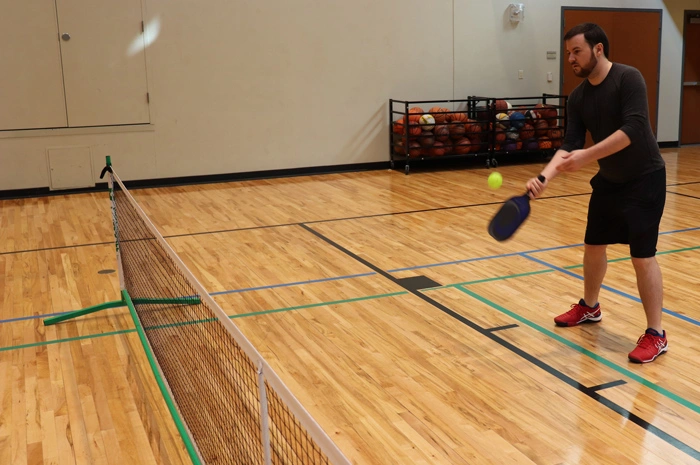
Dinking is one way to manage a rally near the non-volley zone. Keep the ball low enough that it does not create an easy attack, and choose placement by the space and balance you can maintain.
A dink can sustain a neutral exchange or move an opponent into a more difficult contact. Pace, depth and angle should remain controlled; a soft ball is not automatically defensive and an aggressive one is not automatically better.
Use roll dinks to apply pressure
A roll dink adds topspin through a controlled low-to-high stroke. Compare it with a simpler flat dink in practice. Either can be useful, and topspin does not excuse a ball that sits high enough for an opponent to attack.
Here's how to execute a roll dink:
- Get low with bent knees to position yourself under the ball
- Keep the arm and grip comfortable rather than locking the elbow
- Roll upward with a slow, controlled swing, creating topspin
- Choose a controlled target within the non-volley zone, adjusting depth to the incoming ball
Topspin influences the bounce, but the outcome also depends on pace, height and surface. Judge the actual ball and the opponent’s contact rather than expecting every roll dink to force a weak return.
Try the roll on a manageable ball first. If you cannot keep the flight and bounce controlled, use a simpler dink and rehearse the spin separately.
Dink between opponents to create confusion
A controlled dink toward the middle can test how a pair communicates and covers shared space. A coordinated opponent may return it comfortably, so observe the response before repeating it.
Vary placement when the incoming ball permits it, while keeping an effective target available. There is no fixed number of consecutive dinks that every player should avoid.
Use a few small target areas in practice to compare depth and direction. Select one target at a time and track placement, rather than expecting movement alone to create a winning opening.
Take dinks out of the air when possible
Consider a volley dink when you can comfortably reach the ball from a legal position and maintain balance. Letting the ball bounce is a reasonable choice when reaching would pull you into the non-volley zone.
Taking a ball before its bounce can shorten the opponent’s response time. That advantage matters only if you can still place the ball and recover.
A bounced dink may require a step into the non-volley zone; that is legal when you are not volleying. Return both feet completely outside the zone before making a subsequent volley.
For a volley, remain outside the non-volley zone and its lines throughout the volley action and its momentum. Reaching over the zone is allowed, but touching it because of the volley is a fault even after the ball is dead. Do not step into the zone to stabilize a volley.
Choose the volley by comfortable reach and balance rather than a fixed distance into the kitchen. If contact would require an unstable lean, allow a bounce and recover. The current rulebook defines the full non-volley-zone restrictions.
Master the Transition Zone
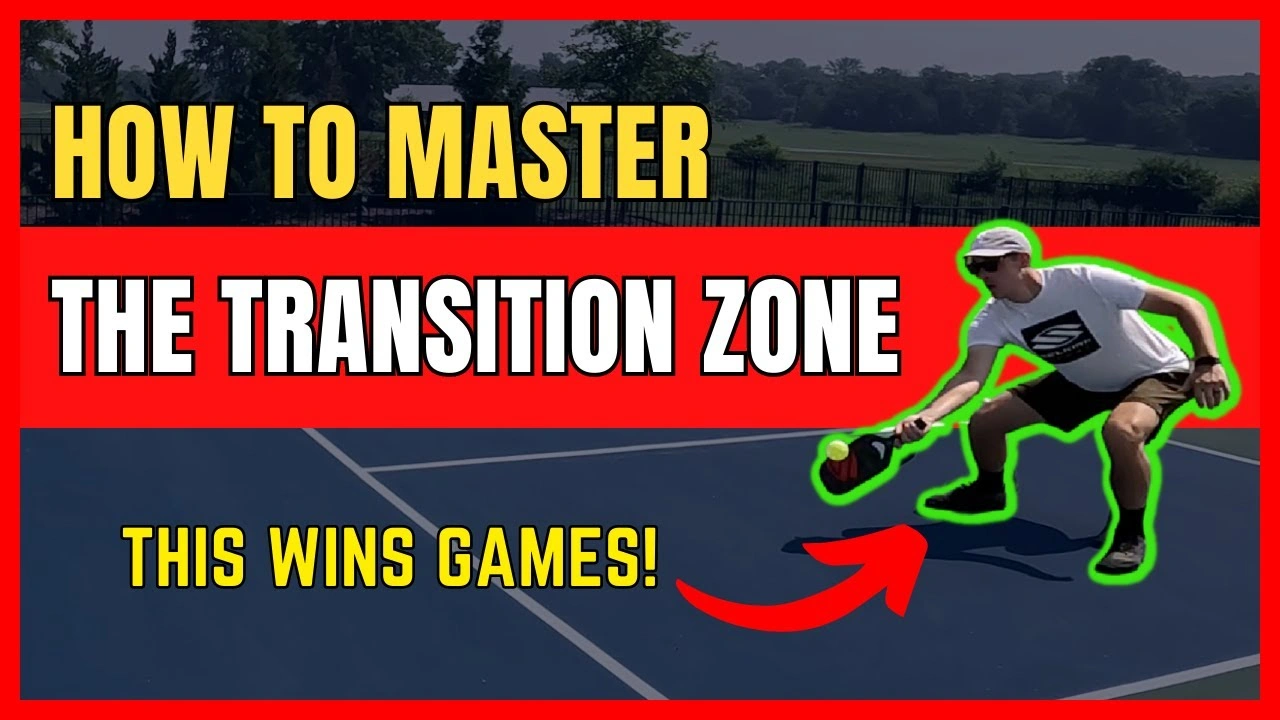
The transition zone between the baseline and non-volley-zone line requires preparation because an opponent may attack before you reach your preferred position. Practice stopping for contact and making a controlled next shot from several depths.
Advance when your shot creates time, then prepare for the opponent’s next contact. Running through that contact can leave you less balanced for a block or reset.
Treat transition movement as part of the rally rather than a race to the line. A useful drill includes the third shot, the opponent’s reply and your next response.
Perfect your third shot drop and drive
Your third shot sets up everything that follows. The decision between a drop or drive isn't random—it depends on what you're seeing:
- Ball height: A ball that is comfortable to attack may permit a controlled drive; a low ball can favor a drop or softer response.
- Return depth: A deep return leaves you farther from the net, so consider the difficulty of both the contact and the recovery before choosing a shot.
- Opponent position: If they haven't reached the net yet, a drive can be highly effective
For a drop, rehearse a controlled stroke and a trajectory that clears the net without sitting up for an easy attack. Check the actual quality before moving forward. A particular grip cue is a practice aid rather than a guarantee of success.
For a drive, choose a reachable gap or a difficult low contact for the opponent. Keep placement and recovery manageable instead of adding pace beyond your control.
Use the fusion third shot when opponents are mid-court
The "fusion" shot—sometimes called a "drip"—mixes elements of both drops and drives. This works especially well when opponents get caught in their own transition zone.
A varied third shot can be used to set up a more manageable fifth shot. Choose the next movement by the opponent’s contact and your partner’s position.
Stay patient while moving to the kitchen
Use a deliberate advance-and-stop routine when moving toward the non-volley-zone line:
After the third shot, advance only as its quality allows. Prepare and become balanced as the opponent contacts the ball, then respond to what comes back. The advance-and-stop cue is a drill aid, not an instruction to run on every third shot.
If the third shot is high and attackable, avoid charging into the next ball. Prepare for a block or reset from a position that gives you time, and move again when the rally permits.
Judge transition decisions by the next contact and recovery. A patient reset may be more useful than reaching the line early but off balance.
Attack with Precision and Deception
Pace can be effective, but attacking also requires a manageable contact and a useful target. Read the ball before deciding that a rally needs a speed-up.
Use deceptive speed-ups during dink rallies
Practice a compact speed-up that shares preparation with a dink. A smaller backswing may reveal less information, but it cannot guarantee surprise. Choose the attack only when you can keep it in court and prepare for a counter.
Rehearse changing direction from a common preparation with slow cooperative feeds. Keep the stroke controlled and avoid elaborate fakes that make clean contact less reliable. Judge whether the disguise helps without sacrificing placement.
Select a target from the opponent’s position
Look for an open space or a contact that is awkward for this opponent. A backhand-ready paddle may leave a different target available, but there is no universal weak side. Keep the pace suitable for the setting and avoid aiming toward faces.
Observe whether the opponent is balanced and how quickly they recover. Test a controlled target and be ready for a solid return instead of assuming that a particular body position guarantees a pop-up.
Finish points with smart overheads
For an overhead, turn and move to a balanced position under the ball rather than backpedaling blindly. If the ball travels too far behind you, turn to pursue it or let it bounce rather than forcing a falling smash.
Use a comfortable high contact and place the ball into available court space. Power is optional; staying balanced and avoiding a net or non-volley-zone fault remain necessary.
Add roll attacks to your arsenal
Roll attacks use topspin to create fast, tricky shots during those kitchen exchanges. The rolling motion helps keep balls in court while still adding pace. The backhand roll works particularly well—drop your paddle below the ball, then roll upward with controlled speed.
A roll attack is an option when contact height, reach and the target allow control. Choose it from the actual ball rather than saving it for a dramatic moment or forcing it from a low, stretched position.
Stay Calm When You're Under Attack
Defensive control is part of attack preparation. A manageable reset can create time to recover rather than forcing a counterattack from a poor position.
Reset hard shots instead of fighting back
When someone fires a hard shot at you, your first instinct might be to fire back. But that's usually a mistake. Instead, focus on resetting the ball—dropping it gently into your opponent's kitchen to neutralize their attack.
For a reset or block, begin with a comfortable grip and a compact motion. Adjust the paddle angle to the incoming ball and observe the result. Exact grip scores and contact distances are individual practice cues, not universal settings.
Stay balanced and leave space for contact. An exaggerated forward lean can make recovery difficult, so adjust with footwork rather than assuming a lean prevents a pop-up.
Use lobs to buy time or catch opponents off guard
A well-placed lob can save you when you're in trouble or surprise opponents who are crowding the net. When you're caught off-guard, a defensive lob buys precious time to recover your position. When opponents are overcommitted to the kitchen line, an offensive lob can catch them completely out of position.
For proper execution, contact the ball with an open paddle face and lift it high over your opponents' outstretched paddles toward their baseline. If you're defending a lob, retreat with your partner to match their depth—don't leave them isolated back there.
Survive those intense net battles
Hand battles at the net happen fast, so minimize your movement. Keep your paddle and body compact, focusing on keeping the ball out front. Watch your opponent's paddle face to anticipate where they're going.
A small, balanced step back can create room for a fast exchange when space is available. Practice it with a partner and judge whether it improves your contact without opening an easy target.
Communicate with your partner
Clear communication prevents those awkward moments where both players go for the same ball (or worse, both players watch it drop). Whether you use verbal calls like "mine" or "yours" or simple hand signals, stay connected with your partner.
Move with your partner to cover the ball and protect shared space. Discuss responsibility for middle balls and coverage after a poach or wide movement. No fixed two-thirds coverage rule can replace judging the actual positions.
What This All Means for Your Game
Choose a practice pattern from the ball and position that most often trouble you. The same shot can be useful in one situation and risky in another.
Begin with repeatable contact, balanced preparation and ordinary placement. Those habits make it easier to assess whether a new pattern helps.
Practice a controlled dink before varying spin, depth or angle. Volley only from a legal, balanced position; letting a ball bounce is often the sensible choice.
Link the third shot to the next response. Use an advance-and-stop practice cue, then check whether it leaves you balanced when the opponent contacts the ball.
Add a compact attack when the contact and target permit it. Prepare for a counter instead of expecting disguise to end the rally.
Rehearse defensive resets and compact blocks as well as attacks. A useful defensive response creates time for recovery and partner coordination.
Review the patterns after practice. Note which ball heights, placements and positions made the choices easier or more difficult.
Start with one or two manageable techniques and record errors over several sessions. Increase difficulty when placement and recovery remain controlled.
Compare decisions as well as outcomes. A sensible attack can be returned, and a poor choice can sometimes win a point; practice should examine both.
Use what you observe to choose the next practice goal.
Key Takeaways
Use these ideas to plan controlled practice around contact, placement, legal positioning and partner coverage.
- Reliable contact first: Find a comfortable contact position and use balanced footwork before adding complex combinations.
- Controlled dinking: Compare flat and roll dinks, use several targets and volley only when you can remain legal and balanced.
- Deliberate transition: Choose the third shot by the incoming ball and prepare for the next opponent contact before moving farther forward.
- Manageable attacks: Use compact preparation, an available target and a recovery plan instead of expecting deception to guarantee a winner.
- Defend strategically under pressure: Reset hard drives with loose-grip blocks, use lobs to buy recovery time, train for hand battles with compact movements, and maintain constant communication with your partner.
Adapt the pattern to the rally. Shot height, opponent position and partner coverage are more useful guides than a claim that one tactic separates every recreational and competitive player.
Frequently Asked Questions
Advanced play involves reliable ordinary shots, useful placement, balanced movement and sound decisions under pressure. Rating systems assess a range of skills; a particular deceptive shot or practice pattern does not establish a rating.
Practice the third shot together with the opponent’s reply and your next response. Advance when the shot creates time, then prepare and become balanced for the next contact. A high, attackable ball may require a stop and defensive reset.
Choose an attack from a manageable contact and an available target. Compact preparation can help conceal intent, but placement and recovery are still necessary. Expect a counter rather than assuming the speed-up will win the point.
Rehearse compact blocks and softer resets at a manageable pace, adjusting the paddle angle to the incoming ball. Communicate about middle balls and wide recovery. A defensive lob is another option when its height and depth can be controlled.
Use controlled dinks to manage placement and contact height. A legal volley can shorten response time when you can stay balanced outside the non-volley zone; otherwise allow a bounce. Vary targets as the incoming ball permits, without assuming constant pressure guarantees an error.
For equipment-independent rule limits, use the current USA Pickleball rulebook. The drills and patterns above are practice suggestions, not a guarantee of a player rating or result.
For a basic dinking reference, see USA Pickleball’s dinking guidance.