Pickleball can contribute to a useful exercise routine, but court booking time is not the same as active exercise time. The intensity depends on the rallies, singles or doubles format, waiting periods and your own fitness. A social session and a demanding singles game can feel very different.
This guide helps you plan the week. For the broader benefits and limitations of the activity, read the health-benefits guide. The plan here is an example to adapt, not a prescription for a medical condition.
Use the general activity target correctly
The CDC recommends adults aim for at least 150 minutes of moderate aerobic activity a week, or 75 minutes of vigorous activity, plus muscle-strengthening work on two days. Those targets refer to activity across the week, not a requirement to get everything from one sport.
Pickleball can be one part of that total. Walking, cycling or another suitable activity can fill gaps when courts are unavailable. Starting below the target can still be worthwhile; build a manageable routine rather than forcing a sudden increase to reach a number.
Estimate effort with the talk test
The CDC describes moderate effort as breathing hard enough that you can talk but cannot sing. At vigorous effort, speaking more than a few words becomes difficult without pausing for breath. This is a practical estimate, not a medical test.
Check your effort during active play. Standing in a queue or discussing the score does not become moderate exercise simply because you are holding a paddle. A wearable can provide another observation, but its calorie estimate should not be treated as an exact measurement.
Track moving time rather than the reservation
Keep an uncomplicated session note: total time at the venue, approximate active playing time and how hard it felt. You do not need to time every rally. The purpose is to notice whether a long booking contains enough movement to support your weekly goal.
For example, if a one-hour open-play visit includes extended waiting, count the moving portions you can reasonably identify instead of logging the entire hour as a workout. Avoid chasing an exact calorie figure; it varies with the person, pace and amount of rest.
Build a week around the schedule you have
| Day | Example activity | What it contributes |
|---|---|---|
| Monday | Comfortable walk and strength session | Aerobic movement and muscle-strengthening work |
| Tuesday | Pickleball at a manageable pace | Active play, movement practice and social time |
| Wednesday | Rest or easy movement | Space to assess recovery |
| Thursday | Walk or another aerobic activity and strength work | Activity when a court is unavailable |
| Friday or Saturday | Another pickleball session if recovered | Repeatable play without crowding every day |
| Sunday | Review the week and adjust | A plan based on actual activity and recovery |
This example does not automatically total 150 active minutes; durations must be set for your situation. If your court sessions contain little movement, add suitable activity elsewhere. If a session is more demanding than expected, adjust the next day instead of treating the schedule as a command.
Add strength and, when appropriate, balance practice
Playing a paddle sport is not a dependable substitute for a planned muscle-strengthening routine. Choose exercises suited to your ability and access to equipment, with instruction if needed. Older adults also benefit from including balance activity in the weekly mix, as outlined in CDC guidance for older adults.
Do not add several unfamiliar activities and a large increase in play simultaneously. A simpler routine makes it easier to notice what you tolerate and maintain consistency.
Make sessions sustainable
Begin with an easy warm-up and manageable movement before more demanding rallies. Take breaks, choose suitable footwear and consider heat, court condition and your recovery. Use a fitting process for court shoes rather than assuming any sneaker works on the surface.
If you have a health condition, recent injury or uncertainty about appropriate intensity, ask a health professional for individual guidance. Stop exercise and seek urgent help for symptoms such as chest pain or fainting. New or persistent pain is a reason to reassess, not to push through to meet the weekly total.
Review consistency before raising the workload
After a few weeks, check attendance, moving time, enjoyment and recovery. Choose a small adjustment: a little more walking, a more reliable court slot or a coached session that keeps you moving. Increase the plan gradually as tolerated.
The strongest routine is one you can repeat. Pickleball is useful when it adds enjoyable activity to the week; it does not have to supply every aspect of fitness to be worth playing.
Active play and preparation illustrations
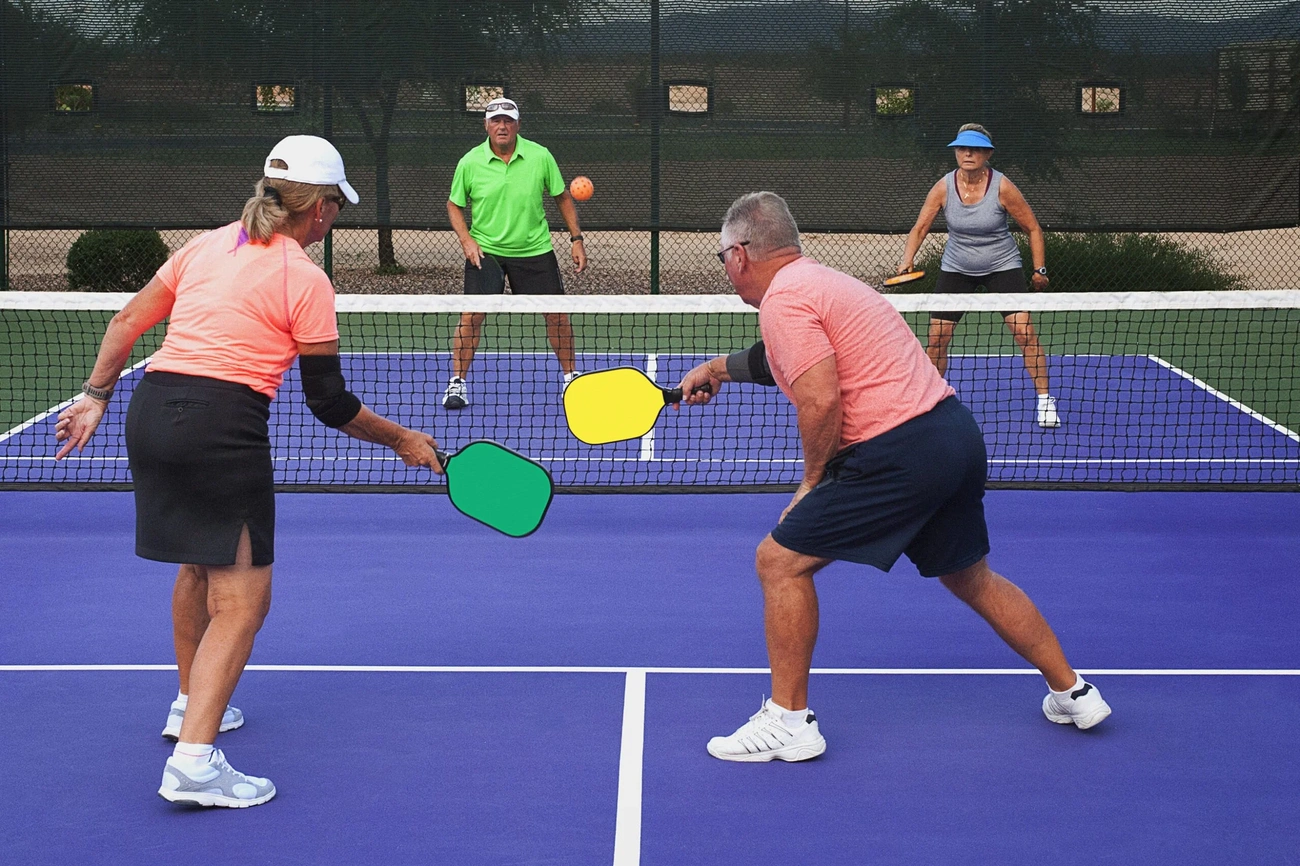
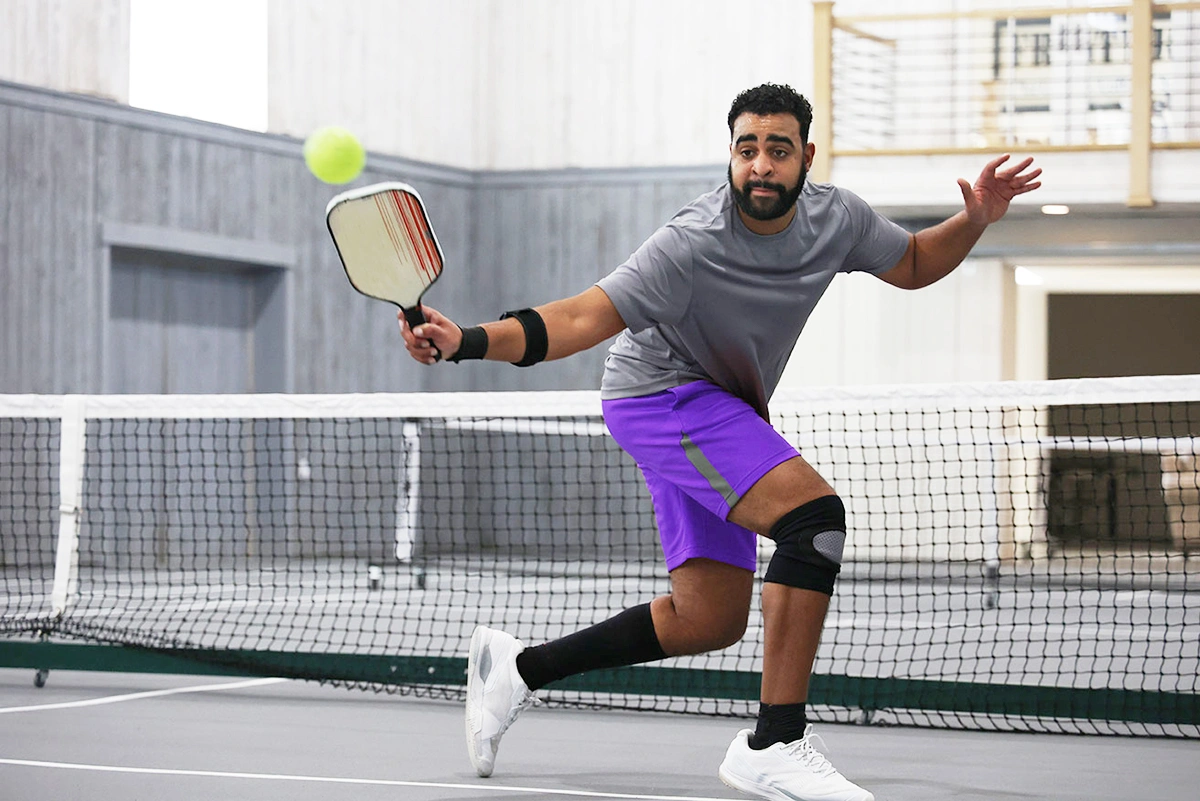
Visual examples of equipment and court settings. Images are illustrative; current specifications and fit should be checked with the maker or retailer.

Frequently asked questions
Does one hour at open play count as one hour of exercise?
Not necessarily. Waiting and extended rests reduce active time. Estimate the moving portions and their intensity rather than counting the whole booking automatically.
Can pickleball replace strength training?
It can contribute aerobic activity, but it is not a dependable substitute for a planned muscle-strengthening routine. Include suitable strength work as part of the overall week.
How many calories does pickleball burn?
There is no single reliable number for every player. Effort, body size, format and rest time all matter. Use activity time and tolerable intensity to plan instead of promising a fixed calorie burn.