For a first pickleball game, learn a simple sequence: agree on the format, make a legal serve, allow the two required bounces and keep the rally going within the court. Add scorekeeping one step at a time rather than trying to learn every tactical pattern at once.
The examples below use traditional doubles side-out scoring. Read the current USA Pickleball rulebook for official details, and confirm the format your facility or organizer uses before starting.
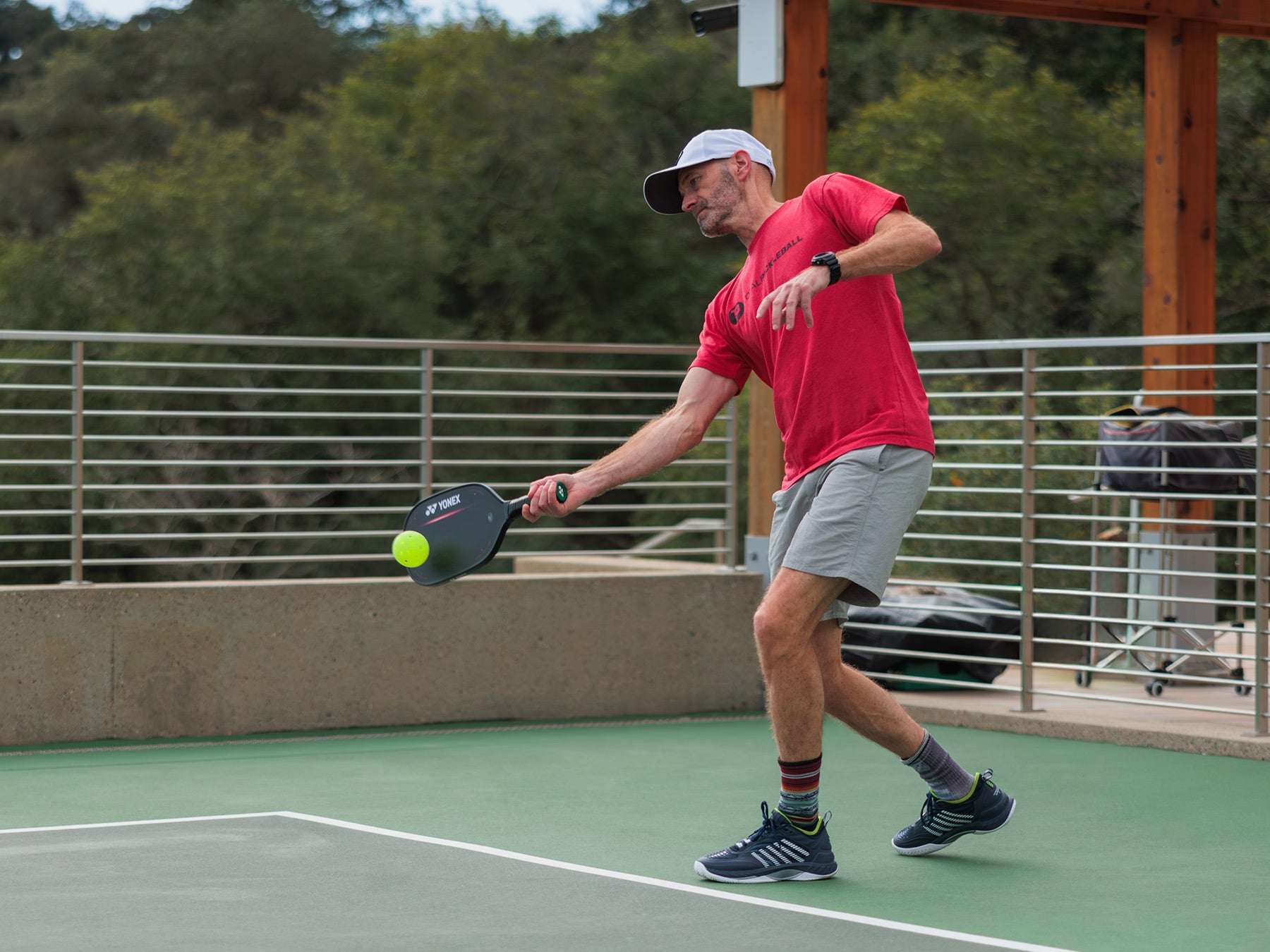
Set up the court and a small playing kit
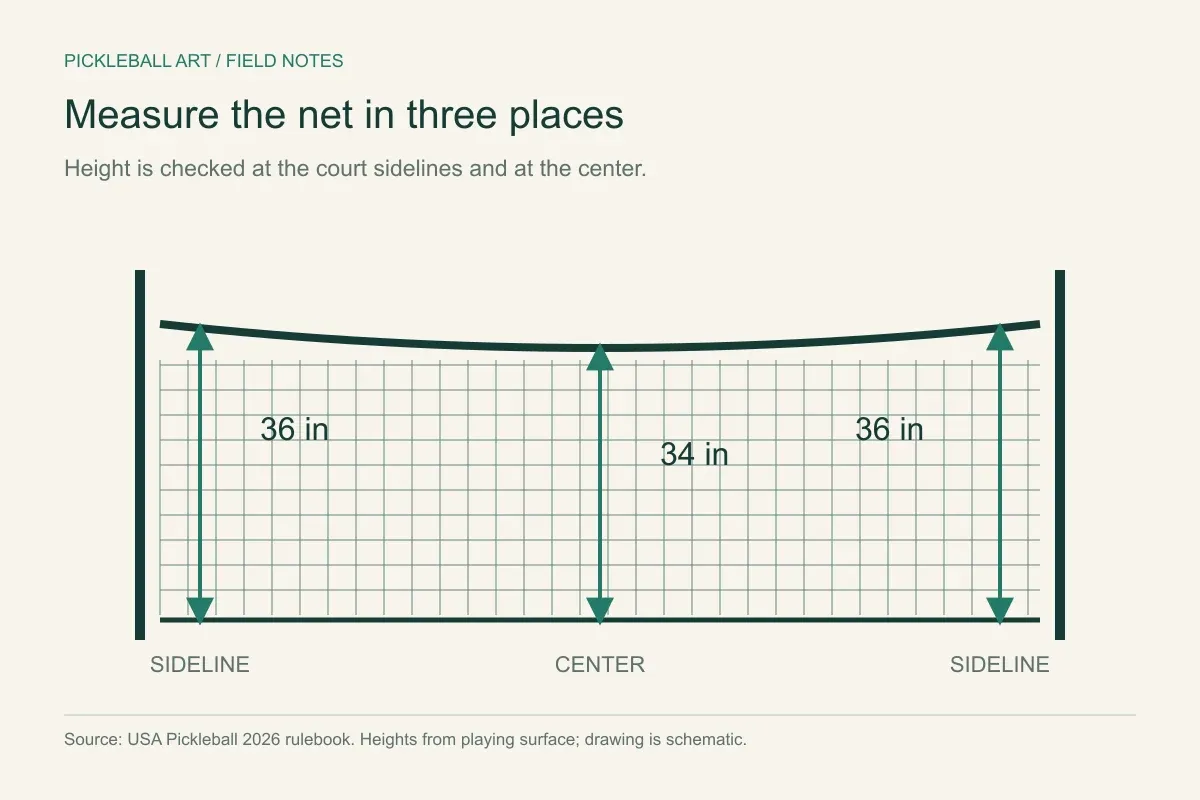
A regulation playing court is 20 feet wide by 44 feet long. The net is 36 inches high at the sidelines and 34 inches at the center. The kitchen, or non-volley zone, extends seven feet from the net on both sides. The court needs clear surrounding space, not just enough room for the painted rectangle.
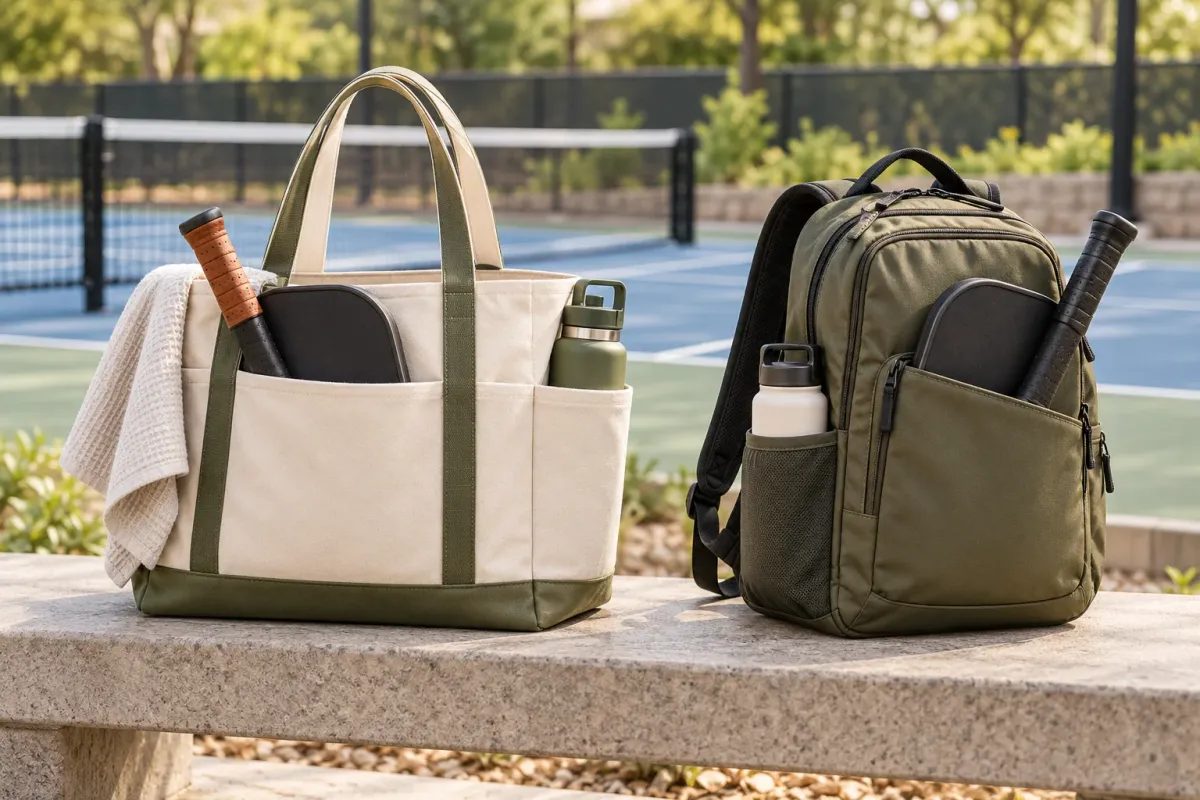
Bring a paddle, a ball suited to the court or specified by the facility, and footwear appropriate for court movement. Check for a dry, clear surface and a stable net. Agree who serves first using a fair method, and discuss the score target and any facility rules.
Serve into the opposite diagonal service court
Start behind the baseline in the correct service position. A legal serve travels diagonally into the opposite service court and must clear the non-volley zone and its line. Follow the current rulebook’s foot-position and serving-motion requirements.
A volley serve and a drop serve have different requirements. For a first practice, ask an instructor or experienced player to show a legal version of the serve you choose. Make a controlled serve that starts a playable rally rather than trying to create immediate power.
Let the serve and return each bounce
The receiver lets the serve bounce before returning it. The serving team then lets the return bounce before playing the next shot. After that, either team may play a bounced shot or a volley, subject to the kitchen restrictions.
Practice this pattern without keeping score first: serve, bounced return, bounced third shot, then a cooperative rally. The two-bounce rule applies to the start of each rally, not to every subsequent exchange. A ball cannot bounce twice on your side before you return it.
Understand what the kitchen restricts
You may enter the kitchen to play a ball that has bounced. The restriction concerns volleying: do not volley while touching the non-volley zone or its line, and do not let the momentum of a volley carry you into it.
That is why players often use soft bounced shots near the net. You can practice from a comfortable position outside the line and step in for a bounced ball when needed. Learn more in the kitchen rule guide.
Follow traditional doubles scoring
Only the serving team scores in traditional side-out scoring. The doubles call identifies the serving team’s score, the receiving team’s score and the current server number. The usual opening call is 0–0–2 because the opening team has only one service turn before the first side-out.
During a normal later turn, both partners have a chance to serve. The first server’s lost rally transfers service to the partner; the second server’s lost rally passes it to the opponents. When the serving team wins a point, its partners switch left and right positions and the same player continues serving.
Games commonly use 11 points with a two-point winning margin, but confirm the format. Rally scoring awards points differently and should not be mixed into these examples. Use the scoring examples when the server order feels confusing.
Make clear calls and reset safely
A ball touching a court line is generally in; the non-volley-zone line on a serve is an important exception. Under the standard rules, a serve that touches the net and then lands legally remains in play. Do not assume that tennis service-let procedures apply.
Follow the USA Pickleball sportsmanship guidance and resolve uncertainty calmly. After a rally, identify any point or service change, check the next server’s position and call the score before serving. Stop play for a stray ball or other hazard.
Practice a useful first session
Start with cooperative hits from a manageable distance, followed by serve-and-return practice and short games. Pick one goal: consistent score calls, remembering the return bounce or making calm contact. Partner communication helps when both players can reach a ball.
Keep early sessions at a comfortable pace and take breaks suited to your conditions. A first game need not include stacking, Ernes or aggressive speed-ups. The official tips for new players provide a useful next reading step.
Frequently Asked Questions
Can beginners play doubles first?
Yes. Doubles is a practical way to learn the serve, bounce sequence, score calls and partner communication. Agree on a scoring format and play at a manageable pace.
What are the two required bounces?
The receiver lets the serve bounce, then the serving team lets the return bounce. After those two bounces, volleying is permitted subject to the non-volley-zone rules.
Can a player enter the kitchen?
Yes, including to play a ball that has bounced. The restriction is on volleying while touching the zone or line, and on volley momentum carrying a player into it.
Who scores in traditional side-out doubles?
Only the serving team. A lost serving rally changes the server or produces a side-out; it does not automatically award the receiving team a point.
What should a first practice focus on?
Practice a legal serve, bounced return and bounced third shot, then cooperative rallies. Add clear score calls and correct server positions before more advanced tactics.