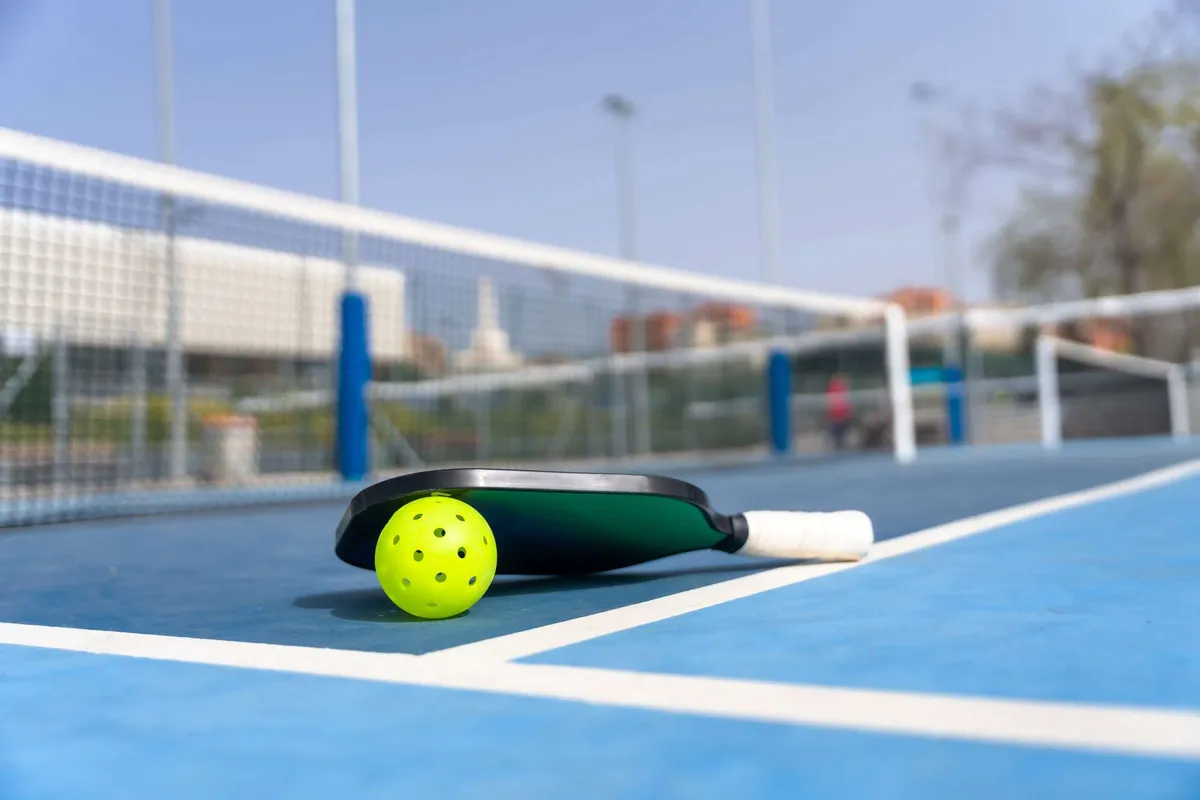
A clear line call depends on the ball's landing and the applicable line. Most relevant boundary lines are in. The important serve exception is the non-volley-zone line: a serve touching it is short and a fault. A rule for a ball landing near a line is different from a fault involving a player's feet.
This guide follows the 2026 USA Pickleball rulebook. It focuses on non-officiated play; an event with referees or line judges has defined authority and review procedures that players must follow.
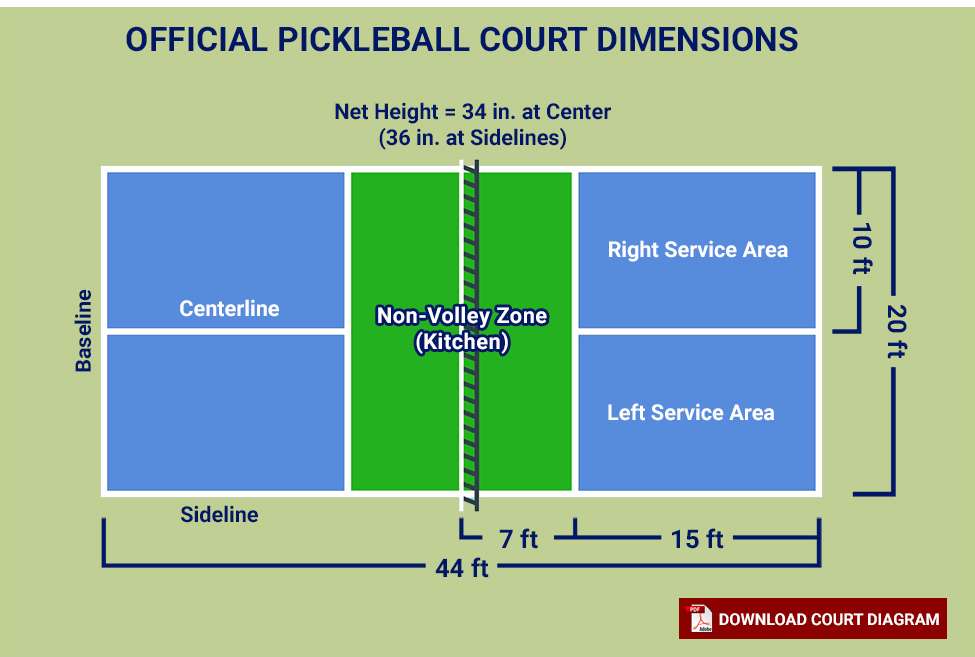
Which lines are in?
| Ball landing | Result |
|---|---|
| During a rally, on a sideline or baseline | In. |
| On a legal serve, touching a boundary of the correct service court other than the kitchen line | In. |
| On a serve, touching the kitchen line | Fault: the serve has not cleared the non-volley zone. |
| During a rally, landing in the kitchen or on its line | The landing can be in; volley restrictions concern the player's contact with the zone. |
The centerline divides the service courts for the serve. It is not an out-of-bounds divider during the rest of a normal rally. A ball may land on either service-court side after the serve.
Call only what you can clearly determine
Make your side's calls honestly and give the opponent the benefit of doubt. A ball should not be called out merely because it looked likely to miss before landing. Do not use an opponent's movement, a sound or a spectator's reaction as a substitute for seeing the landing.
When you cannot clearly call the ball out, treat it as in. A routine uncertain call is not a reason to replay. If doubles partners disagree on an in/out call, the doubt benefits the opponent under the rules.
Make an out call promptly
Use a clear word and, where helpful, a hand signal. In the current rulebook, a returned ball's out call must come before the opponent hits it or the ball becomes dead. When you do not return the ball, the rule still requires a prompt call, even though that call can occur after the ball becomes dead.
Do not wait to see whether your own return succeeds before deciding to call the previous ball out. Also distinguish “out” as advice to a partner about a ball still in flight from an actual line call after a landing.
Do not consult spectators
Spectators must not be asked to decide line calls. A well-positioned viewer is still a spectator. Rules cover the limited circumstances for asking an opponent for their view; use that procedure rather than collecting votes around the court.
If officials are assigned, know which calls belong to players and which belong to the officials. Not every match has line judges, and an assigned referee does not mean players can ignore their own responsibilities.
Keep foot faults separate
A serve landing on a baseline is a ball-location question. A server stepping on that line at paddle contact is a service foot-fault question. Similarly, a rally ball landing on the kitchen line can be in, while a player touching that line during a prohibited volley commits a fault.
The kitchen's momentum requirement also continues after ball contact. Refer to the non-volley-zone guide. In non-officiated play, opponent service foot-fault and kitchen-fault calls have their own procedure, including disagreement handling.
Resolve confusion calmly
State what occurred, consult the current rule and follow the appropriate procedure. A close call, a wrong score and a disputed fault are different problems. Avoid agreeing to a new interpretation halfway through a competitive match.
Before a social game, explain the serve exception and agree to make prompt calls. Clear habits keep more attention on the next rally.
Frequently Asked Questions
Most relevant boundary lines are in. A serve touching the non-volley-zone line is the important exception: it is short and a fault.
No. The current USA Pickleball rules prohibit consulting spectators about line calls.
Not as a routine response. Doubt generally benefits the opponent, so the ball is treated as in under the applicable rule.