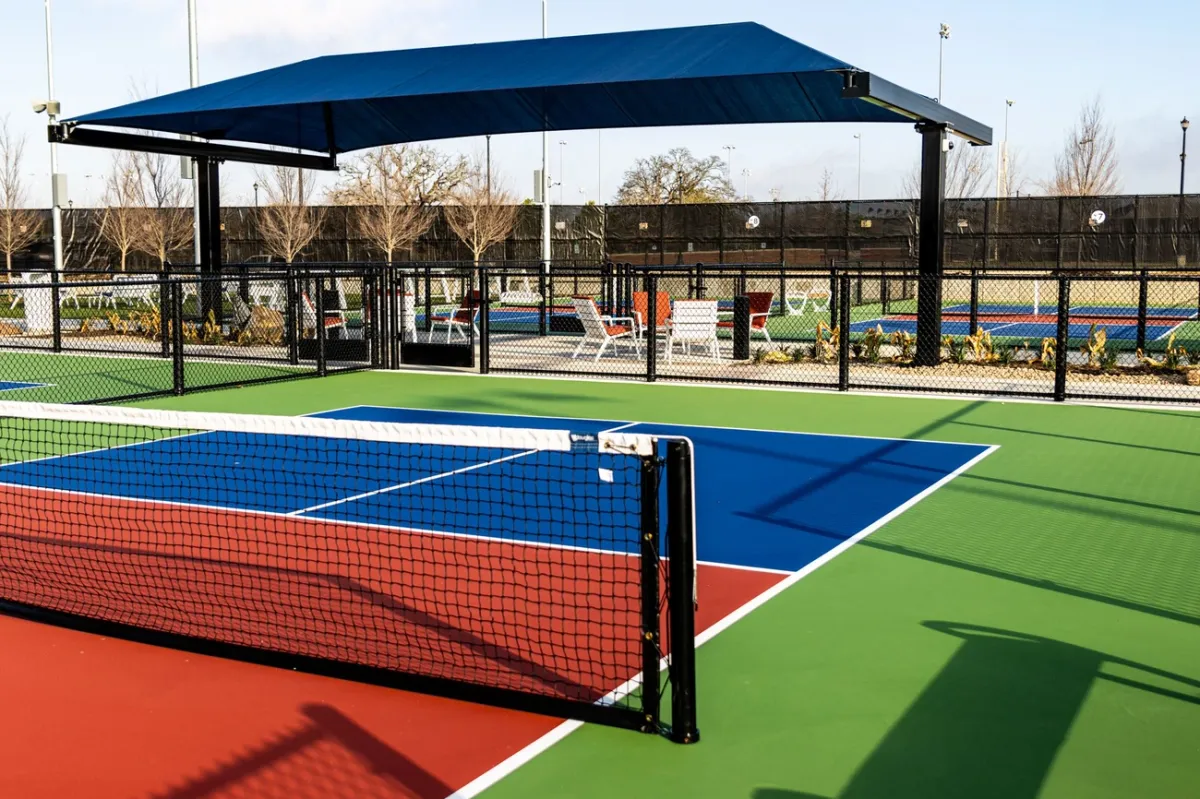
The non-volley zone, or kitchen, extends seven feet from the net on each side, across the court. Its line belongs to the zone. It restricts volleying, which means hitting the ball before it bounces; it is not a zone that players must avoid at all times.
The 2026 USA Pickleball rulebook places the non-volley-zone rules in Section 11. Use that edition for the exact wording, exceptions and officiating procedure instead of a remembered section number from an older guide.
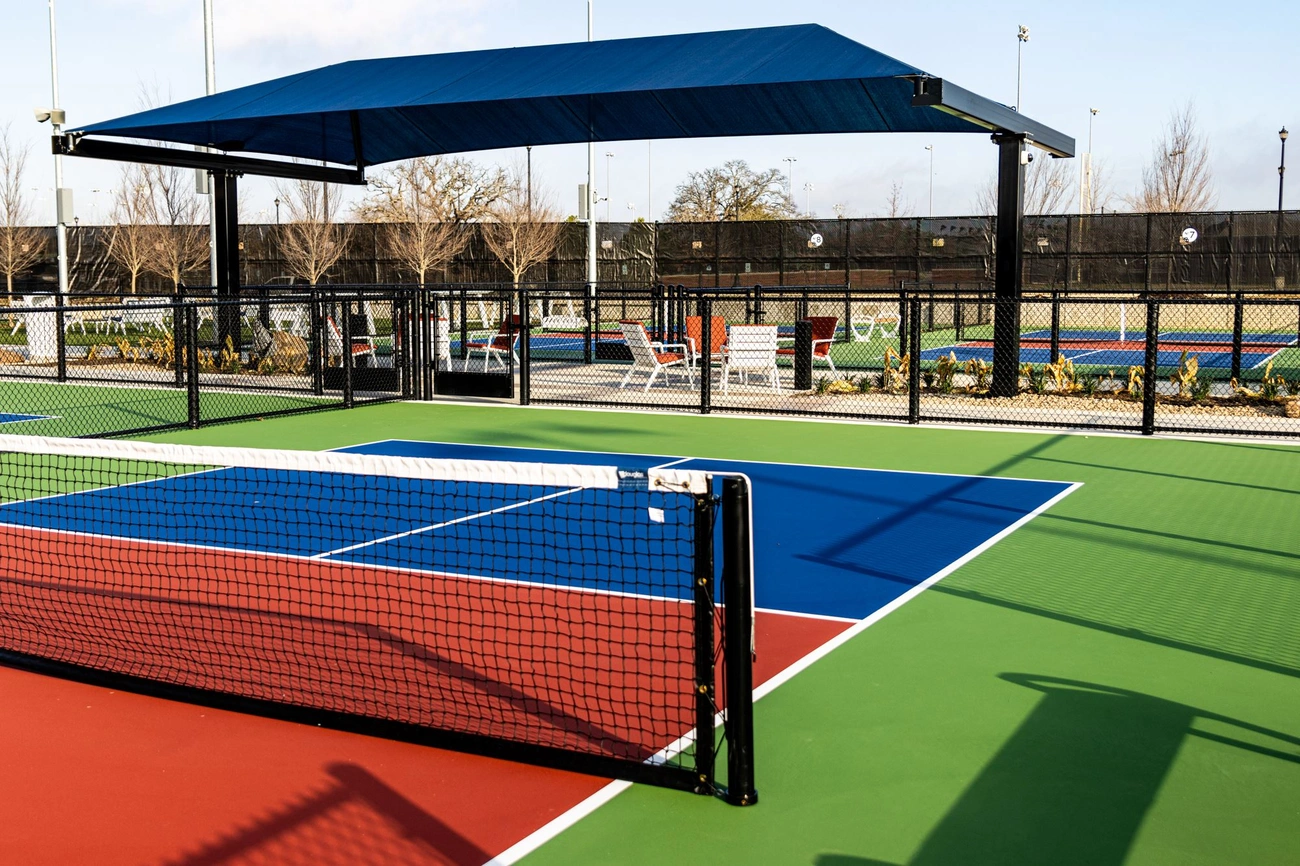
When you can enter the kitchen
You may enter or stand in the zone to play a ball that has bounced. You do not have to wait for the ball to bounce before stepping in. Entering to retrieve a short ball is legal when the resulting shot is a groundstroke and no other rule is broken.
After playing it, move back out when the rally allows. Remaining inside can leave you unable to volley the next ball legally. Do not confuse a tactical disadvantage with a fault: standing inside by itself is not a kitchen fault.
What makes a volley fault
You cannot volley while touching the zone or its line. The rule also covers relevant contact by something you wear or carry. Looking only at where the ball and paddle meet is not sufficient; your contact with the court and the continuation of the volley matter.
A toe on the kitchen line is contact with the zone. Hitting the ball from outside does not make it legal to follow through into the zone under volley momentum.
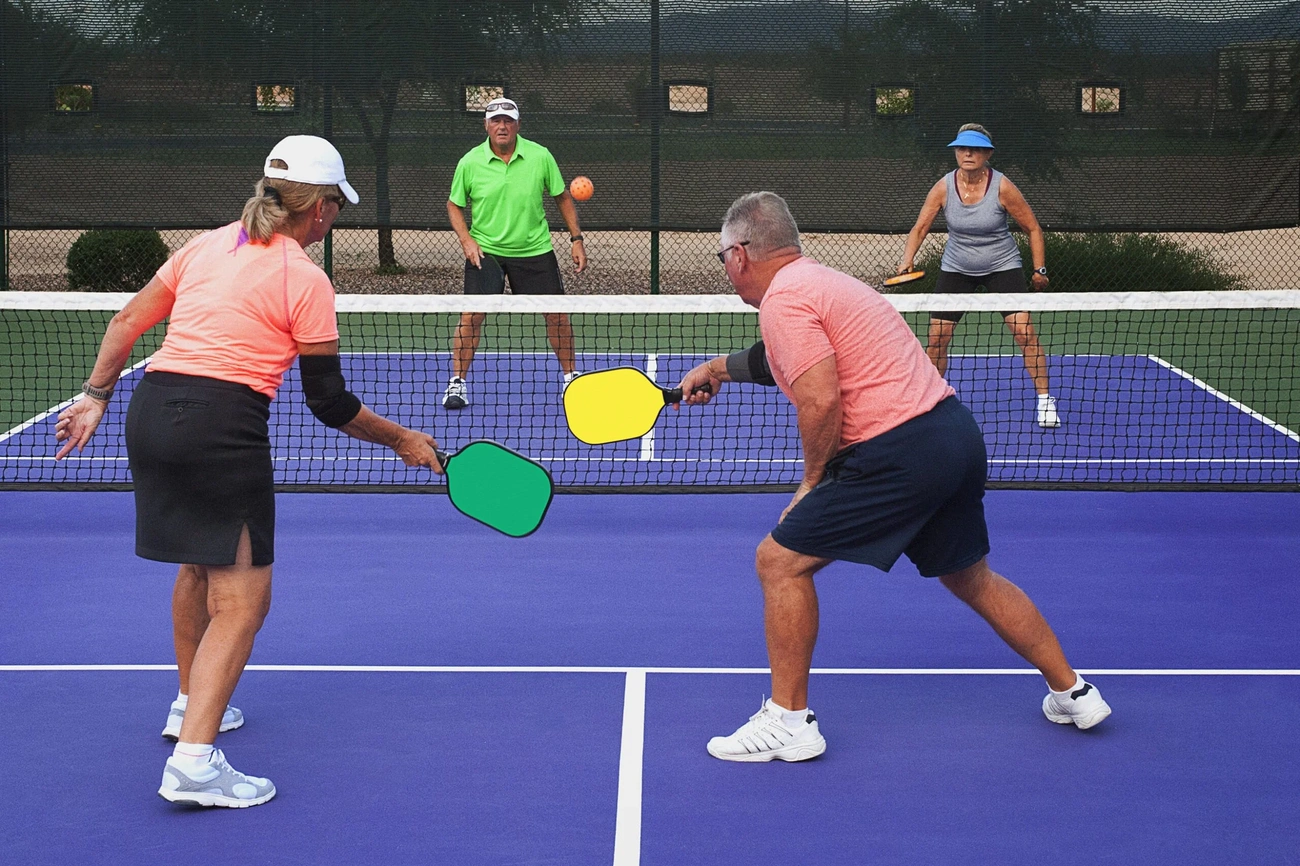
Momentum continues after contact
If momentum from your volley carries you into the zone, it is a fault even if the ball becomes dead before you touch it. There is no universal number of seconds after which a continuing loss of balance becomes harmless.
Practice hitting a controlled volley and finishing balanced outside. A partner cannot make the sequence legal by pulling you out after a prohibited contact. Special situations involving contact with another player should be checked against the complete rulebook.
Re-establish both feet before volleying again
After touching the non-volley zone, re-establish both feet outside it before volleying. Jumping from inside and striking the ball in the air does not bypass that requirement. A short groundstroke followed by a rushed airborne volley is an easy place to lose track of your feet.
For a basic drill, play a bounced short ball, move outside, settle both feet and then receive a controlled volley feed. Keep the feed slow enough to learn the sequence accurately before adding pace.
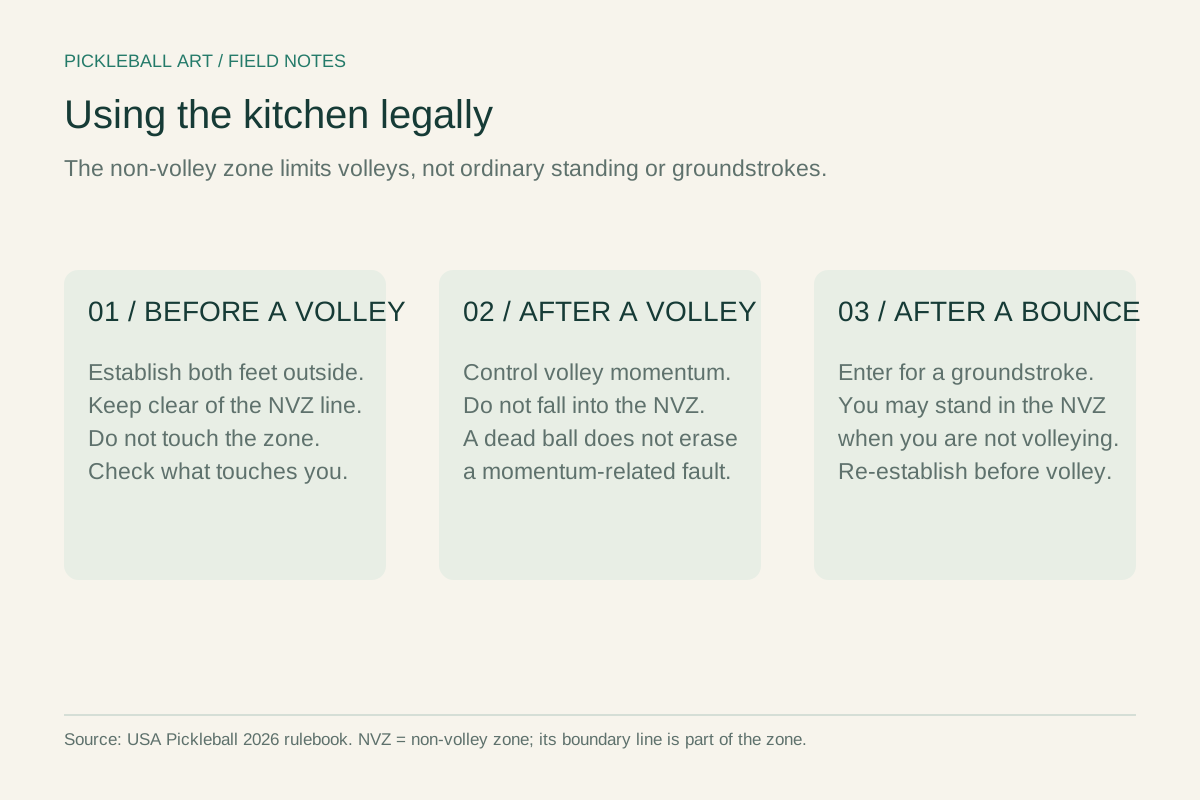
Common situations
| Situation | Kitchen consequence |
|---|---|
| You enter before a short ball bounces, then hit after the bounce. | Entry alone is allowed; check that the shot is a groundstroke. |
| You volley with a foot on the kitchen line. | Fault: the line is part of the zone. |
| You volley outside but continuing momentum takes you in. | Fault, even after the ball becomes dead. |
| You jump from inside to strike a volley. | You have not re-established both feet outside. |
Calling a fault and playing the next rally
Call your own clear fault. In non-officiated play, the current rules provide a procedure for opponents to call a non-volley-zone fault; disagreement is handled under that procedure. In an officiated event, follow the referee. Line-call doubt and a disputed kitchen fault are different situations.
For the surrounding serving and scoring rules, see our current rules guide. You can practice footwork with a paddle you already know; no material or weight category automatically prevents kitchen faults.
Frequently Asked Questions
No. You may enter at any time when you are not making a prohibited volley. The ball must bounce before the shot you play from inside.
If continuing momentum from that volley takes you into the zone, it is still a fault even after the ball becomes dead.
No. After touching the zone, re-establish both feet outside before volleying.