Good court manners make it easier to share a busy venue and enjoy a game with unfamiliar players. Some points below are official rules; others are local customs or courteous choices. Ask how the session operates rather than assuming every court uses the same system.
The USA Pickleball sportsmanship guide and current rulebook are useful references for fair play. This article offers practical suggestions without presenting a claimed personal coaching history.
1. Learn the local rotation before joining
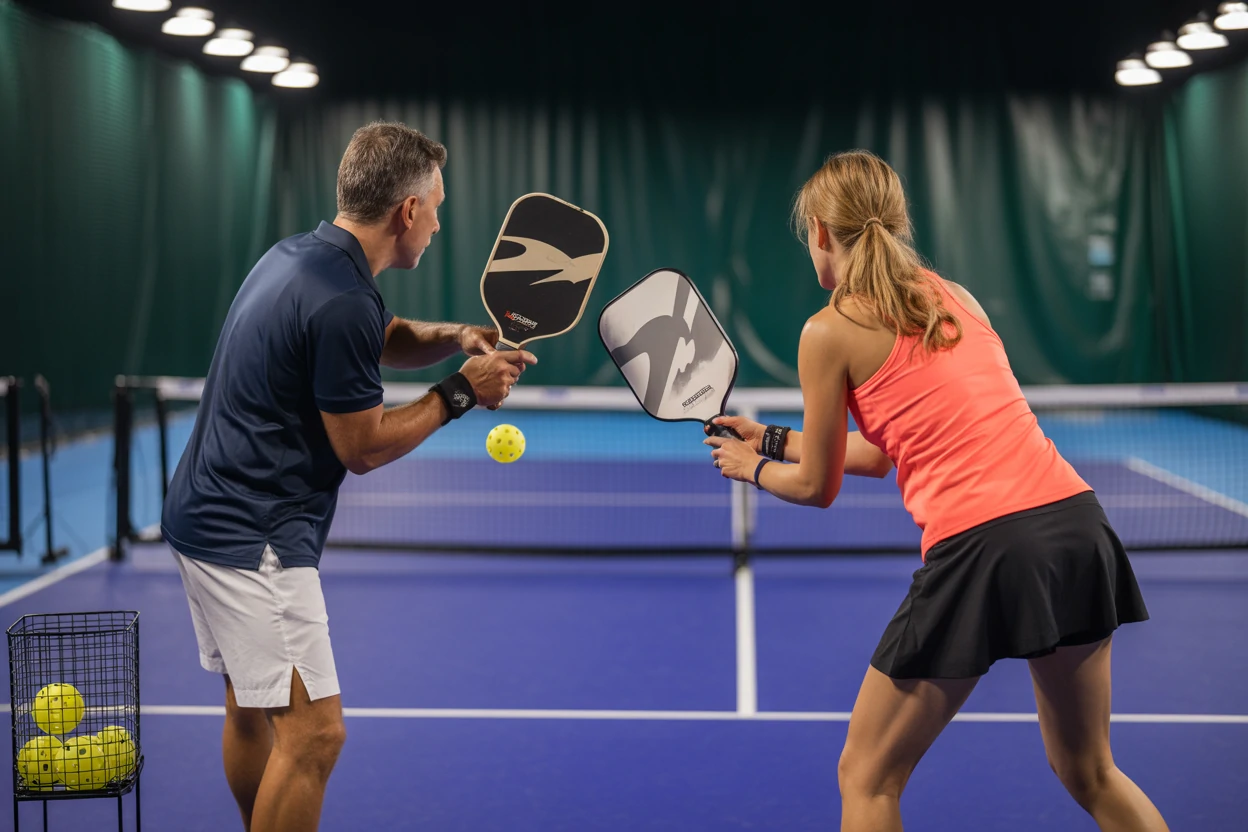
Look for a posted queue or ask the organizer. Some venues use a paddle rack, timed play or a specific winners-stay rotation; others require reservations. Put your paddle in the queue only when you are available, watch for your turn and leave promptly when the rotation requires it.
Label equipment in a permitted way and avoid handling someone else's paddle without asking. Marking or adding tape to a competition paddle must still meet the applicable equipment rules.
2. Introduce yourself and agree on the game
Confirm the scoring format, target score and how players will rotate. Say if you are new or need an explanation. A greeting or a paddle tap can be friendly, but physical contact is optional; respect others' preferences.

3. Make fair line calls
In non-officiated play, players make calls on their side under the rulebook. Call a ball out only when you can make a clear call; doubt goes to the opponents. A serve touching the kitchen line is a fault, while other relevant boundary lines are in.
Do not consult spectators. A uncertain call is not an automatic replay. If partners disagree, follow the rule for that situation rather than bargaining over a point. See the line-call guide for examples.
4. Warn players about a stray ball
If a loose ball creates a hazard, give a clear warning such as “Ball on court.” Let the players stop and locate it. Wait for acknowledgment before returning a ball to another court; do not send it through an active rally.
Cross a playing area only during a safe break, with the players aware of you. Use designated walkways when available. Alert the organizer to a damaged surface or equipment hazard.
5. Match the session's purpose
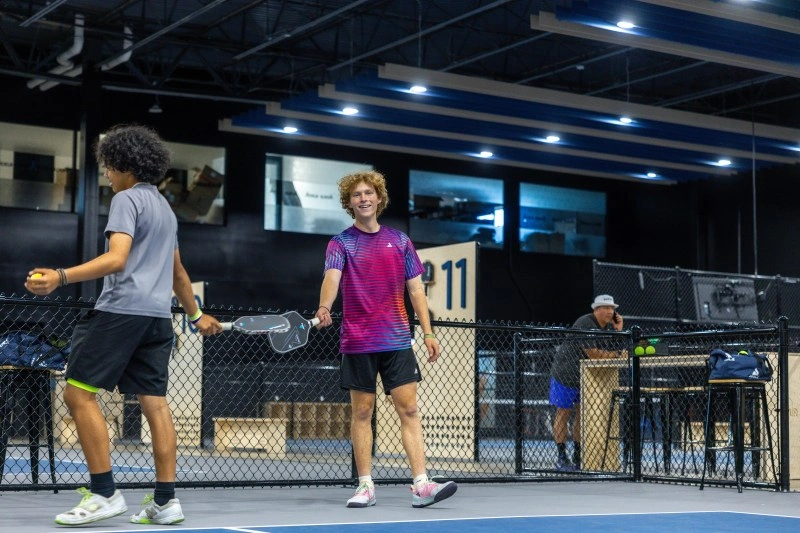
Competitive open play, social sessions and beginner clinics may have different expectations. Ask before deliberately making a practice game more demanding. Sharing playable balls with both opponents can be a helpful choice in a beginner session; it is not an official ban on targeting a weaker opponent.
Keep celebrations respectful and avoid directing anger at another player. Good sportsmanship still applies when a session is competitive.
6. Communicate with your partner
Agree on simple calls for shared balls. Use “mine” or “yours” early enough to help coordination, and distinguish advice during play from an actual out call. Discuss responsibility calmly between rallies.
After a mistake, keep the next instruction useful and brief. A partner does not need a technical correction after every error. Ask before offering coaching, and accept a polite refusal.
7. Respect equipment and shared facilities
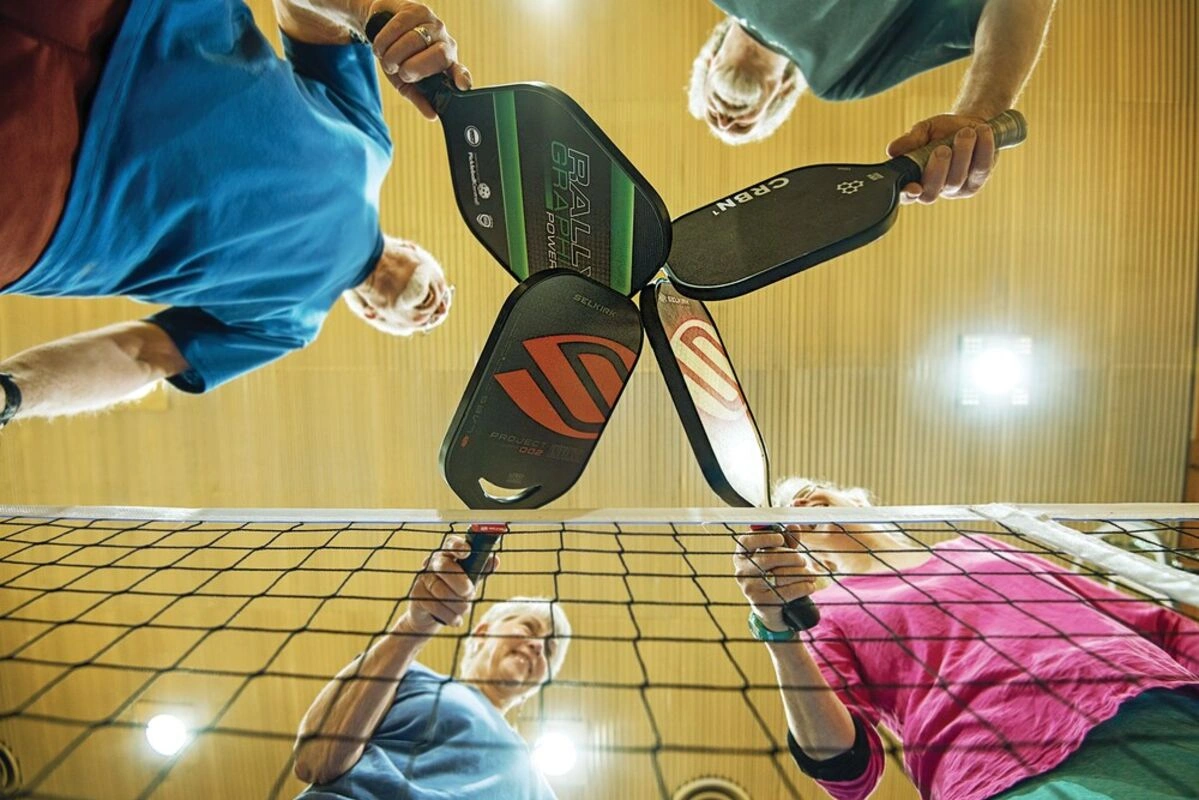
Return borrowed equipment, collect rubbish and keep bags out of circulation routes. Follow venue requirements for shoes, noise and court reservations. Check an actual local equipment restriction rather than assuming an approved competition paddle meets every quiet-play policy.
8. Raise disputes through the appropriate process
State the situation calmly and consult the current rule or organizer. A line call, a service foot fault and a kitchen fault have different procedures. In an officiated game, follow the assigned official's authority.
For your first session, concentrate on the rotation, safe movement and fair calls. You can learn the rest through clear questions and the published rules.
Frequently Asked Questions
No. Rotation systems vary. Follow posted instructions or ask the organizer before joining.
No. Under the rules, uncertainty generally benefits the opponent rather than creating an automatic replay.
No. In a social or beginner session, sharing the rally can be considerate, but it is a session expectation rather than a universal rule.