

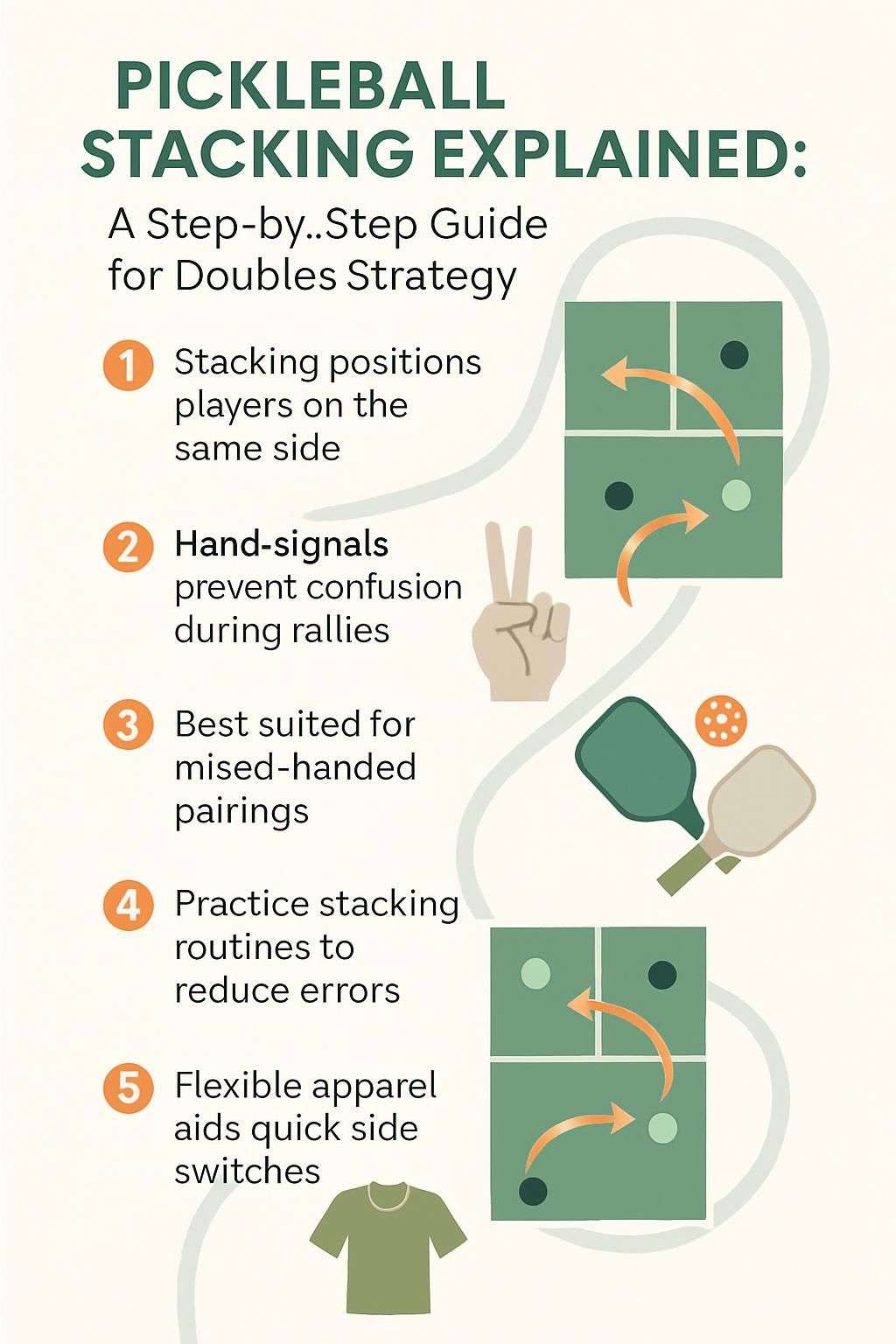
Stacking is a doubles positioning choice used to help partners play preferred sides after the serve or return. It changes where players wait and how they move into the rally. It does not change which player is the correct server or receiver.
Learn ordinary service order first. Use the opening-rally guide and partner communication plan before adding a movement pattern that gives you another decision to manage.
Choose a reason to stack
A right-handed and left-handed pair may prefer an arrangement with both forehands toward the middle. Another pair may want one player on a side that suits a particular pattern. These are preferences to test, not proof that stacking will improve every team's results.
Name the desired position and the trade-off. If the movement creates more confusion than useful coverage, standard positioning may be the better choice while the pair practices.
Keep the rules separate from the tactic
The correct server must serve from the appropriate side and comply with the service rules. The correct receiver must return that serve. Stacking does not authorize the wrong player to receive or remove the opening two-bounce requirement.
Use the current USA Pickleball rulebook for positioning and service details. Keep track of the starting server and the team's score; do not import the singles shortcut “even right, odd left” as a complete explanation of doubles positions for every player.
Rehearse a serving-side formation first
Decide where each partner needs to finish after the serve. Place the server in the legal service position and have the partner wait where movement into the preferred formation is practical and permitted. Walk the movement without a ball before playing a point.
Both serving players must remain ready for a return that has to bounce. The preferred formation should not leave a player unable to reach an ordinary deep return. Practice with a cooperative receiver who sends the ball to several realistic locations.
Receiving-side movement requires more coordination
The correct receiver still takes the serve. After the return, the pair moves into the agreed arrangement when the ball and balance permit it. The receiver may have farther to travel than in standard positioning, so a hurried switch can leave space exposed.
Begin with the easier serving-side version if receiving movement is unclear. Expand the tactic only when the pair can explain the service order and cover the opening ball without colliding or making a last-second crossing.
Use signals both partners understand
The pair can agree a signal for “stay” and another for “switch.” There is no requirement that your private signals match someone else's tutorial. The useful test is whether both players understand the plan before the serve and can confirm it without confusion.
Have a default if a signal is missed. For example, standard positioning can be the fallback. Discuss signals before the game rather than expecting a partner to interpret a hand gesture for the first time during a point.
Practice with a score and position worksheet
| Before the point | After the point |
|---|---|
| Who is the correct server or receiver? | Did the correct player take the ball? |
| Where should each partner finish? | Was the formation reached safely? |
| What is the signal? | Was the signal understood? |
| What happens after a deep or wide reply? | Was ordinary court coverage maintained? |
Change the score in the rehearsal so that the pair does not learn only one arrangement. Separate rule mistakes from tactical problems: the wrong receiver needs a service-order correction, while an exposed middle needs a movement or coverage adjustment.
Use it selectively in games
Try a formation in a low-pressure practice game and review the result. You can stack in selected situations rather than every point. Keep the plan only when it produces understandable positions and manageable movement for the actual partners.
The value of stacking is a deliberate arrangement, not a secret that replaces reliable shots. Good calls and a controlled transition remain essential after the serve, whichever starting pattern the team chooses.
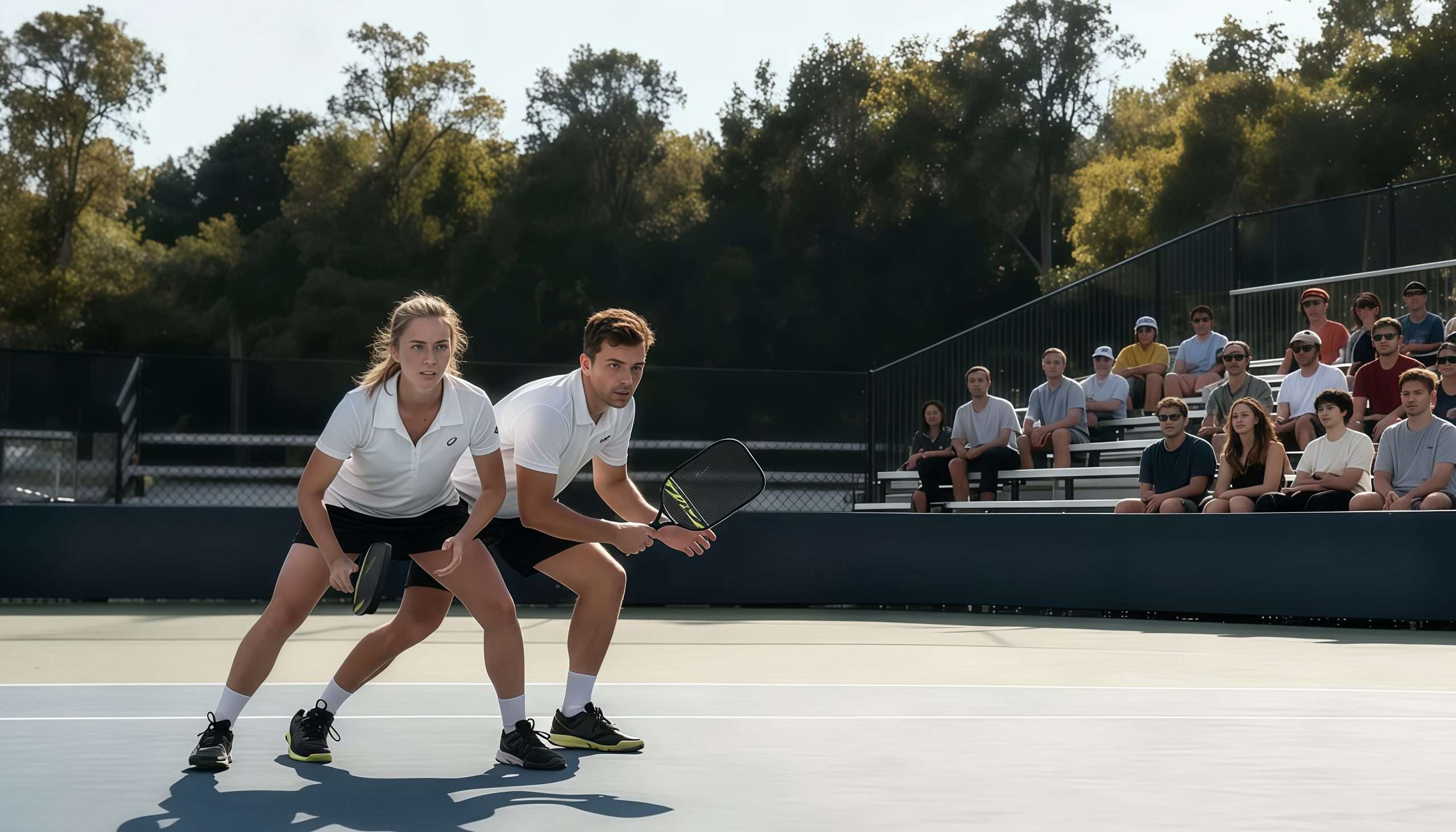
Doubles starting-position illustrations
Visual examples of equipment and court settings. Images are illustrative; current specifications and fit should be checked with the maker or retailer.
Frequently asked questions
Does stacking change who must receive the serve?
No. The correct receiver must return the serve, and the server still follows the service-position rules. The tactic changes the formation and movement, not service order.
Do all teams need to stack?
No. Use it when a specific preferred arrangement helps the pair and the movement is manageable. Standard positioning can remain the better choice while fundamentals are developing.
What if a partner misses the hand signal?
Agree a fallback before the game. A simple default, such as standard positioning, is more useful than guessing during the rally.